INDEPENDENT AUTOMOTIVE NEWSGLOBAL PERSPECTIVE / AUSTRALIAN EDITION
TDCNTHE DAILY
CAR NEWS.

The road ahead.
Every day.

RSS ↗
Latest/New cars

84 original articles

New cars / TDCN ORIGINAL

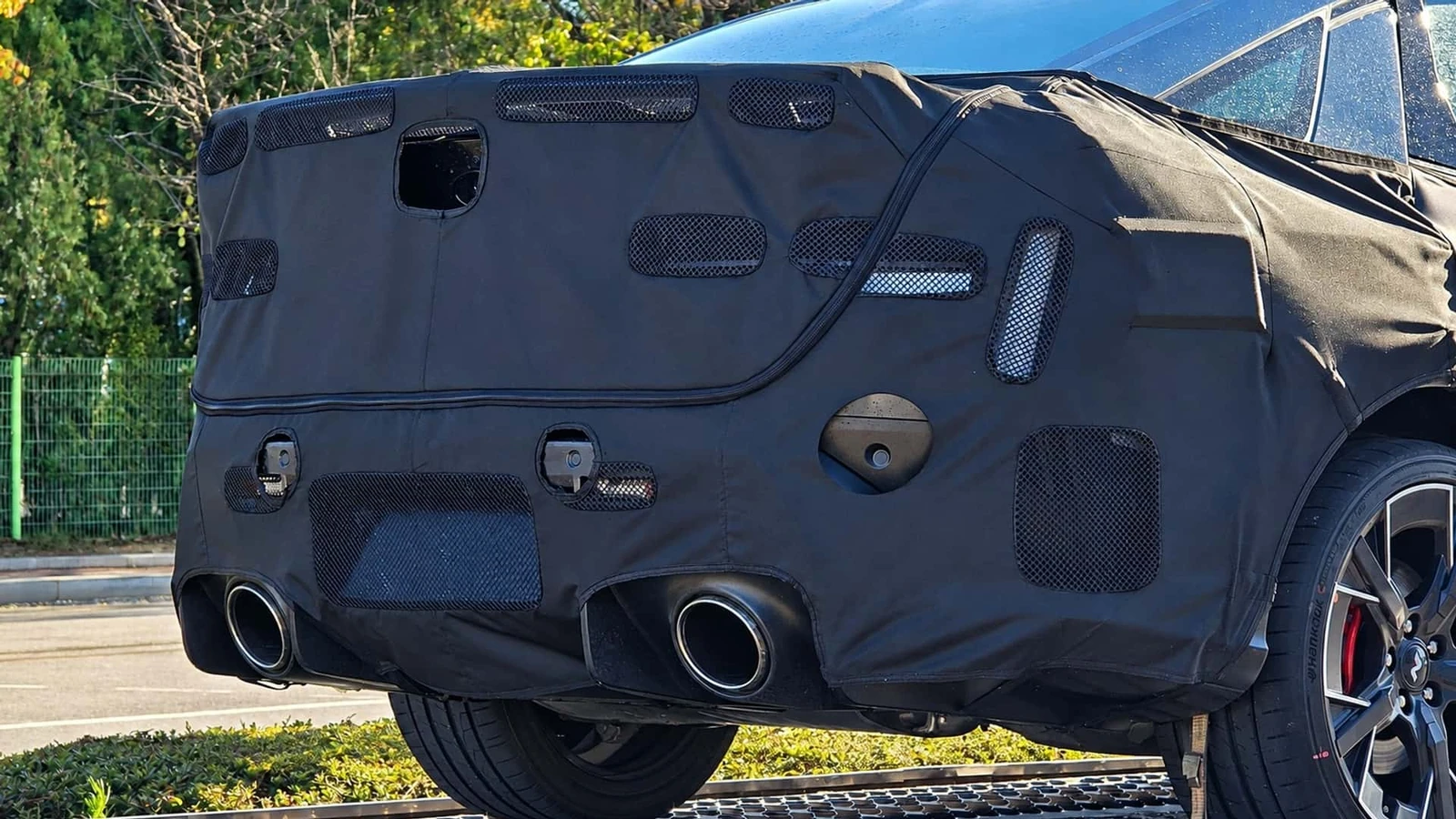
Hyundai Elantra N prototype spied with wider body and 275-section tyres

The first sighting of the next-generation sports sedan points to a wider track, a possible 2.5-litre turbo upgrade and a debut as soon as 2027, with pricing still unannounced.

Image: Motor1

Hyundai's next-generation Elantra N has been caught on camera for the first time, spotted on a car trailer in South Korea under heavy camouflage. The early prototype suggests a substantially wider, more muscular sports sedan than the current model, with a debut possible as soon as 2027.

The sighting, shared by the YouTube channel Healer TV, shows flared wheel arches, a thinner and wider front lip and chunky rear exhaust tips. The most telling detail is on the tyres: a 275/30ZR19 sidewall, up from the 245-section rubber on today's car.

Wider track, wider rubber

The current Elantra N already sits on 19-inch wheels, but wears 245-spec tyres. Stepping up to 275-section rubber is a substantial increase in width for a compact sports sedan, and combined with the flared arches it points to a widened track aimed at more grip and a more planted stance.

The camouflage hides the bumpers, lighting and aero details, so the finer design work remains a mystery for now. What the prototype does make clear is that Hyundai is not treating the next N as a mild facelift of the current car.

A 2.5-litre future?

The bigger question is what sits under the bonnet. Former Hyundai performance boss Albert Biermann said back in November 2023 that a larger engine would fit in the Elantra, and that he had secured the project's future before leaving Namyang. Hyundai's performance leadership has since reiterated its commitment to internal combustion.

The current car makes 276 hp and 289 lb-ft (392 Nm) from its turbocharged 2.0-litre four. Hyundai's turbo 2.5-litre already produces 290 hp and 311 lb-ft (422 Nm) in the Sonata N Line, and up to 300 hp in the Genesis G70, which gives a reasonable guide to what a 2.5-litre Elantra N could offer, though no output has been confirmed.

There may be more than displacement at play. Hyundai has tested a next-generation high-performance powertrain at the Nürburgring 24-hour race, promising gains in power delivery, responsiveness and racing capability while meeting emissions rules. Whether that unit reaches the production Elantra N has not been confirmed.

What else is still unknown

Hyundai has launched the eighth-generation Elantra, sold as the Avante in South Korea, and the standard car is longer and wider than before. Design chief Sangyup Lee has teased an even wider performance version, calling it the sportiest Elantra yet.

Two open questions matter most to buyers. Hyundai has not said whether the six-speed manual survives alongside the eight-speed dual-clutch, and no pricing has been announced for any market. The current car's role as one of the last affordable driver's cars, pitched against the Honda Civic Type R and Volkswagen Golf GTI, makes both answers consequential.
Open this article ↗
Electric / TDCN ORIGINAL

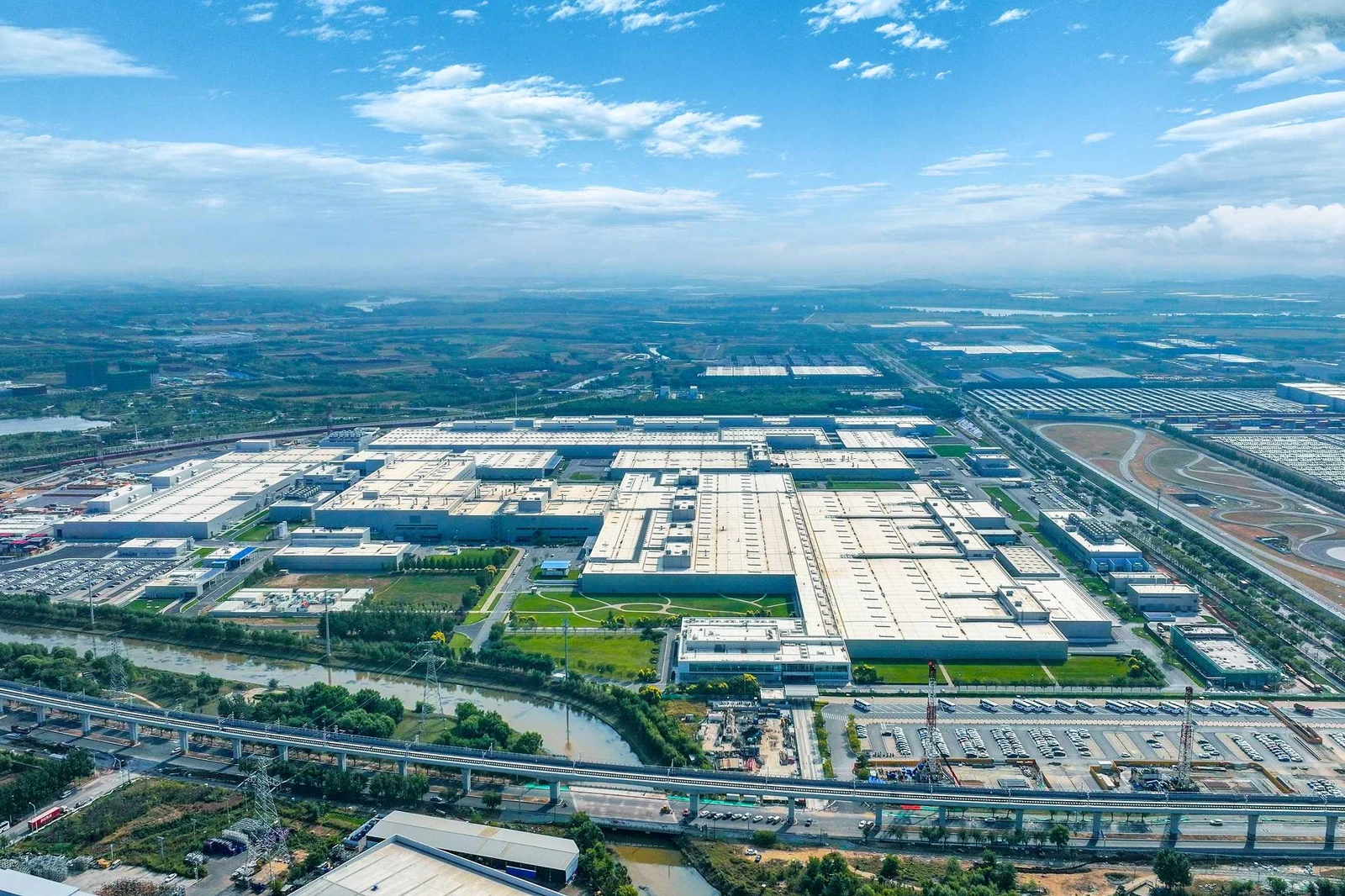
BMW starts building Gen6 batteries in Shenyang for Chinese-market Neue Klasse models

Shenyang becomes the third site in BMW's global Gen6 battery network after Debrecen and Irlbach-Straßkirchen, with Woodruff and San Luis Potosí to follow within months.

Image: BMW PressClub

BMW has begun series production of its sixth-generation high-voltage batteries in Shenyang, China, the third location in the company's global Gen6 battery network after Debrecen in Hungary and Irlbach-Straßkirchen in Germany. The locally built packs will supply the energy core of future Neue Klasse models produced in China.

The cylindrical cells at the heart of the new battery offer more than 20 percent higher energy density than the previous generation, with charging speed and range up by as much as 30 percent.

The Shenyang start-up is a key step in BMW's local-for-local strategy: batteries are built where the vehicles are made, shortening transport routes and insulating supply chains from disruption. Dr. Raymond Wittmann, the BMW AG board member for Production, said the China launch shows how quickly the group is industrialising its latest technology across the global network, creating a key prerequisite for the worldwide Neue Klasse ramp-up.

For Chinese buyers, the practical payoff should arrive with the first locally built Neue Klasse models. The battery is the single biggest lever on range and charging times, and the Gen6 chemistry is BMW's answer to the fast-charging, long-range packs Chinese rivals have made the benchmark in their home market.

How the cell-to-pack design works

The Gen6 battery abandons the conventional module layer: cylindrical cells are integrated directly into the housing, which uses the available space more efficiently and lets the pack be flexibly adapted to different vehicle models.

A central control unit called the Energy Master, developed in-house by BMW, sits directly on the battery and consolidates the essential power-supply and battery-management functions.

The rest of the global network

Two further assembly locations, Woodruff in the USA and San Luis Potosí in Mexico, are due to begin series production in the coming months. Uniform production, quality and safety standards apply worldwide, with each site contributing regional manufacturing and supplier expertise.

Production in Shenyang follows a tightly controlled process: cells are inspected, joined with cooling units into clusters, laser-cleaned and precision-welded to the contact system, then bonded by foaming into a single mechanical unit before the housing is sealed and the Energy Master fitted. Every pack passes a complete end-of-line test, with digital twins, data analytics and AI-supported inspection monitoring laser-welded joints in real time.

What it means for the Neue Klasse rollout

BMW has not announced launch dates, model names or range figures for the Chinese-market Neue Klasse cars that will use these batteries. The company has also not confirmed which plant in China will build them, though the Shenyang packs are explicitly destined for vehicles assembled locally.

The sequencing is telling, though: battery production now precedes vehicle production at every Gen6 site, so Shenyang coming online third, after the European plants, points to China joining the Neue Klasse ramp-up once the European launch is under way.

Open this article ↗

Keep scrolling to read the next story.

Older articles →