Toyota is engineering the next-generation Corolla so it can be sold with four different powertrains: conventional petrol, full hybrid, plug-in hybrid and battery-electric, depending on the market. The split comes from a new electrical architecture divided into four domains rather than the single centralized computer that rivals such as Tesla are pursuing.
According to a Nikkei Cross Tech report, Toyota will separate the car's electronics into driver-assist technology, cabin controls, body electronics and motion control, letting each system be tailored to the powertrain and feature set of the variant it serves.
The approach runs against the industry trend toward software-defined vehicles, where all controls and features sit on one hardware platform and wiring is greatly reduced. Toyota is instead betting that domain-specific electronics will let it build one compact car that can carry very different drivetrains without compromise.
Which engines and hybrids are planned
A traditional hybrid is the likeliest core variant, but the petrol, plug-in hybrid and fully electric versions would follow depending on market. In the United States, the expectation is combustion and hybrid Corolla sedans and hatchbacks. The current car offers a 169-horsepower 2.0-litre four-cylinder and a 1.8-litre hybrid.
Toyota has already confirmed a new family of 1.5- and 2.0-litre inline-four engines, and the smaller unit is the likely candidate for the compact model. The company claims these engines will be lighter and more efficient than today's units.
When it arrives and what it looks like
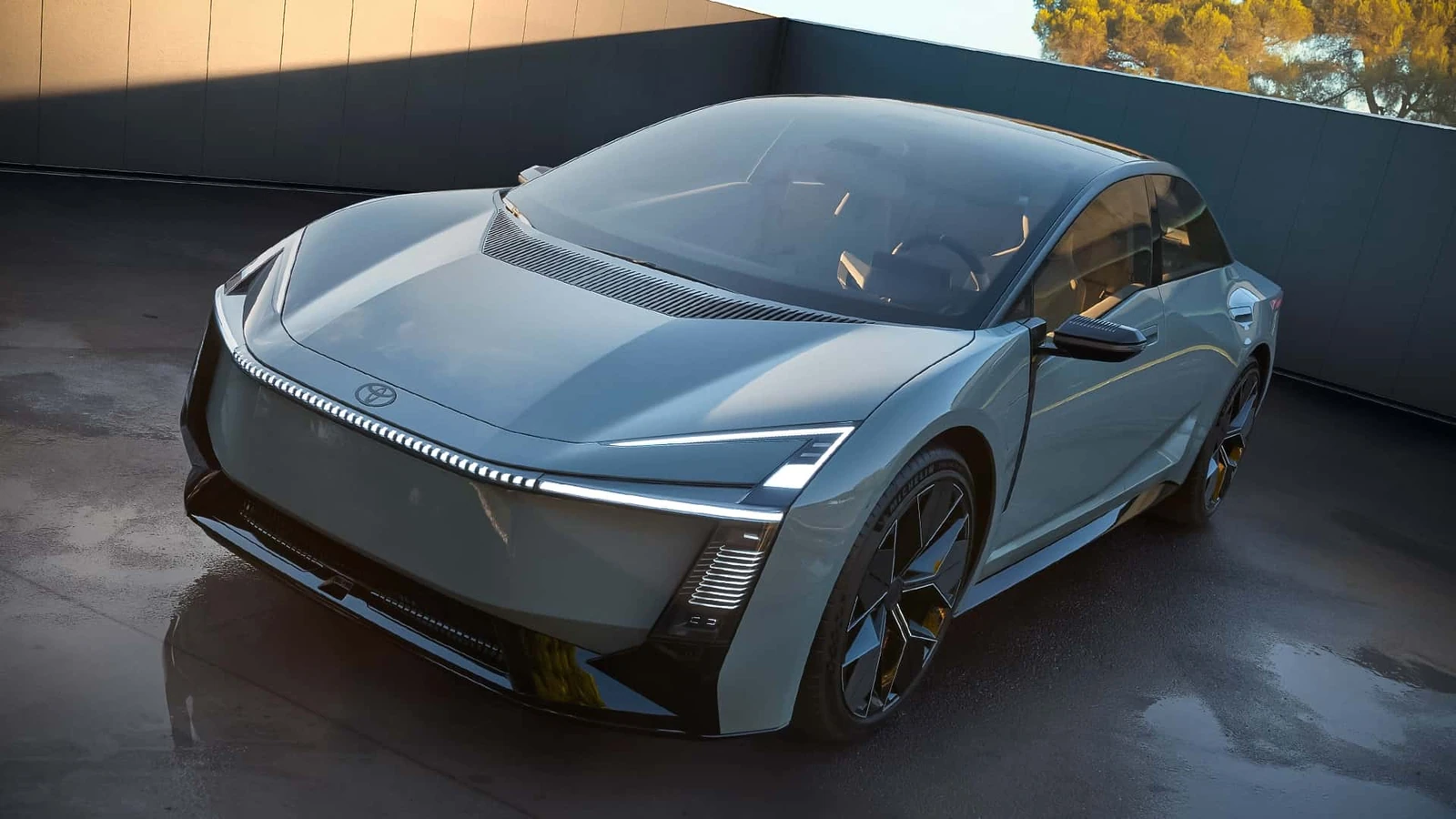
Toyota teased the next Corolla a year ago with a radical concept featuring 21-inch wheels, a descending beltline and frameless doors. The production car is not expected to look that dramatic, but the concept signals the direction.
The current, twelfth-generation Corolla dates to 2018 and is nearly a decade old, so a replacement is due. The thirteenth-generation car is likely to be revealed sometime next year, with the US model possibly reaching showrooms as a 2028 example.
Pricing has not been announced, and neither has an Australian launch: the sourcing so far covers the architecture and the US market outlook, so local availability and cost will have to wait for Toyota's own announcements. What the domain split does promise is flexibility. If hybrid demand softens in some regions while it stays strong in others, Toyota can adjust the Corolla's powertrain mix per market without redesigning the car, which is exactly the position a high-volume nameplate wants to be in.