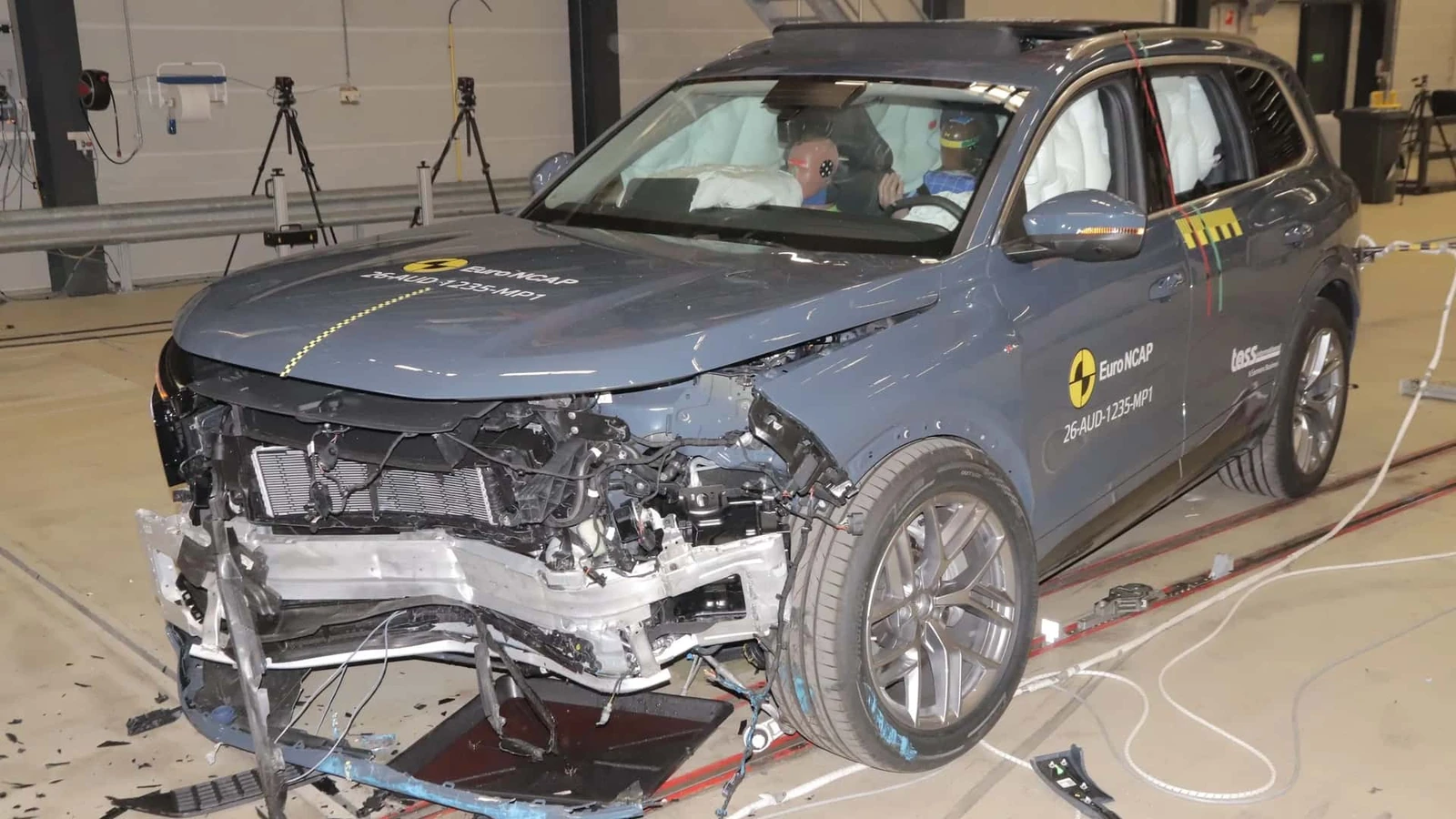
The Audi Q7 has become the first production model to earn a perfect 100 percent score in Euro NCAP's Post-Crash Safety assessment, according to the brand. The large SUV also carries the organisation's five-star overall rating, giving it two separate verdicts under one badge.
The two results measure different things. The five-star rating covers how the Q7 protects occupants in a crash. The Post-Crash Safety score covers what happens in the minutes afterwards, when the rescue chain has to find and free the people inside.
Post-Crash Safety is a standalone Euro NCAP category, separate from the dummy readings and structural scores that usually dominate crash-test coverage. It assesses whether the vehicle alerts the rescue chain automatically, whether it hands over useful data, and whether responders can reach occupants quickly and safely.
The Q7's connect emergency call system can trigger that chain on its own after a serious impact, transmitting the legally required occupant and crash data along with additional vehicle and location details, with no phone call or bystander needed.
Assessors also scored physical access: whether doors unlock and open after the impact, whether electronics still work if low-voltage power fails, and how easily the seat-belt buckles release. The Q7 took the maximum result across all of those criteria.
Audi additionally supplies vehicle-specific rescue sheets and rescue guides, documents that tell firefighters and paramedics where the battery, fuel lines and structural reinforcements sit before they start cutting into the bodywork.
Braking itself to a stop after the first hit
A first collision is rarely the only danger, particularly in a large SUV that can roll into traffic while the driver is stunned or incapacitated. The Q7's multicollision brake detects a relevant impact, then automatically brings the car to a standstill, applies the parking brake and switches the hazard lights on without input from anyone inside. The driver can override the automatic braking if needed.
None of this changes how the Q7 behaves during the crash itself. That sits under the separate five-star result, which covers occupant protection, pedestrian safety and standard driver-assistance systems, and is measured before the post-crash category's clock starts.
Why the perfect score is a first
Audi says no previous production model has managed a full mark in this category, an assessment most manufacturers barely mention in their marketing.
That gap matters for buyers shopping in the three-row segment. The Q7's price bracket already overlaps rivals that have not yet been assessed under the same Post-Crash Safety protocol, so there is no like-for-like comparison available yet.
For anyone cross-shopping seven-seat SUVs, the practical difference is straightforward: the Q7 has a documented, independently scored answer for the minutes after a serious impact, while its competitors' performance in that window simply has not been measured. Whether that sways a purchase depends on how much weight a buyer gives to post-crash rescue over the more familiar crash-protection numbers.
The car underneath the result
The tested Q7 is the latest version of Audi's large SUV, with a flexible three-row interior and seating for up to seven people.
Pricing for the model has not been announced in the source material, so buyers will need to check local Audi configurators or wait for official market figures.