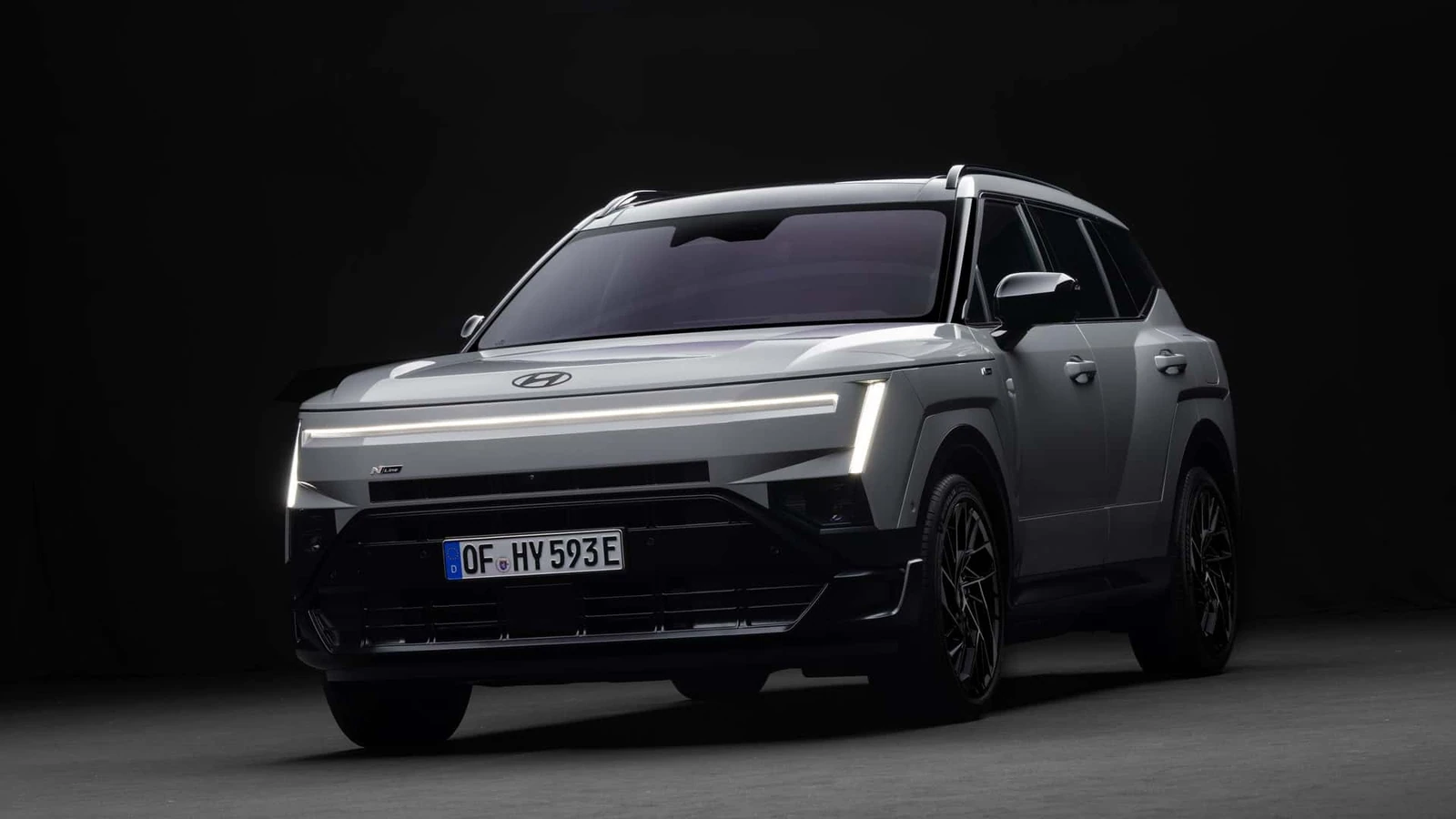
Hyundai has revealed the 2027 Tucson N Line at the 2026 Paris Motor Show, a sportier take on the new-generation SUV that keeps the regular model's mechanicals untouched. It joins the recently shown XRT Pro in fleshing out the fourth-generation Tucson range, and Hyundai has confirmed no dedicated performance upgrades for the trim.
The N Line treatment is cosmetic and equipment based: 20-inch alloy wheels, red accents, suede seats and, unusually for a modern SUV, exposed dual exhaust tips rather than hidden ones. Underneath, it runs the same gasoline, hybrid and plug-in hybrid drivetrains as the standard Tucson.
What the N Line actually gets
The visual package is the story. Beyond the 20-inch wheels and red interior accents, the N Line wears a more aggressive front and rear treatment, with the dual exhaust tips deliberately displayed even though they serve no performance purpose.
Inside, the sporty trim adds suede upholstery while retaining the Tucson's practical family layout. Hyundai has not announced any sharper suspension, brake or powertrain tuning for the N Line, so buyers are paying for looks and equipment, not lap times.
That distinction matters in Hyundai's hierarchy. N Line sits below the full-fat N badge used on the brand's performance models, and the company has not confirmed whether a true Tucson N will ever exist.
Engines: 148 hp to 288 hp, no diesel
In Europe the N Line carries the standard Tucson's full powertrain lineup. The entry point is a 1.6-liter T-GDI turbocharged gasoline engine with 148 hp, offered with front-wheel drive and a choice of six-speed manual or seven-speed dual-clutch gearbox.
The self-charging hybrid pairs the turbo 1.6 with an electric motor and a 1.49-kWh battery for a combined 242 hp, in front- or all-wheel-drive form with a six-speed automatic. Hyundai quotes 8.3 seconds from 0 to 62 mph (100 km/h).
The plug-in hybrid arrives later with a larger 17.1-kWh battery and 288 hp combined, again with a choice of front- or all-wheel drive. The all-wheel-drive PHEV is the quickest Tucson on offer at 7.9 seconds to 62 mph, and Hyundai quotes up to 42 miles (67 km) of electric range for versions on the 20-inch wheels. A 7.2-kW onboard charger handles charging, and certain Tucson variants are rated to tow 1,910 kg (4,211 lb).
There is no diesel in the lineup. Stricter emissions regulations are squeezing conventional oil burners out of Europe, and Hyundai has not announced one for the new Tucson.
Pleos Connect and the tech inside
The N Line inherits the next-generation Tucson's new Pleos Connect infotainment, built on Android Automotive OS and offered with a 12.9-inch or 17-inch central touchscreen.
The system runs Gleo AI voice recognition with access to live internet data, and selected functions update over the air. Hyundai has also kept physical buttons for frequently used controls rather than burying everything in the screen.
A Tucson N is still an open question
Hyundai has confirmed a new family of affordable performance models positioned between N Line and full N, due by 2030, using carry-over parts from N cars and promising what the company calls value features for daily high-performance experience. Whether the Tucson joins that plan has not been announced.
The N Line appears in Paris alongside the second-generation Bayon, which gets an N Line version for the first time. Both follow a playbook the German brands have run for decades: all the show, without the extra go.
The catch for buyers is that the N Line premium buys appearance and equipment, not driving hardware. Anyone wanting a genuinely quicker Tucson will have to rely on the 288 hp plug-in hybrid, which is the fastest version on offer and arrives later in the range.