INDEPENDENT AUTOMOTIVE NEWSGLOBAL PERSPECTIVE / AUSTRALIAN EDITION
TDCNTHE DAILY
CAR NEWS.

The road ahead.
Every day.

RSS ↗
Latest/Australia

99 original articles

Australia / TDCN ORIGINAL

Indonesian shop turns a cheap Toyota Hilux Rangga into a retro Land Cruiser FJ40 tribute

The Rang Gruiser took 35 days to build, stretches the pickup's nose and swaps in a Jeep Wrangler bumper, and the donor truck starts at Rp 194,300,000 in Indonesia.

Image: Carscoops

A small Indonesian body shop has rebuilt a brand-new Toyota Hilux Rangga pickup into a two-door retro off-roader styled after the classic Land Cruiser FJ40, unveiled at the 2026 Indonesia Modification Expo. The truck, called the Rang Gruiser, was built by Delima Body Repair for its owner, Pak Wawan.

The donor was a factory-fresh short-wheelbase Hilux Rangga in chassis-cab form, the budget workhorse Toyota sells in emerging markets. Rather than bolt on a bodykit, Delima stripped every panel off the truck, separated the ladder-frame chassis from the cabin and extended the front section to sharpen the proportions towards a modernised FJ40.

FJ40 face on a Wrangler bumper

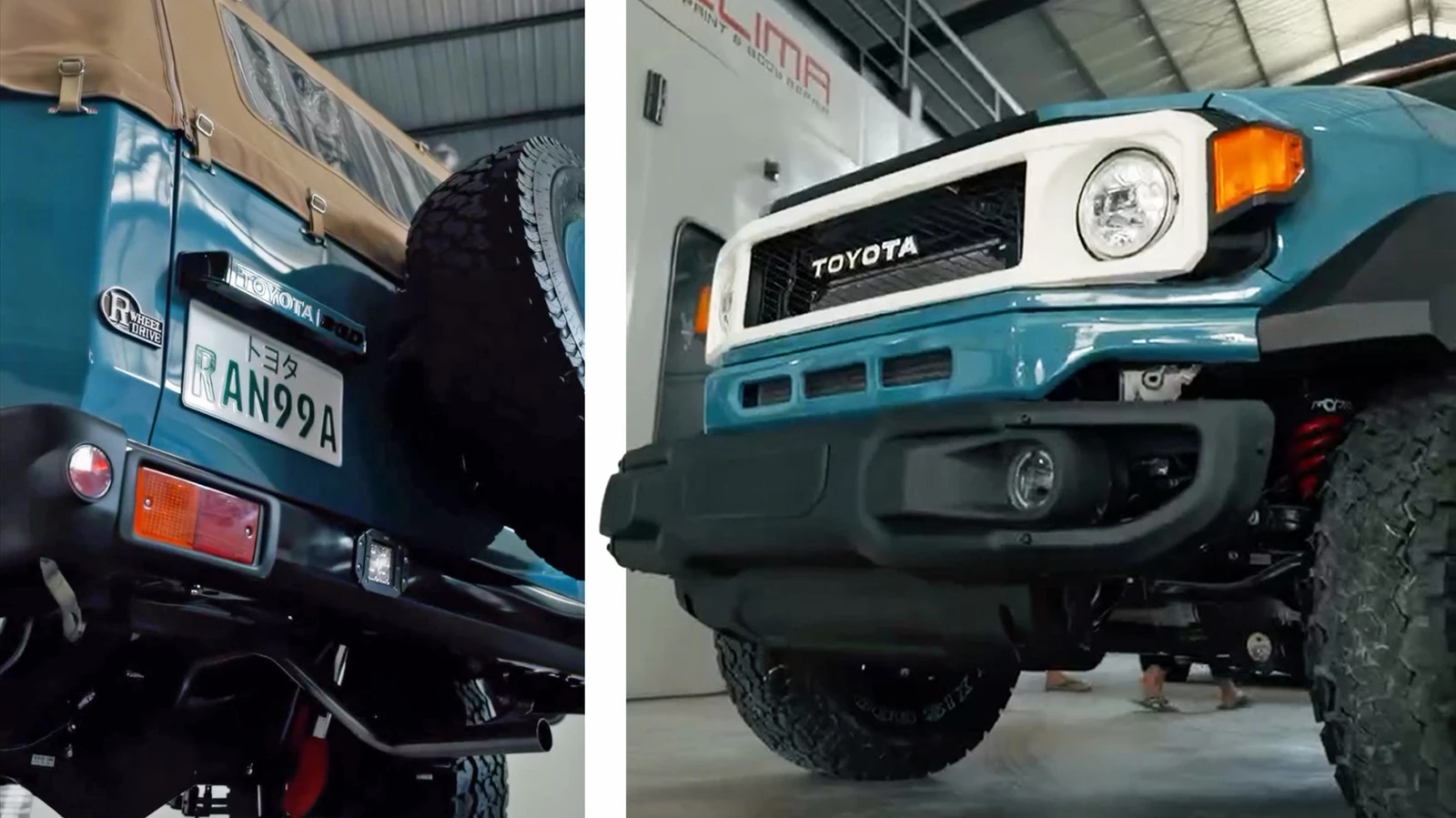
The conversion's centrepiece is the redesigned nose, which takes its round headlights, separate indicators and boxy grille from the Land Cruiser FJ40. The front bumper is borrowed from a Jeep Wrangler, and the truck wears custom Rang Gruiser badges in a vintage-style font.

Along the sides there are wide fender extensions, while the rear gets bespoke fenders and quarter panels, a full-size spare wheel on the tailgate and a canvas cover over the bed that runs back into the roofline. The tan canvas is matched with teal blue paint, unpainted plastic cladding and white trim around the grille.

It rides on black steel wheels with grippy tyres and appears to sit higher than standard, which points to a raised suspension setup, though the shop has not confirmed any mechanical changes there.
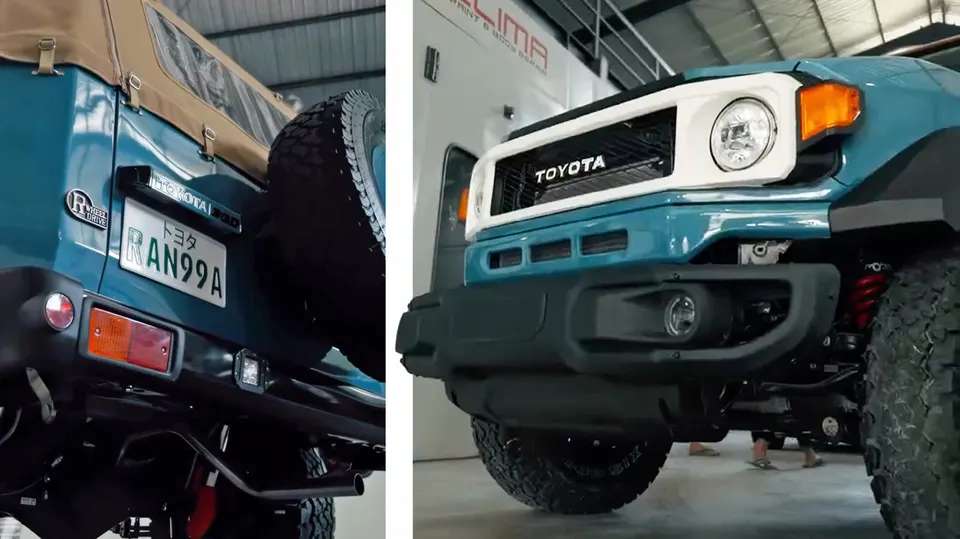
FJ40-style face and canvas rear: the Rangga wears its Land Cruiser tribute proudly
FJ40-style face and canvas rear: the Rangga wears its Land Cruiser tribute proudly, Image: Carscoops

Two-wheel drive only, for now

Delima has not said whether anything was changed under the bonnet. The punchiest engine offered in the Hilux Rangga is a turbocharged 2.4-litre four-cylinder with 148 hp (110 kW / 150 PS) and 400 Nm (295 lb-ft) of torque.

The bigger mechanical compromise is underneath: the donor has no four-wheel drive, so the Rang Gruiser runs a rear-wheel-drive setup despite its off-roader looks.

The cabin keeps the minimalist dashboard and the optional infotainment screen, now trimmed with brown and black leather on the seats. The area behind the front seats is most likely cargo space, though it could be refitted with a bench.

Built in five weeks, and it shows

The whole transformation was finished in 35 days to make the 2026 Indonesia Modification Expo deadline. Delima has admitted the build is not perfect and says it will fix the minor flaws on its next project, due at a future event.

No price has been disclosed for the conversion itself. The donor Hilux Rangga, sold as the Hilux Champ in some markets, starts at Rp 194,300,000 (about $10,800) in Indonesia and tops out at Rp 309,600,000 (about $17,200), undercutting the regular Hilux and competing with used midsize pickups.

That pricing is the point of the build. A cheap, simple chassis-cab truck is exactly the kind of blank canvas that makes a conversion like this affordable, and it explains why the shop did not start from something like the newer Toyota FJ Cruiser, which costs more, is larger and does not come as a two-door.
Open this article ↗
Electric / TDCN ORIGINAL

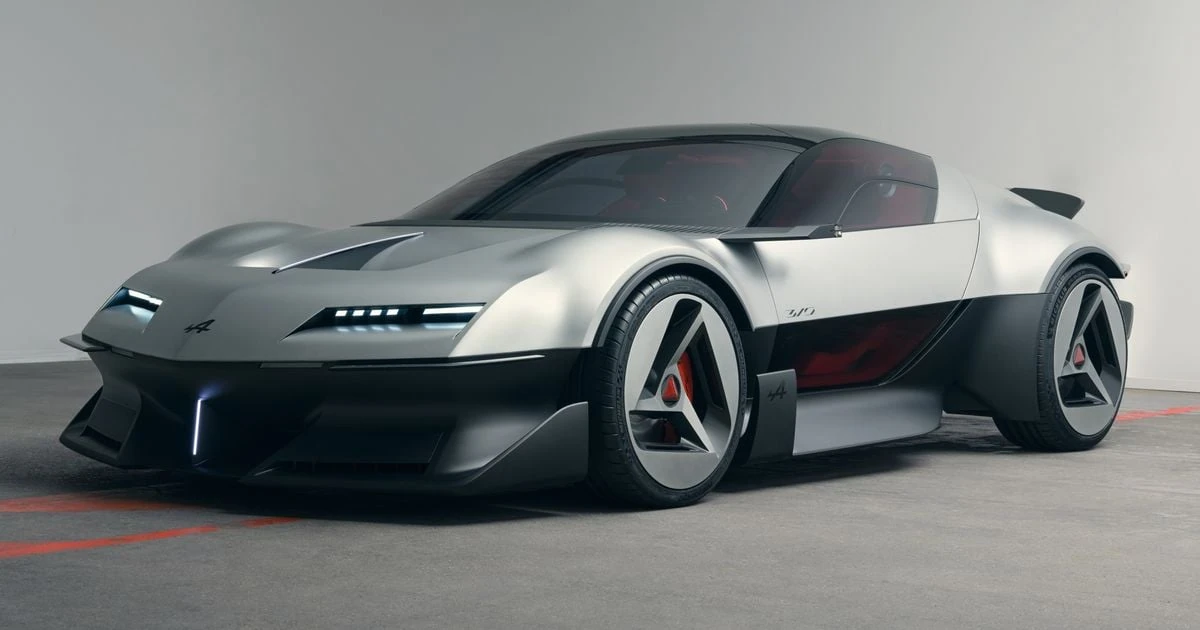
Alpine A310 Vision concept revives the 1970s four-seater for its 55th birthday

Unveiled at the 2026 Paris motor show, the two-seat one-off rides on the same EV platform as the next A110 and carries the internal code PS1.

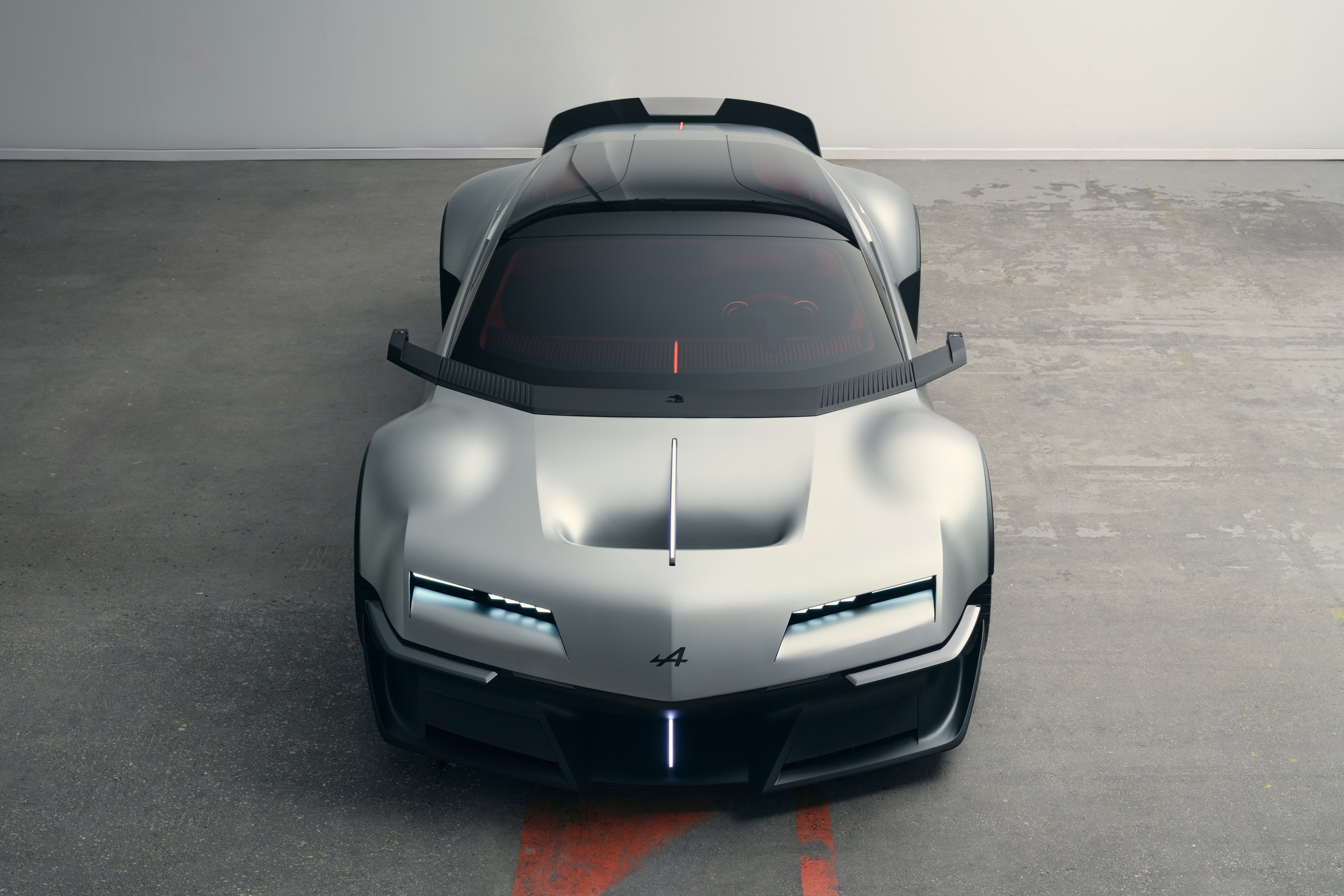
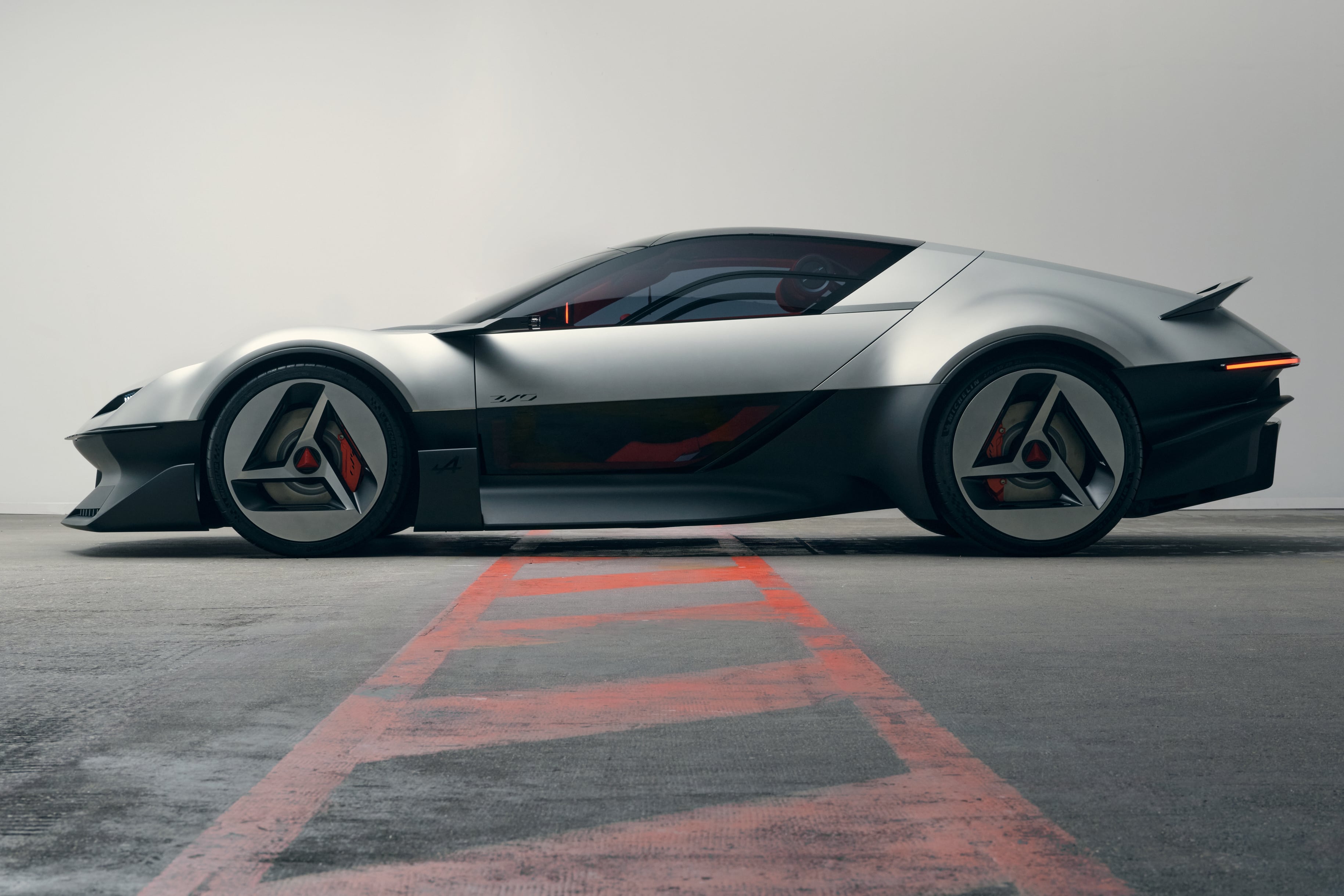
Alpine has revealed the A310 Vision, a one-off concept that reimagines the 1970s A310 coupe for the car's 55th anniversary. It was shown at the 2026 Paris motor show this week.

The company is careful to frame the Vision as a creative exercise in heritage rather than a preview of a production car, but the concept carries the internal model code PS1 (Projet Spécial 1), which suggests it could seed a limited-run model, according to Autocar.

The original A310 arrived in 1971 as a larger, more relaxed companion to the A110, the rally-winning sports car. It stayed in production until 1984 and originally seated four, though the Vision concept drops to two seats.

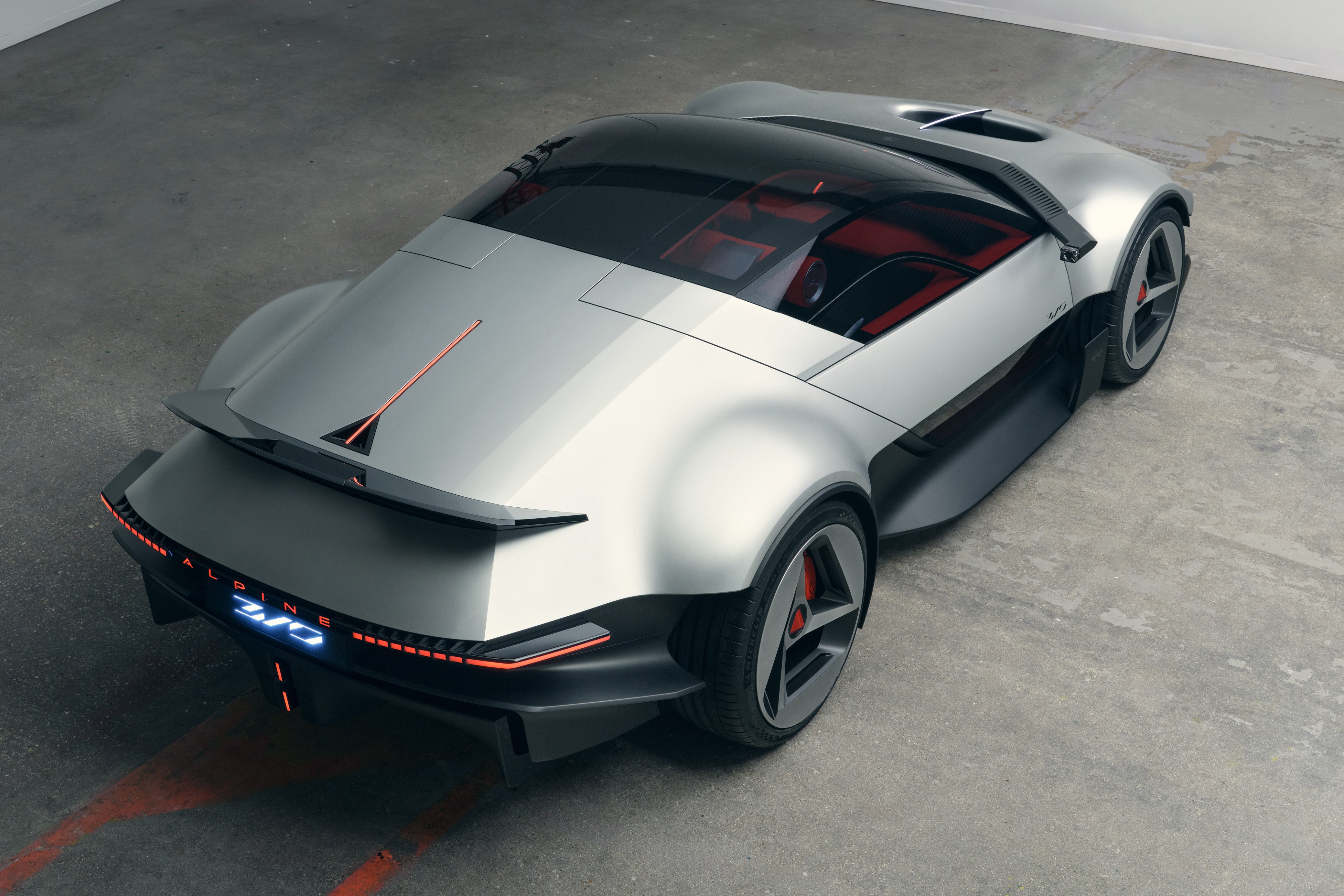
The A310 Vision concept's tail echoes the original's full-width rear light treatment
The A310 Vision concept's tail echoes the original's full-width rear light treatment, Image: CarExpert

Heritage cues from the V6 and GT eras

The Vision borrows from across the A310's life rather than copying the launch car alone. Alpine has mixed in elements from the later V6 and GT versions, including the GT's widened wheel arches, rear wing and sharper, more heavily creased bodywork.

That lineage matters because the early A310 was a modest performer despite its dramatic looks: it launched with a 91kW 1.6-litre carbureted four-cylinder, and only gained a 110kW 2.7-litre V6 in 1976, by which point its heavier body-chassis construction had already earned it a reputation for leisurely pace.

A shark-nosed front end reinterprets the A310's wedge for the electric era
A shark-nosed front end reinterprets the A310's wedge for the electric era, Image: CarExpert

Built on the APP electric platform

Mechanically, the A310 Vision sits on the Alpine Performance Platform, an EV-first architecture with two battery packs: a small unit under the bonnet and the main pack behind the cabin. Alpine says the split layout allows a lower seating position and a more spacious cabin, at the cost of extra complexity.

The same platform underpins the upcoming all-electric A110, whose styling is previewed by a sculpture on the Paris show stand.

Alpine has published no power output or battery specifications for the Vision's drivetrain.

The concept's four-seat fastback profile mirrors the original A310's proportions
The concept's four-seat fastback profile mirrors the original A310's proportions, Image: CarExpert

Petrol is not off the table

APP was designed with combustion in mind. Alpine CEO Philippe Krief said earlier this year that with "some small modifications on the platform we can accommodate an engine, gearbox, fuel tank and all you need", with a petrol drivetrain effectively taking the place of the main battery.

That flexibility is the most interesting thread in the story. A limited-run A310 revival could plausibly be offered with a petrol engine or as an EV, and the PS1 code hints Alpine has at least considered a small series beyond the show car. For now, though, the company's official line is that this is a concept, not a product announcement.

Open this article ↗

Keep scrolling to read the next story.

Older articles →