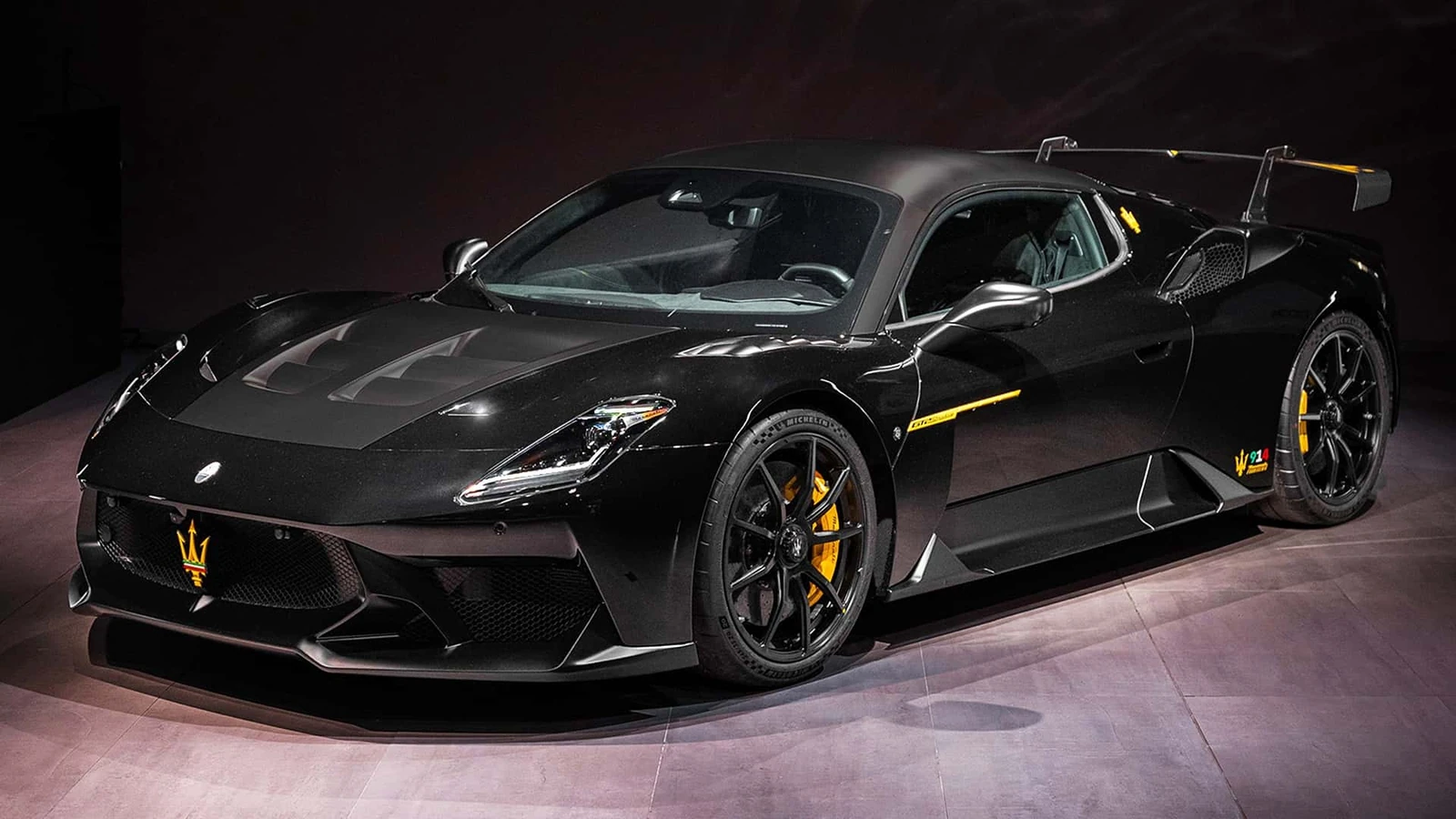
Stellantis has no plans to sell Maserati, chief executive Antonio Filosa said at the 2026 Paris Motor Show, and the group will not split its European and American brands either. Asked directly about a sale of the struggling Italian marque, Filosa told Bloomberg Television: 'Not at all.'
The comments are the clearest statement yet on the Trident's future, after months of speculation that Stellantis might offload the loss-making luxury brand. Filosa dismissed a separate idea, floated during the group's recent troubles, of separating the European marques from the American ones, calling it 'not plausible at all.'
Why the sale rumours kept coming
Speculation about Maserati's ownership has been persistent, and for understandable reasons. The brand has struggled with declining sales and questions about its long-term future, putting the fabled Italian marque under increasing pressure. Stellantis has explored ways to improve its prospects, including discussions with potential partners, but the company says that is not the same as preparing a sale.
The bigger question now is whether Stellantis can give Maserati a clearer direction and the products it needs to regain momentum in an increasingly competitive market.
Closer ties with Alfa Romeo
One route already hinted at is tighter cooperation between Maserati and Alfa Romeo. The idea is to build on their shared heritage and premium positioning while cutting development costs and lead times through shared engineering.
Both brands face an uphill battle in a crowded luxury market, so pooling resources could let Stellantis get more from its investment without blurring the two marques' distinct identities. For Maserati, that cooperation could prove decisive as it tries to recover without changing hands.
Fourteen brands, five priorities
Filosa was equally firm on the structure of the group itself. Stellantis benefits from developing key technologies globally rather than running its regional divisions as separate businesses, he argued, with that shared approach covering everything from powertrains to platforms.
The European brands, Fiat, Peugeot, Citroën, Opel/Vauxhall, Lancia, DS Automobiles, Abarth, Alfa Romeo and Maserati, operate alongside Jeep, Ram, Dodge and Chrysler. Filosa insists all 14 nameplates have a role, though keeping them under one roof does not mean equal investment. Stellantis is reviewing how it allocates spending, particularly where several brands chase the same customers, and its updated strategy prioritises five areas: Jeep, Ram, Peugeot, Fiat and the Pro One commercial vehicle business.
That leaves nine brands outside the priority list, Maserati among them, competing for attention and capital. The challenge is to maximise shared development costs without turning the lineup into a set of rebadged cars, a balancing act that grows more important as Chinese automakers ramp up competition in Europe and elsewhere.
Partnerships and the road back to profit
Stellantis is also pursuing partnerships to use its manufacturing capacity better. Collaborations with Chinese automakers Leapmotor and Dongfeng could help fill underused European plants without closures, while expanding access to electrification technology.
The financial picture explains the urgency. The group posted a €22.3 billion net loss in 2025 and its shares have come under heavy pressure this year. Filosa told Bloomberg the group has already passed the point of returning to profitability, but the real test is turning that confidence into sustained financial improvement.
For now the message from the top is unambiguous: Maserati stays, the European and American brands stay together, and Stellantis will try to make the whole group work as one.