
INDEPENDENT AUTOMOTIVE NEWSGLOBAL PERSPECTIVE / AUSTRALIAN EDITION
TDCNTHE DAILY
CAR NEWS.

The road ahead.
Every day.

RSS ↗
Latest/New cars

57 original articles

New cars / TDCN ORIGINAL

Jeep's 2027 Wrangler Switchback closes the Twelve 4 Twelve series with mismatched panels

Orders open in November 2026 from $66,695 for the two-door and $69,995 for the four-door, plus a $2,870 package on the Rubicon X.

Jeep has revealed the 2027 Wrangler Switchback, a factory-built Rubicon X with deliberately mismatched hood and door colors that closes out the brand's yearlong Twelve 4 Twelve special edition series. Orders open in November 2026, priced from $66,695 for the two-door and $69,995 for the four-door, both including the $1,995 destination charge and the $2,870 appearance package.

The Switchback is the 12th and final release in a run of monthly special editions Jeep staged across 2026 to mark 85 years as an SUV brand. It is also the loudest: Gloss Black and Sting-Gray trucks are built in tandem so the hood and doors contrast on purpose, finished with bright Gecko accents.

How the two-tone trick works

The Switchback starts as a Wrangler Rubicon X. Jeep sequences Gloss Black and Sting-Gray trucks together on the assembly line, then swaps the doors during normal production and exchanges the hoods later at a separate upfitting center. The result is two mirrored versions: one with a black hood and gray doors over gray bodywork, the other with a gray hood and black doors over black bodywork.

That two-stage process is why Jeep counts the Switchback as a factory build rather than a dealer-installed appearance package. The Gecko finish on the beadlock wheel rings was developed specifically for this production run, and the same accent color appears on the grille surround, hood graphic and swing-gate decal.

Mismatched panels and lime wheels visible as the Switchback crawls over rocks
Mismatched panels and lime wheels visible as the Switchback crawls over rocks, Image: Car and Driver

Inside and pricing

The cabin gets black Nappa leather with Switchback branding debossed into the seats, Sea Salt Nappa trim on the dash, and lime accent stitching. Special cupholder and swing-gate plaques mark each car as part of the finale build.

Pricing is $66,695 for the two-door and $69,995 for the four-door, each figure including the $1,995 destination charge and the $2,870 personalization package layered on top of the Rubicon X sticker. Jeep has not said how many Switchbacks will be built, and no production cap has been announced.

High-contrast green detailing sets the Switchback apart on the trail
High-contrast green detailing sets the Switchback apart on the trail, Image: Car and Driver

The end of a year of special editions

Twelve 4 Twelve ran one special Wrangler per month through 2026, marking 85 years of the Jeep brand as an SUV maker. Earlier entries included the retro-themed Rewind package and the V8-powered Moab 392.

Jeep brand CEO Branden Coté framed the series as an internal exercise as much as a product push, saying it unleashed creativity across the brand while staying true to what has always defined Wrangler.

The Switchback's November order window gives the series a factory-built send-off, and it shows how far the Wrangler formula can be reworked without touching the frame underneath.
Open this article ↗
New cars / TDCN ORIGINAL

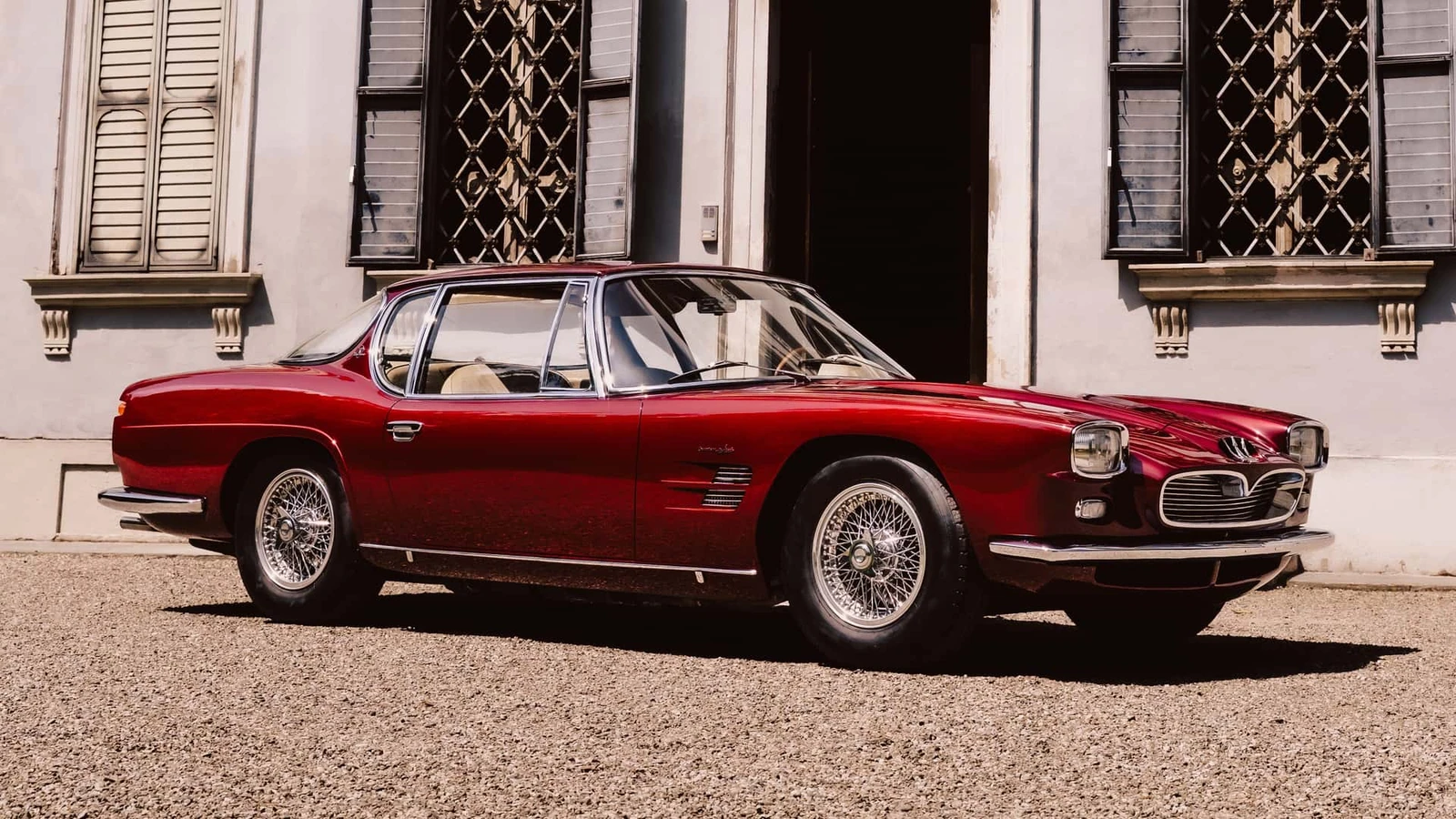
Maserati certifies the first 5000 GT Frua, a royal grand tourer hidden in Cairo for 30 years

Chassis 103*064*, one of just three Frua-bodied 5000 GTs, has earned Classiche authentication after a four-year restoration and a life spanning a shah, an imam and a Saudi king.

Image: Motor1

Maserati has awarded its Classiche certification to chassis 103*064*, the first 5000 GT ever clothed by Pietro Frua and a car that spent more than three decades impounded in a Cairo warehouse. The authentication confirms the car's originality using the factory's own archives and technical inspection, and makes it the first 5000 GT Frua to carry the badge.

Only 34 examples of the 5000 GT were built between 1959 and the mid-1960s, and just three of those wore Frua bodywork.

A grand tourer born from a shah's request

The 5000 GT exists because the Shah of Persia drove a Maserati 3500 GT and wanted something grander. Technical director Giulio Alfieri answered with project AM103: a 5.0-liter V8 derived from the Maserati 450S race car, dropped into a road-going grand tourer rated at over 350 hp.

Carrozzeria Touring built the first three cars, shown at the 1959 Turin Auto Show and nicknamed the

Shah of Persia

after their instigator. Maserati then opened the AM103 platform to other coachbuilders, and Allemano, Pininfarina, Monterosa, Ghia and finally Frua each draped their own body over the same mechanicals.

Pietro Frua built his three 5000 GTs in 1962, and chassis 103*064* was the first. It wore a

Luci di Mezzanotte

exterior over

Camoscio

interior, with a lower beltline and larger glass area that made it sleeker than the Touring and Allemano cars before it.

Royal owners, then 30 years in a Cairo warehouse

Maserati used the car for testing before displaying it at the 1963 Geneva Motor Show, where Karim Aga Khan IV drove it and ordered a 5000 GT Frua of his own.

The prototype returned to Modena at the end of 1963 and was sold to a new owner in Rome. In January 1966 that owner traded it back to the factory against a newer Maserati, and the car was repainted

Rosso Rubino Chiaro

at the request of its next buyer, Saudi Prince Magid Ben Saoud.

Magid gave the car to his father, King Saud bin Abdulaziz Al Saud, and that gift set off the strangest chapter of its life. Egyptian authorities seized it in 1967 after the Six-Day War and the king's departure from Egypt, and it then sat impounded in a Cairo warehouse for more than three decades.

Rescue, restoration and factory certification

When the car resurfaced in 2000 it had covered roughly 7,900 miles and still carried its major components. A Texas collector bought it and shipped it back to Modena, where a four-year restoration preceded its reappearing at the 2004 Concorso d'Eleganza Villa d'Este.

The Classiche certification now attached to the car verifies the authenticity of historic models against factory archives and technical checks. Maserati's Fuoriserie and Bottega studio, launched in 2021, handle bespoke work for current and classic cars, and the restoration sits in the same tradition as one-off projects such as the GT2 Stradale tribute.

For collectors, the certification is the meaningful part: with only 34 5000 GTs built and three of them Frua cars, factory-verified provenance is what underpins value at auction. What the car is worth now, or when it might next change hands, has not been announced.

Open this article ↗

Keep scrolling to read the next story.

Older articles →