INDEPENDENT AUTOMOTIVE NEWSGLOBAL PERSPECTIVE / AUSTRALIAN EDITION
TDCNTHE DAILY
CAR NEWS.

The road ahead.
Every day.

RSS ↗
Latest/New cars

72 original articles

New cars / TDCN ORIGINAL

Xiaomi spied testing a heavily revised SU7 Ultra with a huge rear wing at the Nürburgring

The prototypes wear a twin-plane swan-neck wing, new splitter and diffuser, and may carry a DRS like the Porsche that took its lap record.

Image: Carscoops

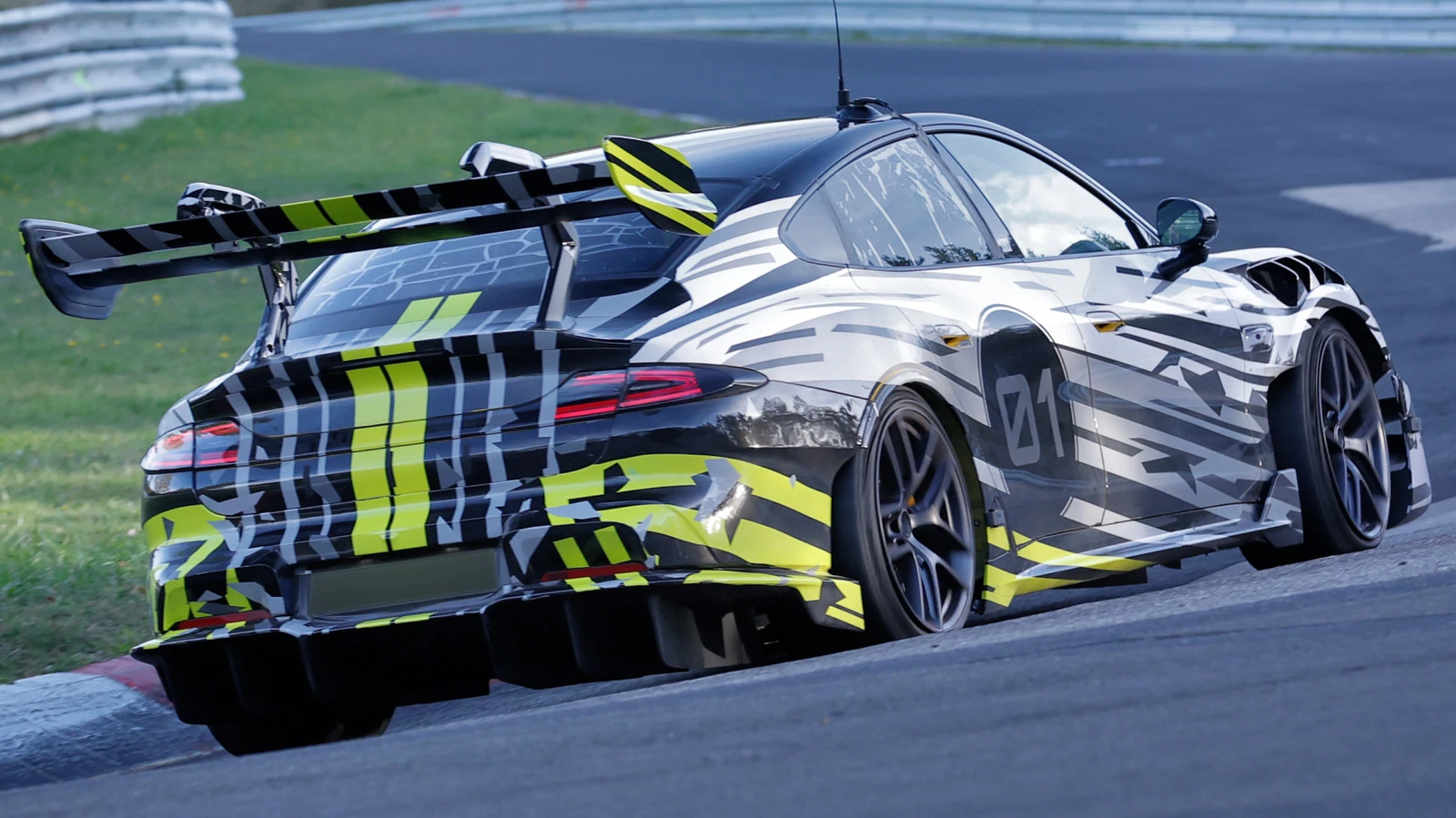
Xiaomi has been caught testing a dramatically revised version of its SU7 Ultra at the Nürburgring, with a pair of prototypes photographed carrying aggressive new aerodynamic parts. The changes include a large front splitter, side skirts, louvers above the front wheels, a twin-plane rear wing on swan-neck mounts and an all-new diffuser.

The timing is pointed. The standard SU7 Ultra, a tri-motor electric sedan with 1,548 hp, held the production-car lap record at the Nürburgring for an executive EV until the Porsche Taycan Turbo GT Manthey took it earlier this year. These prototypes suggest Xiaomi is preparing a response.

The most striking change is at the rear. The twin-plane wing is nearly as large as the unit on a Porsche 911 GT3 RS and, like that car, uses huge swan-neck mounts. The images also appear to show the components needed for an active Drag Reduction System, which would open one of the wing's slats at the press of a button to cut drag and raise top speed. That would mirror the setup on the Porsche that beat it.

Below the wing sits a new diffuser, likely made from carbon fiber, that resembles the one Manthey offers for the Taycan Turbo GT. Working together, the wing and diffuser are designed to keep the EV's rear wheels planted at speed.
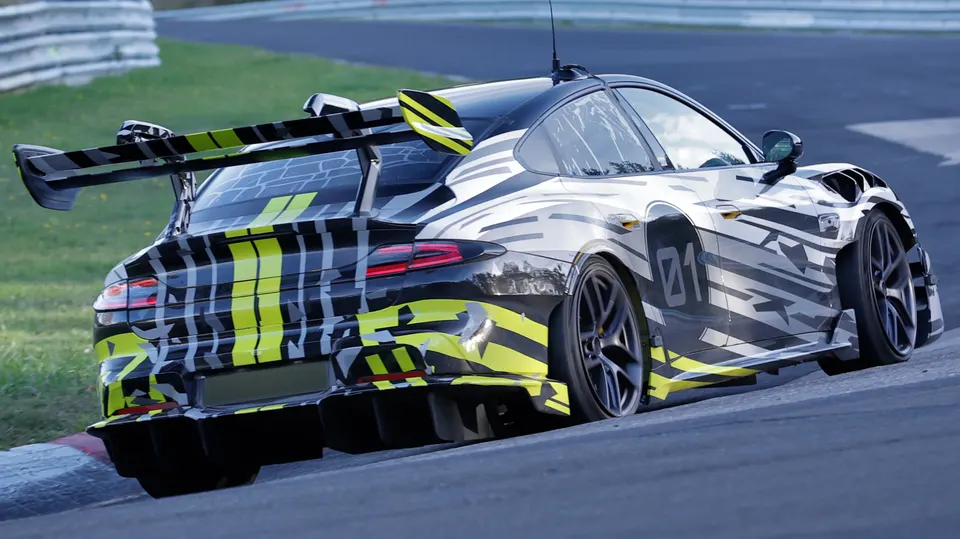
The heavily revised SU7 Ultra caught testing with its huge new rear wing at the Nürburgring
The heavily revised SU7 Ultra caught testing with its huge new rear wing at the Nürburgring, Image: Carscoops

Brakes, suspension and possibly more power

The front end has been overhauled too. The bumper now carries a large splitter and aero skirts on either side, with louvers above the front wheels and large side skirts along the flanks. In some photos the carbon ceramic brake discs are glowing red, which hints that braking hardware may have changed as well.

The added downforce will almost certainly require suspension changes, and a power upgrade is possible. Xiaomi has previously shown a quad-motor powertrain producing 2,054 hp but has not fitted it to a production model, and a hotter SU7 Ultra would be an obvious candidate.

What it means for the Porsche fight

The road car is visibly moving toward the configuration of the original record-setting SU7 Ultra Prototype, which suggests this is a lap-time exercise rather than a routine facelift.

Nothing has been confirmed. Xiaomi has not announced the upgrades, a launch date, pricing or whether the DRS and quad-motor drivetrain will make production, so the prototypes leave plenty of questions open.
Open this article ↗
Industry / TDCN ORIGINAL

Xpeng targets 500,000 annual sales in Europe by 2030, more than Ford sold there last year

CEO He Xiaopeng told Bloomberg the brand wants 1 million global deliveries by 2030, with half from Europe, where it has sold just 60,000 cars since 2020.

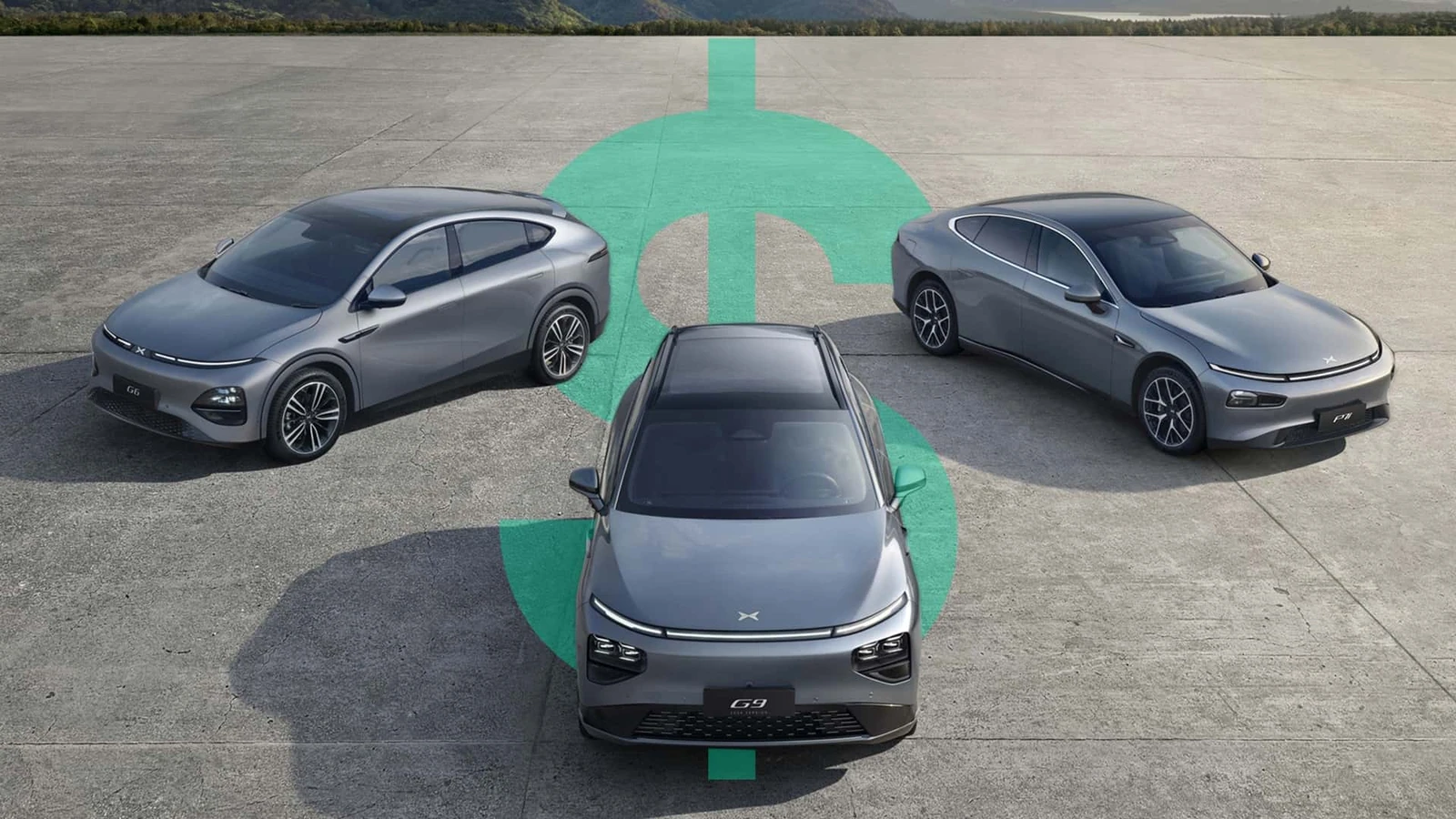
Xpeng wants to sell 500,000 cars a year in Europe by 2030, a figure that would top the 426,000 vehicles Ford sold there last year. The target is half of a global goal of 1 million annual deliveries by the end of the decade, which chief executive He Xiaopeng set out in an interview with Bloomberg.

The scale of the ambition is stark: Xpeng has delivered only about 60,000 cars in Europe since entering the region in 2020, and just under 430,000 worldwide last year.

Xpeng's European push would more than double its global sales within six years, and the company expects Europe to account for roughly half of all deliveries at the 1 million mark. Ford, by comparison, has been building cars in Europe for more than 115 years, though its sales there have fallen from about 1 million units a decade ago to 426,000 last year.

That decline is part of why the target looks plausible rather than fanciful. Chinese EV brands have been taking market share from established carmakers across Europe on the strength of high equipment levels and low prices, and Xpeng is one of the brands doing the eating. If that collective penetration continues at its recent pace, a half-million annual sales for Xpeng alone starts to look less like a stretch.

Local production is the sticking point

The harder part is manufacturing. Xpeng has no European factory of its own, and new EU rules require a minimum level of local content in EVs sold across the bloc, a threshold every Chinese carmaker is now racing to satisfy.

As a stopgap, Xpeng has contracted Magna to assemble several of its models in Austria. But vice president Yeqing Zheng told Reuters that Magna's output is not even sufficient for the sales goal, and that the company plans to expand its manufacturing presence in Europe, both to meet the content rules and to build volume.

That admission matters for the timeline. Contract assembly caps how many cars Xpeng can physically deliver, so the 500,000 figure depends on the company adding real production capacity in Europe, not just shipping more cars in from China.

No word on the United States

American buyers are unlikely to have seen an Xpeng on the road: the brand does not currently sell cars in the US. Neither Xpeng nor the sources indicate any plan to enter the American market, and no US launch has been announced.

For now the company's attention is fixed east across the Atlantic. The bet is that Europe's appetite for affordable, tech-heavy EVs keeps growing while legacy brands regroup, and that a decade in the market is enough to outsell a manufacturer that has been there for a century.

Open this article ↗

Keep scrolling to read the next story.

Older articles →