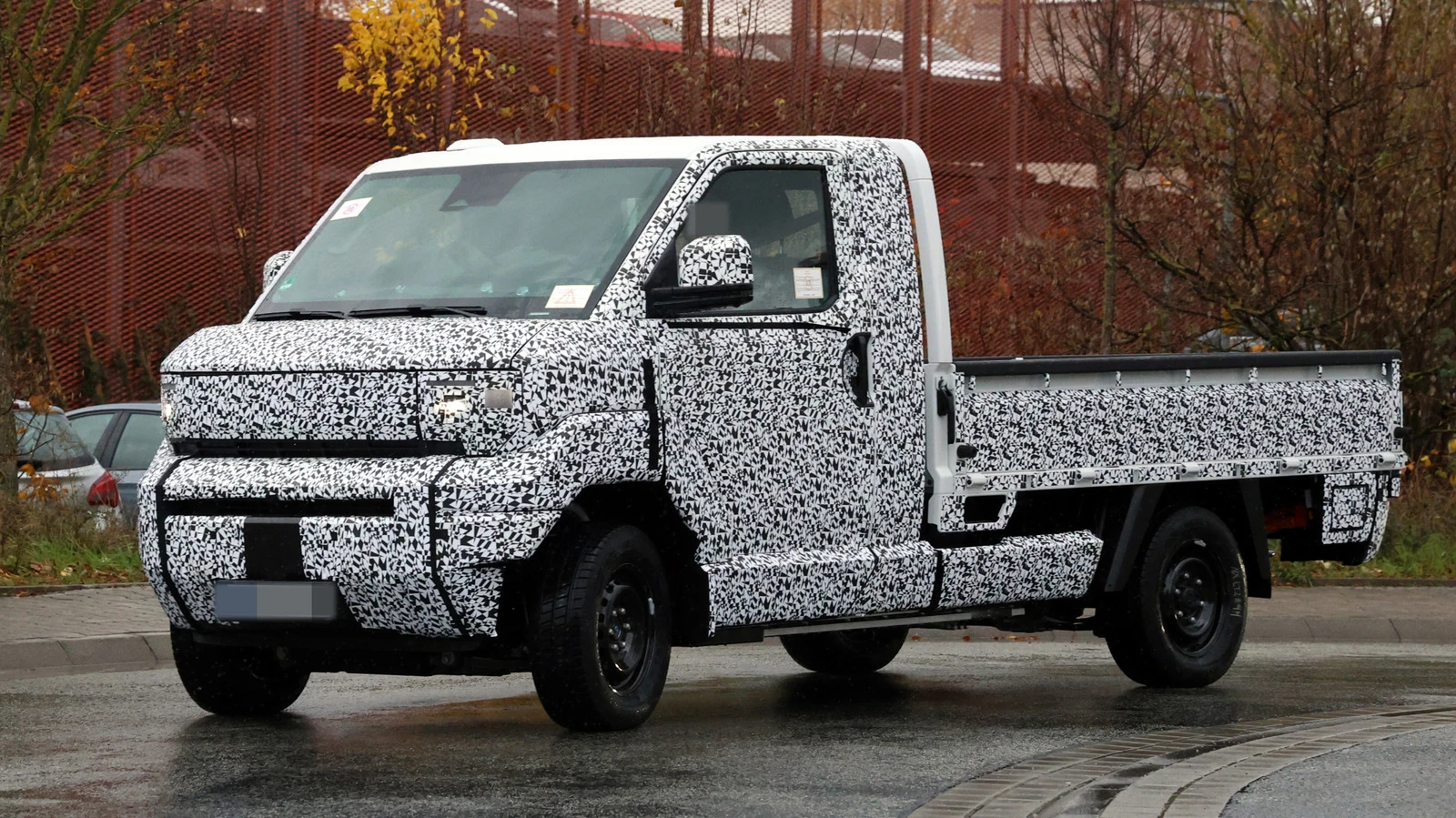
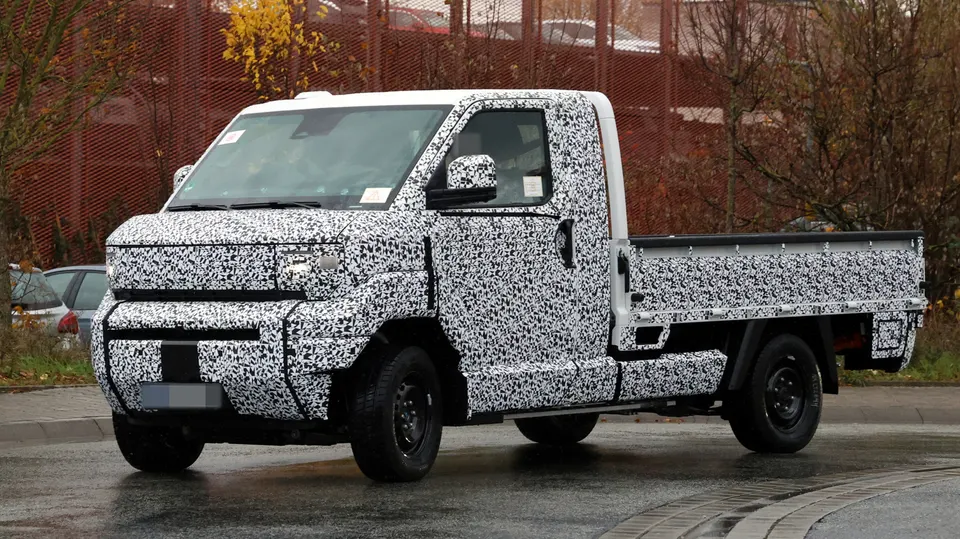
Hyundai's next-generation Porter has been spied with only light camouflage, revealing a cab-back design that replaces the flat-fronted cab-over layout the small pickup has used since 1977. The fifth-generation truck is expected to debut in 2027, according to Carscoops, and the prototype shows no tailpipes below the bed's tailgate.
The Porter is a familiar sight in South Korea and Asia, where it has been used for urban deliveries since 1977, but it is not sold in the US or Europe. The current fourth-generation model launched in 2004, making the replacement long overdue.
A new layout for crash safety
The current Porter places the driver's feet ahead of the front wheels, which is good for urban agility and space efficiency but leaves little crumple zone in a head-on collision. The new truck has a short hood and a cab pushed behind the front axle line to improve crash protection.
That change is likely to bring a longer wheelbase and a larger turning radius unless Hyundai's engineers have found a workaround, Carscoops notes. The squared-off front end and angular fender extensions also bring the Porter into line with the boxy styling of the latest Tucson and Santa Fe SUVs.
Electric powertrain details remain unconfirmed
Hyundai has not announced the battery size, range or power output for the new Porter. The electric powertrain continues what the Porter II Electric started in 2019, and spy photographers previously caught a Porter prototype plugged into an EV charger.
Carscoops suggests Hyundai could borrow hardware from the chassis-cab version of Kia's PV5 van, which uses the Hyundai Group's E-GMP.S commercial vehicle platform and is offered with 51.5 kWh and 71.2 kWh batteries. Some reports also say Hyundai is planning an LPG variant as an alternative to a gasoline engine.
Pricing and markets still to be confirmed
Hyundai has not announced pricing for the new Porter. The truck is expected to go on sale in South Korea and other Asian markets, where the current model is sold, but a European launch is only under consideration and a North American launch is considered very unlikely.
The Porter's shift to a cab-back layout is the biggest change in five decades, and it addresses a long-standing safety weakness in a vehicle that has been a workhorse for small businesses across Asia. The electric version's success will depend on whether Hyundai can keep the price and payload competitive with the diesel models that dominate the segment, but those figures have not been released.