INDEPENDENT AUTOMOTIVE NEWSGLOBAL PERSPECTIVE / AUSTRALIAN EDITION
TDCNTHE DAILY
CAR NEWS.

The road ahead.
Every day.

RSS ↗
Latest/Electric

634 original articles

Electric / TDCN ORIGINAL

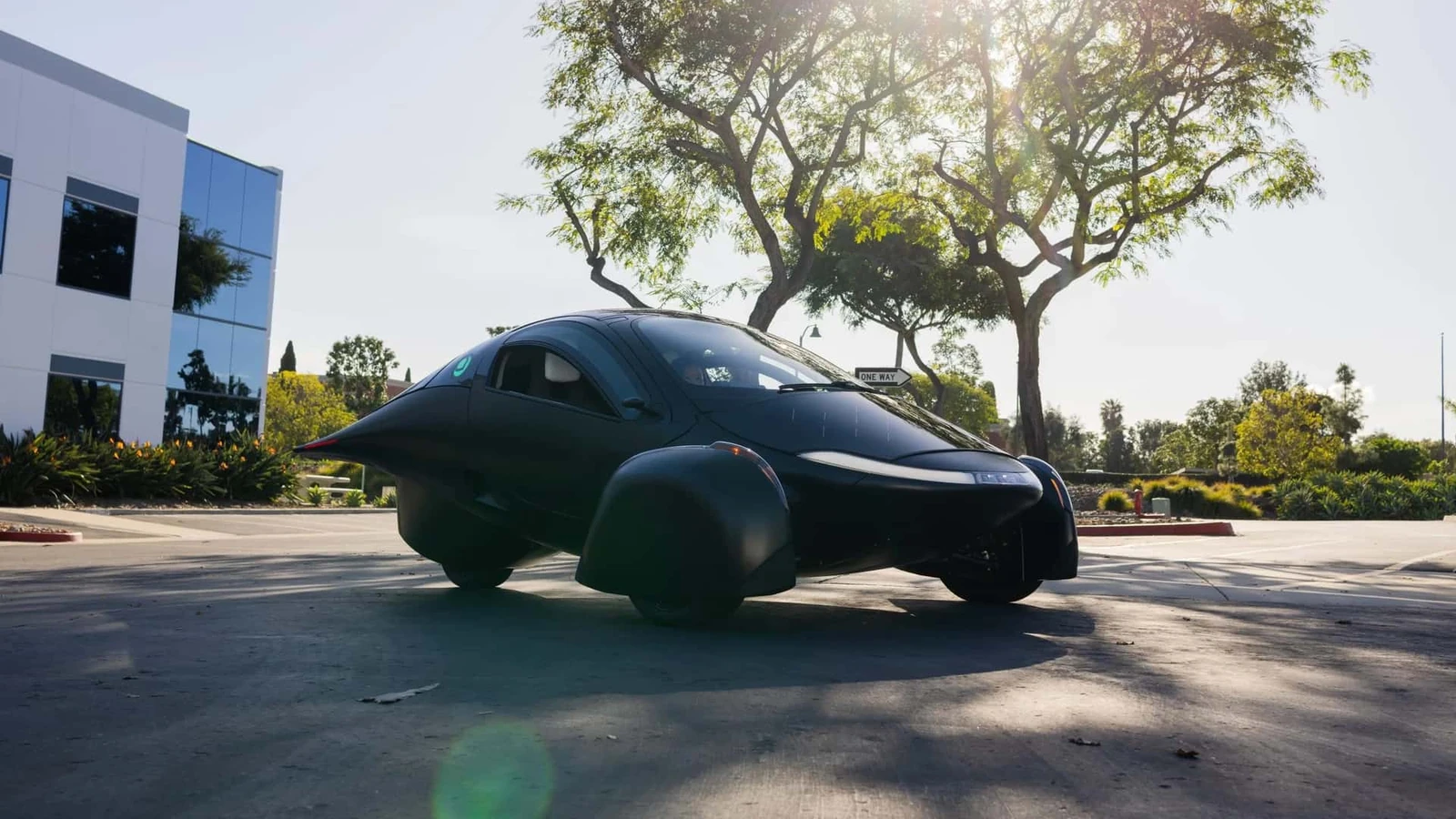
Aptera delivers its first customer car, a matte black Noir, to its first investor

The three-wheeled solar EV maker handed the vehicle to Accelerator #1 Martin Hartono, whose car will be exported from California for use outside the US.

Aptera Motors has delivered its first road-legal production car to a customer, handing the matte black "Noir" model to Accelerator #1, Martin Hartono, the company's first early investor. A representative of GDP Ventures, the Indonesia-based firm Hartono leads as CEO, attended the handover in Carlsbad, California in his place, and the car will soon be exported to live outside the United States.

Who received the first car

Aptera refers to its early investors as "Accelerators," and Hartono holds the number one position. In a statement, Hartono framed the delivery as the payoff of an early bet on the company's approach: "By combining solar technology, battery power and an ultra-efficient vehicle design, Aptera offers a compelling solution for people who want to minimize their energy consumption without compromising the ability to travel long distances".

Co-CEO Chris Anthony said the handover marked "the moment our team has worked toward for years" and thanked reservation holders and shareholders, adding that Aptera is "working to complete more vehicles for early customers as soon as possible". The company has not announced a schedule or volume for those next deliveries beyond that commitment.

The solar roof claim and its limits

Aptera's pitch rests on three-wheeled EVs with solar roofs that it says can add up to 40 miles of range per day from sunlight. That figure will not hold in every situation, but the company says third-party verification showed the cars can exceed it in the right conditions.

The practical appeal is narrow but real: a driver with a short commute who parks outside all day could recover the morning's miles from the sun rather than a plug. For buyers with long daily drives or covered parking, the solar contribution shrinks toward a novelty, and the car's value rests on its efficiency and battery rather than its panels.

What is still unknown

Aptera has not announced a price for the Noir or for customer cars generally in the material released around the delivery. The company also has not said how many vehicles it intends to build in the near term, beyond Anthony's statement that more are being completed for early customers as soon as possible.

The delivery closes a long gap. Aptera has existed for roughly two decades, changed ownership several times and, until now, had not produced a car for a customer, which is why the handover carries weight beyond the single vehicle. Whether the company becomes a lasting automaker, and whether solar-assisted motoring catches on, are questions a first delivery cannot answer.
Open this article ↗
Safety / TDCN ORIGINAL

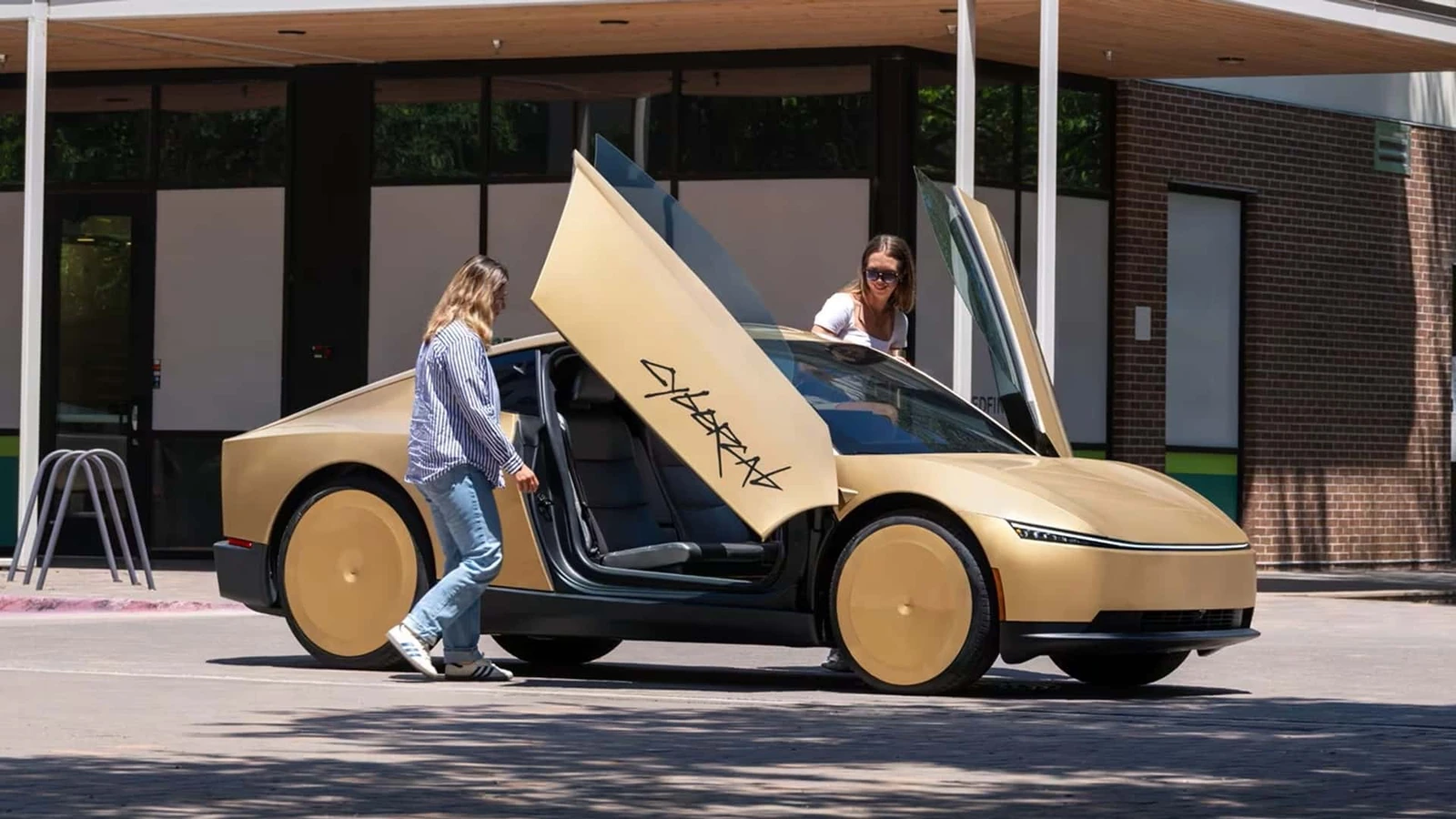
Tesla expands driverless Cybercab service to Dallas, its second city

The two-seat, steering-wheel-free robotaxi follows its September launch in Austin, though Tesla has not explained how it meets federal safety standards.

Tesla has begun running its purpose-built Cybercab in Dallas, the second city to get the driverless two-seater after the service launched in Austin in September. The automaker announced the expansion in a post on X.

Dallas riders had already been served by Tesla Model Y robotaxis, but this marks the first time the dedicated Cybercab has joined the fleet there. The vehicle carries up to two passengers, has no steering wheel or pedals, and is ordered through the Tesla Robotaxi app on a smartphone.

Where the Cybercab runs, and where it does not

Beyond Austin and Dallas, Tesla's robotaxi service operates in Houston, Fort Worth, Tampa, San Antonio, Orlando, Miami and the San Francisco Bay Area. Only Austin and Dallas have the Cybercab; the other cities are served by the Model Y.

The Bay Area cars carry human supervisors because of California's rules. Tesla's rollout has clustered in Texas and Florida, states with fewer regulatory roadblocks that let the company add vehicles and widen its geofenced areas faster than elsewhere. That concentration is a regulatory story as much as a technology one: the Cybercab's footprint is being drawn by state rulebooks, not by where demand is strongest.

Production plans and a two-million-car target

CEO Elon Musk has said Tesla eventually intends to have two million Cybercabs in the U.S.. That number warrants skepticism given the company's record of promising large figures and missing them.

To free up capacity, Tesla plans to wind down Cybertruck production at Gigafactory Austin next summer and ramp up Cybercab output. Tesla has also said it will add a version of the Model Y without a steering wheel or pedals to its robotaxi fleet.

Private buyers face a subscription and an unanswered safety question

Tesla recently began inviting select customers to buy the Cybercab for private use, an announcement that raised more questions than it answered. The car will not operate without a $299-per-month autonomy subscription.

It is also unclear how the Cybercab will meet the Federal Motor Vehicle Safety Standards, and Tesla has not publicly detailed how it will do so. That matters because a car without a steering wheel or pedals sits awkwardly against rules written around human controls, and until Tesla explains the compliance route, private buyers are being asked to commit to a vehicle whose regulatory footing has not been spelled out.

Open this article ↗

Keep scrolling to read the next story.

Older articles →