INDEPENDENT AUTOMOTIVE NEWSGLOBAL PERSPECTIVE / AUSTRALIAN EDITION
TDCNTHE DAILY
CAR NEWS.

The road ahead.
Every day.

RSS ↗
Latest/New cars

631 original articles

New cars / TDCN ORIGINAL

Hyundai reveals 2027 Elantra specs, with a more powerful 2028 hybrid to follow

The redesigned compact sedan grows in wheelbase and gains a 12.9-inch standard touchscreen, but Hyundai has not published prices or exact on-sale dates.

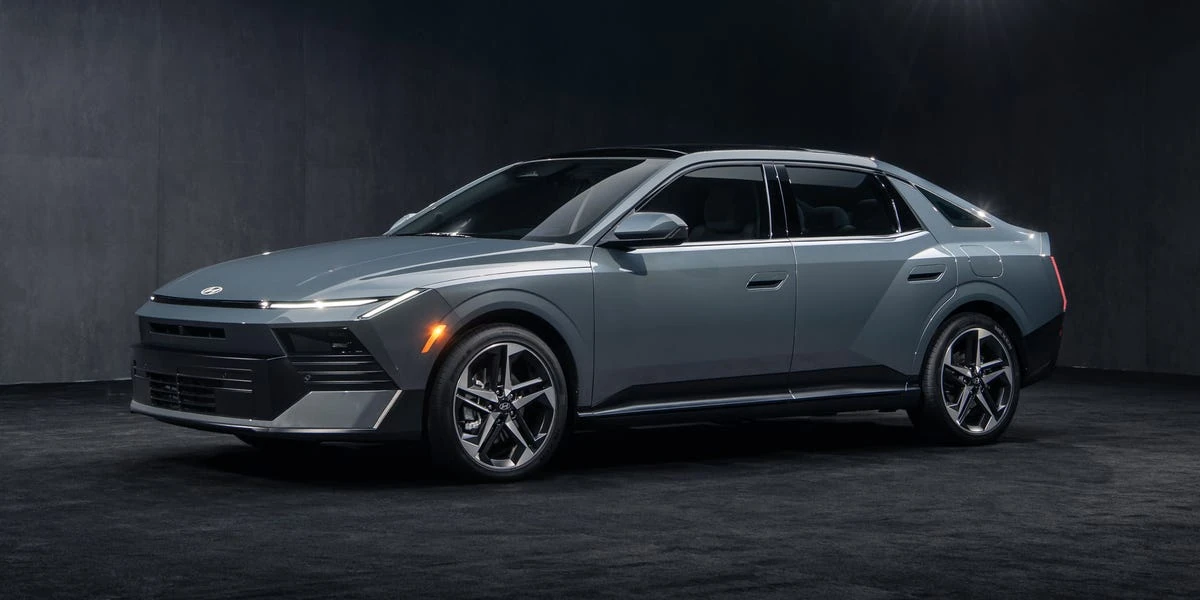
Hyundai has fully detailed the next-generation Elantra, a redesigned compact sedan that goes on sale as a 2027 model with a carryover 147-hp 2.0-liter four-cylinder, followed later by a 2028 Elantra Hybrid making 155 horsepower. The U.S. version, revealed after the car's global debut, adopts the same angular styling and is larger than the outgoing car, with a wheelbase stretched by 1.2 inches for extra rear legroom.

Hyundai has not announced pricing or precise launch dates for either version. Car and Driver expects the 2027 Elantra to start at around $25,000 and says the 2028 hybrid will cost a few thousand dollars more, but those figures are the outlet's estimates rather than confirmed numbers.

A carryover engine for the 2027 car, hybrid upgrades for 2028

The standard 2027 Elantra keeps the previous model's powertrain: a 147-hp 2.0-liter inline-four paired with a continuously variable automatic transmission. Hyundai has not announced a performance variant of the new generation. The previous Elantra offered a turbocharged N Line, and Car and Driver expects the full Elantra N to eventually join the lineup, though nothing has been confirmed.

The 2028 Elantra Hybrid combines a 1.6-liter inline-four with electric motors for a combined 155 horsepower, 16 more than before. Hyundai estimates up to 53 mpg combined, which is 1 mpg below the outgoing model's best combined rating. The hybrid also uses a multilink rear suspension where the non-hybrid car makes do with a twist-beam setup, a difference that should show up in how the two cars ride and handle.

That the hybrid gains power while giving up a mile per gallon suggests Hyundai has traded a sliver of efficiency for drivability, a reasonable call for a car whose buyers are more likely to notice sluggish acceleration than a single mpg. The multilink rear end reinforces the point: the hybrid is positioned as the more sophisticated car in the range, not just the frugal one.

Trims, interior and equipment

The 2027 Elantra lineup opens with the SE and continues through SEL Sport and Limited trims. The hybrid range mirrors that structure, with a base SE Blue model.

Inside, the dashboard is new and includes a standard 12.9-inch touchscreen mounted centrally. An optional slim digital gauge cluster sits near the base of the windshield, and Hyundai's Pleos Connect infotainment system is fitted, which the company says recognizes more natural voice commands. Optional equipment includes dual wireless charging pads and a Bang & Olufsen stereo. Car and Driver, sitting in a loaded Limited model, judged the materials nicer than is typical for the segment.

The 12.9-inch screen as standard equipment is the detail worth watching for buyers: features that were once reserved for top trims are becoming the baseline in compact sedans, and Hyundai is pushing that further here than most rivals.

What is still unknown

Two things a buyer would want are not yet settled. Hyundai has not released U.S. pricing for either the 2027 Elantra or the 2028 Elantra Hybrid. Car and Driver's figures, roughly $25,000 for the 2027 car and a few thousand dollars more for the hybrid, are expectations, not published prices.

Nor has Hyundai given exact on-sale dates. The standard car is described as arriving for the 2027 model year, with the hybrid following later as a 2028 model. Anyone shopping the current Elantra, one of the most affordable cars on sale, will want to see whether the redesign pushes the starting price much above that $25,000 mark before deciding to wait.
Open this article ↗
New cars / TDCN ORIGINAL

Genesis adds a hybrid G80 sedan with 347 hp for 2028

The G80 becomes the brand's first hybrid sedan, sharing the GV80's 2.5-litre turbo four and twin-motor setup, but US pricing and launch timing are still unannounced.

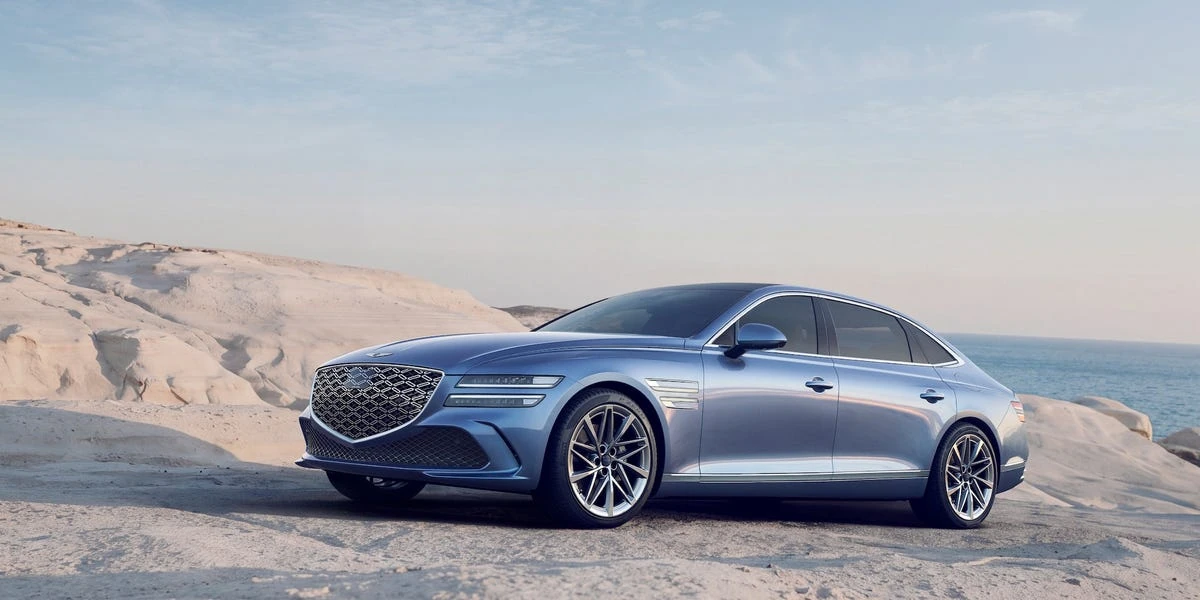
Genesis will offer a hybrid version of the G80 sedan for the 2028 model year, the brand's first sedan to carry a gas-electric powertrain. The car pairs a turbocharged 2.5-litre inline-four with two electric motors for a combined 347 horsepower and 391 pound-feet of torque, the same output as Genesis's twin-turbo 3.5-litre V-6.

The G80 hybrid follows the GV80 SUV, which introduced the same 2.5 Turbo Hybrid system earlier this year. Genesis has not yet announced US on-sale dates or prices for either model.

Shared hardware with the GV80 hybrid

The sedan uses the same powertrain Genesis revealed on the GV80: a turbocharged 2.5-litre four-cylinder working with two electric motors, driving through a seven-speed automatic transmission. Genesis says the Genesis hybrids are the first models in the Hyundai Group to use a liquid-cooled battery rather than an air-cooled one.

Genesis claims the hybrid G80 will be 30 percent more fuel efficient than the nonhybrid turbo-four model, which Car and Driver calculates should work out to roughly 30 mpg combined. That figure is a manufacturer claim and an estimate, not an EPA-rated number.

Hybrid-specific settings and trim

Both the hybrid G80 and GV80 get features including adjustable regenerative braking, an EV Mode and a Stay Mode that lets occupants run the air conditioning and infotainment without starting the petrol engine. Genesis says an enhanced engine clutch and crankshaft reduce noise and vibration.

Visually, the hybrid G80 is set apart by a 3-D mesh grille, and it rides on unique 18- and 20-inch wheels. The hybrid sedan is 5.1 inches longer than before, and both models add new paint colours for 2028, plus an optional Prestige Black appearance package. Inside, the G80 keeps the dash-spanning OLED screen and appointments of current models.

Price and timing still open

Genesis has not said when the 2028 G80 and GV80 will reach US dealers, nor what they will cost. For reference, the 2027 G80 sedan is priced from $60,995 to $81,695, and the GV80 SUV from $60,395 to $86,295. Car and Driver expects the hybrid additions to land somewhere near the upper half of those ranges, but that is an estimate rather than a Genesis figure.

That leaves buyers weighing the hybrid G80 without a sticker to compare against the V-6 or turbo-four versions. The 30 percent efficiency claim is the strongest argument Genesis has published so far, and it will matter most to sedan buyers who cover high miles.

Why a hybrid sedan matters for Genesis

Genesis has built a lineup of three sedans and four SUVs, including three EVs, but had no hybrid option until the GV80 and now the G80. Adding a gas-electric sedan puts the brand into a segment where BMW and Mercedes-Benz already compete, and it does so with a powertrain that matches the V-6's torque output on paper.

The liquid-cooled battery is the detail worth watching. It suggests Genesis is engineering the hybrid system for sustained load rather than short electric bursts, which suits a large sedan better than an air-cooled pack would.

Open this article ↗

Keep scrolling to read the next story.

Older articles →