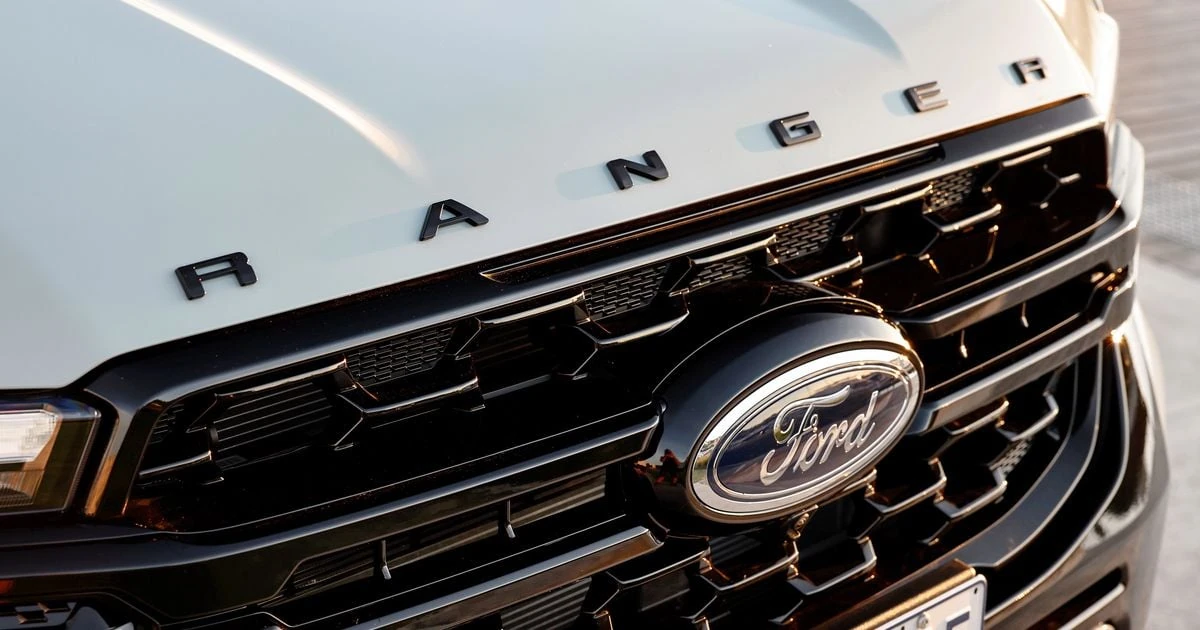
Ford Australia has applied to trademark the Ford Ranger Crosspower name, a filing that points to a possible extended-range electric vehicle (EREV) version of the country's best-selling ute. The applications cover both Ranger Crosspower and Crosspower, and an equivalent overseas filing has also been made, yet the name has not been used on any Ford product anywhere in the world.
What Ford will and will not say
Ford Australia and New Zealand confirmed the trademark applications but declined to elaborate when approached by CarExpert. A spokesperson said the company files trademarks as a normal course of business and that they are not necessarily an indication of new branding, badging or product plans.
That caveat is standard practice: manufacturers often register names to keep rivals from using them, rather than waiting until a model is locked into a production plan. Even so, the choice of Crosspower is telling. Ford Australia is the lead design and engineering centre for the current and next-generation Ranger and the related Everest large SUV, so securing a nameplate early fits the way the local operation works.

Why the name points to a range extender
An EREV, sometimes called a range-extender, uses an internal combustion engine purely as a generator to charge a high-voltage battery that feeds the electric motor or motors driving the wheels. The engine never drives the wheels itself.
The Ranger line-up is still overwhelmingly diesel, with the exception of the petrol twin-turbo V6 Ranger Raptor, and the Ranger plug-in hybrid electric vehicle (PHEV) arrived in Australia in 2025. An EREV would sit alongside the PHEV as a different answer to the same question of how to cut fuel use in a ute without going fully electric.
The trademark also follows Ford Australia renaming the Ranger PHEV as simply the Ranger Hybrid, an umbrella badge that could logically cover both plug-in hybrid and range-extender variants. That renaming is the strongest hint that Ford wants room under one name for more than one electrified powertrain.

Ford's EREV track record in Australia
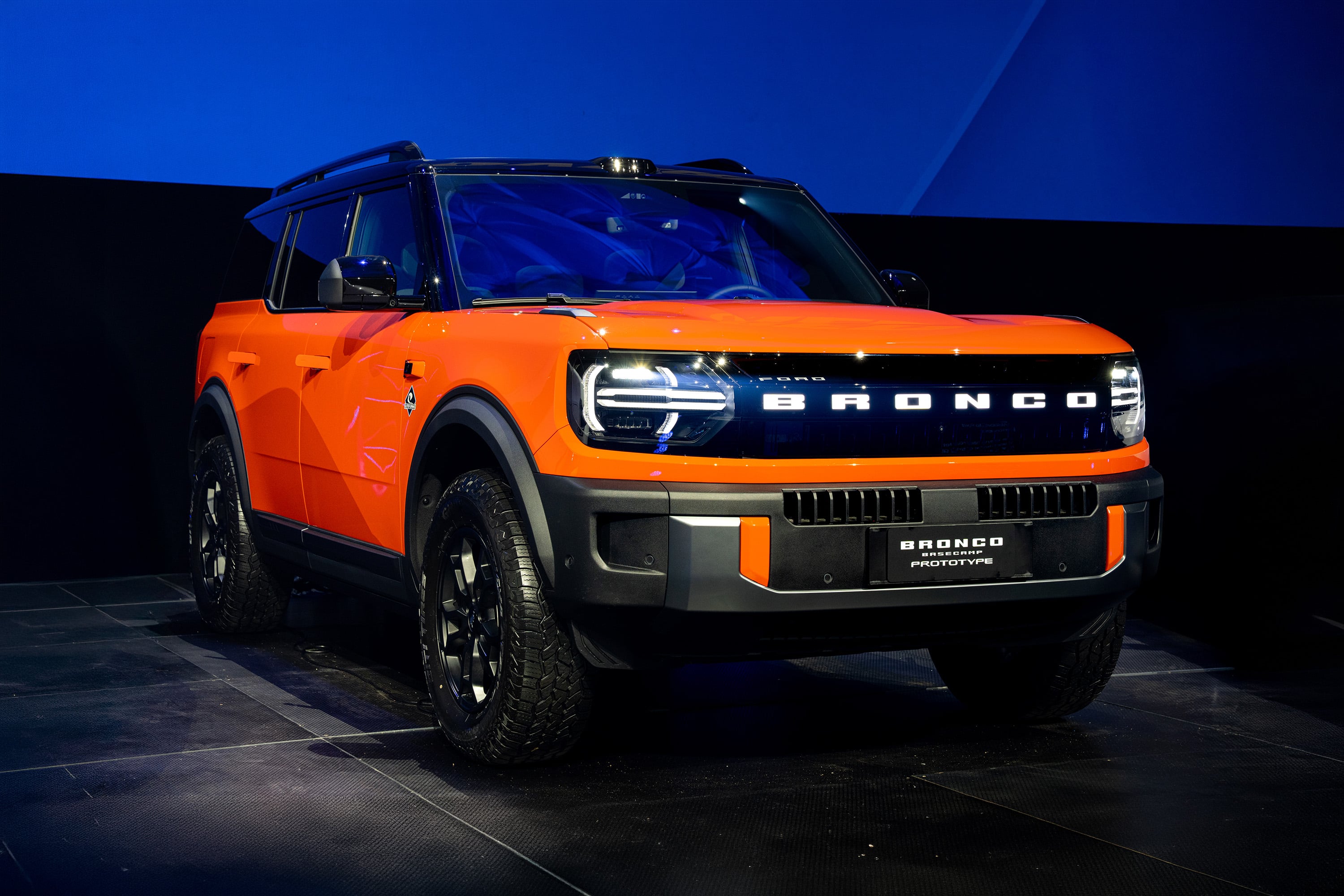
Ford has already committed to an EREV in Australia: the Bronco Basecamp, previously known as the Bronco New Energy, will be sold here exclusively with a range-extender powertrain from the second half of 2027. It will be Ford Australia's first EREV and its second Chinese-made model, following the Transit City electric van, which is due to reach customers this month.
Both of those vehicles are built by Jiangling Motors Corporation (JMC), in which Ford holds a 32 per cent stake. JMC already builds the Ranger in Nanchang for the Chinese market, and it also produces the Australia-bound Bronco Basecamp and its EREV powertrain.
The Ranger PHEV, by contrast, comes to Australia from Ford's Silverton plant in South Africa, the only factory that builds the plug-in. That split matters for anyone trying to guess where a Ranger Crosspower would come from. JMC already has EREV hardware and Ranger assembly experience in China, which makes Nanchang a natural candidate, but Ford has not said where a Crosspower would be built.
What is still unknown
Ford has not confirmed that the Ranger Crosspower will be an EREV at all, let alone announced a launch date, specification, power or torque outputs, battery size, electric range or charging times. Nothing has been said about pricing either, in Australia or elsewhere.
The only firm dates attached to Ford's Australian EREV plans concern the Bronco Basecamp, due in the second half of 2027. A Ranger Crosspower, if it happens, has no publicly stated on-sale timing or showroom price.
For buyers, the appeal of a range-extender ute is straightforward: electric drive for daily work with an engine on board to keep a heavy trailer or a long remote run from depending on charger coverage. Whether Ford prices that proposition close to the diesel Ranger, or positions it as a premium variant, is the open question the trademark does not answer.