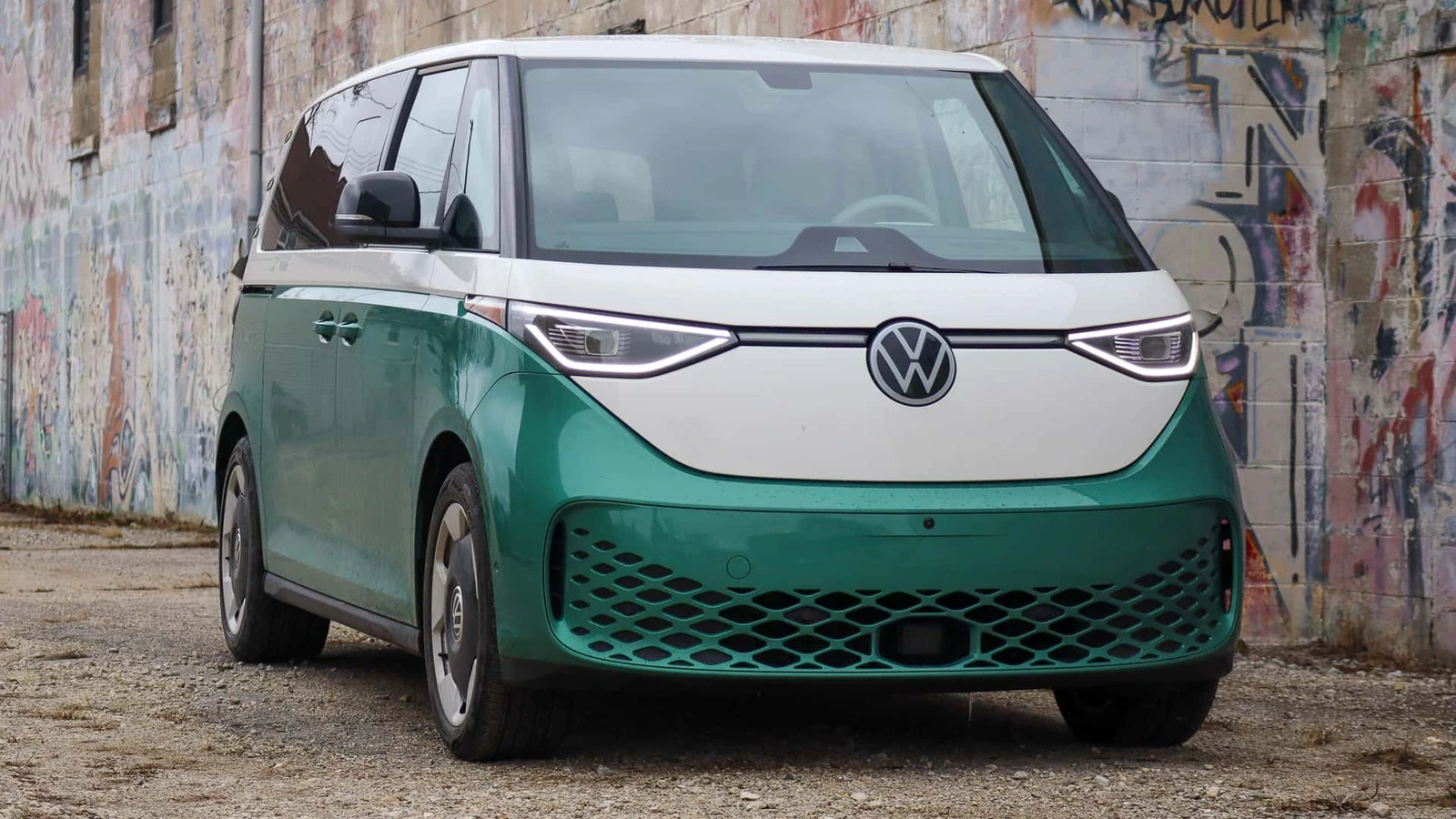
The next-generation Volkswagen ID. Buzz will be built on the SSP architecture rather than today's MEB platform, VW CEO Thomas Schäfer confirmed in an interview at the Paris Motor Show. He admitted the current van is priced from a cost base that limits its sales, and the switch to SSP is meant to fix that through shared development and cheaper battery options.
No launch date or pricing has been announced. The successor is expected to follow VW's first SSP-based SUV, tentatively called the ID. Touareg, which is due before 2030.
What SSP changes for the Buzz
The Scalable Systems Platform supports 800-volt electrical systems, which is where the biggest practical gain should show up. VW has set a platform-wide target of roughly 12 minutes to charge from 5 to 80%, though that figure has not been confirmed for the Buzz specifically.
SSP is also expected to bring improvements in range and software over MEB. Sharing the architecture across the VW Group spreads development and manufacturing costs, which is the mechanism Schäfer pointed to for a lower price. He also hinted at cheaper LFP battery chemistry but set no price target for the new model.
The 800-volt upgrade matters because the current Buzz tops out at slower charging speeds; its official 26-minute charging time was one of the things InsideEVs praised, but the hardware is a generation behind what Korean rivals now offer.
Rivian electronics and a physical-button cabin
The second major change is an electrical architecture developed with Rivian. Powerful central computers will run the vehicle's functions, enabling more advanced driver assistance and infotainment that improves through over-the-air updates.
Inside, the next Buzz will adopt the approach of the new ID. Polo and ID. Tiguan, ditching most touch-sensitive controls for physical switches. That addresses one of the more common complaints about the current van's cabin.
On styling, design chief Andreas Mindt wants to avoid the trap of repeating the same retro look across successive models, as happened with the Beetle. Schäfer sees the Buzz's heritage as an advantage over newer brands, but not every classic name needs reviving; Mindt's stated priorities are stability, likeability and distinctive character.
The current Buzz's problems the successor must fix
Schäfer's cost admission lines up with the van's market performance. InsideEVs' tester cost $66,040 and was criticized for cheap-looking trim, awkward cupholders and missing features, with a 234-mile EPA range that falls short of larger-battery Kia EV9 variants.
VW has already pulled the Buzz from the U.S. for 2026, citing poor sales and a difficult trade environment, then delayed its planned 2027 return. It now comes back for the 2028 model year with true one-pedal driving, updated software and two new trims including a camping-focused variant.
In Europe, an April update added vehicle-to-load capability, physical buttons, revised infotainment and an additional all-wheel-drive option, though that package was not announced for the U.S.
The current generation will likely receive another update before it is replaced, and VW has not confirmed when the SSP successor arrives or what it will cost.