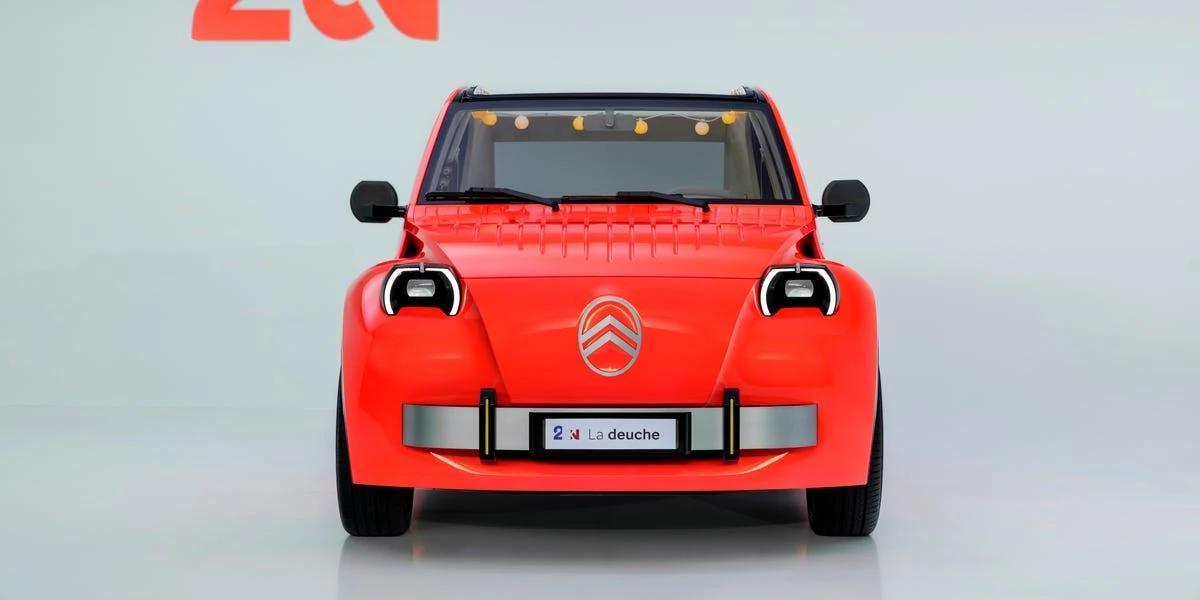
Citroën has revealed a new 2CV concept at the 2026 Paris auto show, previewing a production electric city car that will join the lineup in 2028. The original 2CV, built nearly four million times over a production run of more than 40 years, is the most iconic car in the French brand's history.
Alongside the passenger car, Citroën also showed the 2CV Fourgonnette, a van version with the same front end and a boxy cargo body with roll-up doors on either side. Neither model is confirmed for the United States.
A deliberate throwback, with electric power underneath
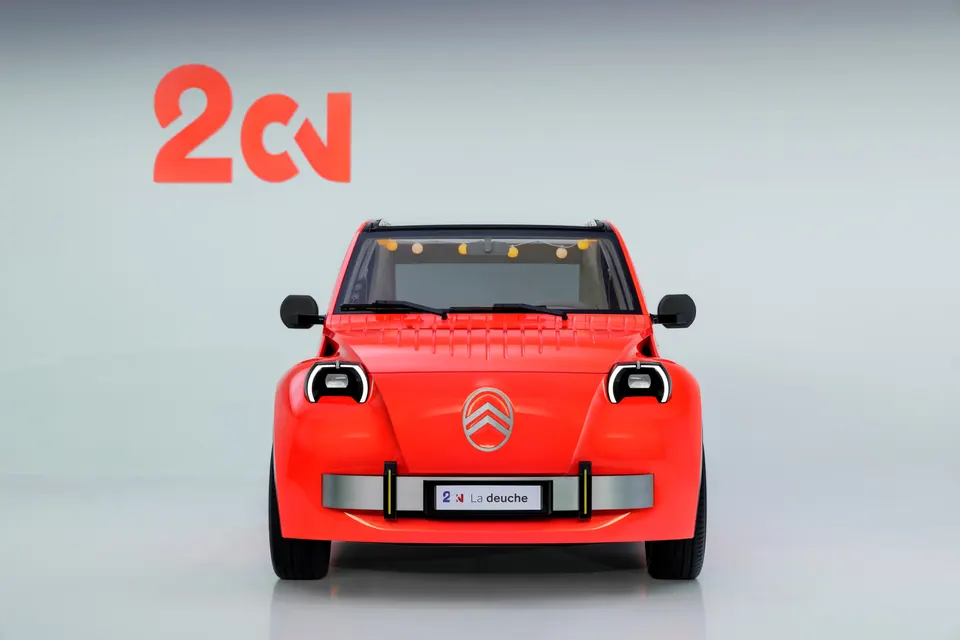
The concept leans hard into retro design. The headlights are LED arches sprouting from pronounced fenders, a chrome bumper protrudes from the front bodywork, and the hood carries vertical indented lines. The door handles are small metal units rather than the flush electronic ones now common on new cars.
At the rear, thin LED taillights sit either side of a black fascia that contrasts with the vibrant orange paint. The 18-inch steel wheels have a large dish in the centre ringed by small spokes, and turn signal indicators are mounted on the C-pillar.
Citroën has not released any powertrain details beyond confirming the car will be electric, a departure from the original's tiny air-cooled engines.

A cabin built for a picnic
The interior is eccentric even by French standards. The bench seats look like deck chairs, with puffy cushions in yellow plaid cloth, and the centre console is a removable wicker basket. Tiny lanterns are strung around the opening of the large fabric sunroof, and the door panels carry straps in place of handles.
The dashboard is minimal: a cylinder extending from the steering column holds the main 8.0-inch touchscreen, with a thin display running along the base of the windscreen. The user interface is styled after comic books, with a hand-drawn look applied to everything from the climate controls to the speedometer and navigation. The sound system hangs under the dash like a classic radio and detaches to work as a portable speaker.

Small, light and cheap by modern standards
Citroën is positioning the new 2CV against the industry trend of cars growing larger and heavier each generation. At 148 inches long it is about four inches shorter than the original 2CV, though five inches longer than a Fiat 500e.
The brand is targeting a kerb weight under about 2200 pounds, which would allow a smaller and less expensive battery. The stated aim is a starting price of around 15,000 euros for the production version, roughly $16,700 at current exchange rates.
That price would undercut almost every new electric car on sale in Europe, and the sub-1000-kilogram weight target is a rarity in a segment where battery costs usually push prices upward. The catch is that Citroën has given no battery capacity, range or charging figures, so the affordability claim rests on the weight target alone.
Fourgonnette van concept joins the show stand
The 2CV Fourgonnette revives the cargo variant of the original, pairing the passenger car's front end with a large box body and roll-up doors on each side. Citroën released few details, and there is no confirmation the van will reach production, though the original 2CV's own commercial variant makes it a plausible companion.