INDEPENDENT AUTOMOTIVE NEWSGLOBAL PERSPECTIVE / AUSTRALIAN EDITION
TDCNTHE DAILY
CAR NEWS.

The road ahead.
Every day.

RSS ↗
Latest/Electric

508 original articles

Electric / TDCN ORIGINAL

Uber logs a record 207 million EV trips but admits its 2030 goals are out of reach

Electric trips rose 52% year on year in the third quarter, yet Uber missed nearly all of its 2025 sustainability targets and says its end-of-decade ambition is unlikely to be met.

Uber drivers completed 207.4 million trips in electric vehicles worldwide in the third quarter of 2025, a 52% increase on the same period last year, the ride-hailing company has disclosed. That works out to more than 26 EV trips every second on average across the quarter.

The number of drivers using an EV on the platform also climbed 52%, to an average of 434,000 active EV drivers between July and September. Despite the gains, Uber concedes that its 2030 emissions goals, based on current trends, "continue to be out of reach".

Europe pulls ahead as North America stalls

The global figures hide a sharp regional split. In Europe, one in five Uber trips in the quarter was made in an EV, while in the US and Canada the ratio was one in ten. Uber's own charts show Europe holding a consistent lead on electrification since the start of 2021, with the two North American markets falling well behind from the third quarter of 2024 onward.

Uber attributes the gap to two factors: European drivers are more inclined toward EVs and hybrids, and the US has more stringent fuel economy reporting standards, which affect how emissions are counted. European uptake has also been helped by incentives and expanded charging infrastructure, while Uber itself has offered cash bonuses to drivers who switch to an EV.

The regional divide matters for anyone watching fleet electrification, because ride-hailing covers high-mileage driving where the emissions difference between a petrol car and an EV is largest. Europe's lead reflects policy and charging support as much as driver preference, and the flat North American line suggests bonuses alone are not shifting the mix.

Emissions per mile improve but remain above 2023 levels

Average emissions per passenger mile in the US and Canada came to 318 grams of CO2 in the quarter, better than 2024's 340 grams but worse than the 306-gram average recorded in 2023. In Europe the figure was 186 grams per mile, down on 2024 and 2023 but above the 183-gram average in 2022.

The pattern is the same on both sides of the Atlantic: a year-on-year improvement that still leaves emissions above where they stood two years earlier. More EV trips have not been enough to offset the drivers who chose petrol or diesel cars to earn on the platform.

Uber misses nearly all of its 2025 targets

Uber had aimed for 100% of rides in London and Amsterdam to be zero-emission in 2025. The year ended at 41%. It also wanted 50% of all mobility miles across seven European capitals completed in EVs; the outcome was 32%.

By the end of the decade, Uber wants 100% of rides in Canada, Europe and the US to be zero-emission, but the company is candid that finishing 2030 at those numbers is highly unlikely. It says it remains "deeply committed to this transition" while acknowledging that many of the levers are outside its control.

That admission is the most telling part of the disclosure. Uber can incentivise drivers and set platform targets, but the pace of electrification depends on vehicle prices, charging access and government policy in each market, which is why the company's own numbers show progress and shortfall at the same time.
Open this article ↗
Electric / TDCN ORIGINAL

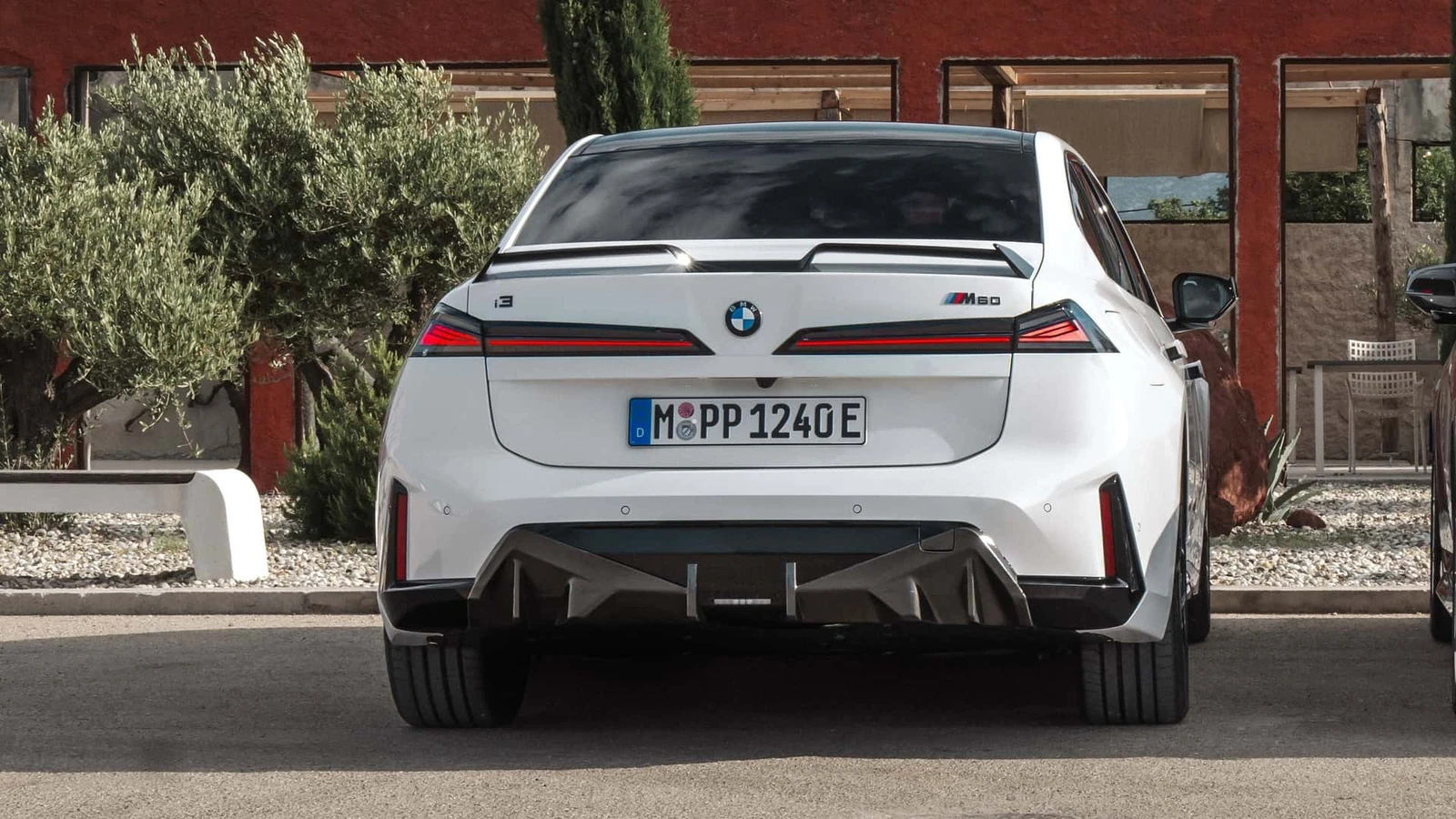
BMW adopts simulated gear shifts on the i3 M60 after calling Hyundai's version a gimmick

The M Performance electric sedan gets paddle-controlled "Stages" and an artificial soundtrack from next year, but BMW has not said how many stages there are.

Image: Motor1

BMW will introduce simulated gear changes on the i3 M60 xDrive next year, reversing its earlier dismissal of the technology as a "funny gimmick" when Hyundai launched it on the Ioniq 5 N. The system uses steering-wheel paddles to trigger artificial shifts that BMW calls "Stages" rather than gears.

The feature was signposted in official i3 M60 images released at the end of September, one of which showed red-accented shift paddles behind the steering wheel, although BMW M did not detail the technical specifications at the time.

Why BMW changed its mind

BMW senior driving dynamics engineer Christian Heiss told Australian publication Carsales that the company's first reaction to Hyundai's setup was scepticism: "We at BMW thought: well, that's a funny gimmick. We're in an electric world; why copy things out of the combustion engine?" Engineers focused on driving dynamics argued the case instead, saying paddle shifting brings drivability and feedback benefits, particularly on track.

BMW M head of development Alexander Karajlovic told British magazine PistonHeads that conventional gears give drivers feedback an EV otherwise lacks, and the aim is to keep that advantage without the drawbacks of a real gearbox. The company tested the Hyundai Ioniq 5 N and other performance EVs before deciding to proceed with its own interpretation.

Heiss described the result as close to a gearbox simulation without being called one: "everyone hoping for a gear shift simulation will be happy with this, hopefully even more than happy".

How BMW's system differs from Hyundai's

Hyundai's N e-Shift artificially limits torque according to the selected ratio. BMW's version will not: the electric M3 is set to deliver the same torque throughout, so drivers get the sensation of shifting without an artificial performance cap. That distinction matters because it keeps the car's full output available at all times, making the feature an engagement device rather than a lap-time variable.

BMW has not revealed how many Stages the system will offer. The i3 M60 will also come with an artificial soundtrack to accompany the simulated shifts.

What the i3 M60 is expected to deliver

The dual-motor i3 M60 xDrive is expected to match the iX3 M60 with 603 horsepower and 645 lb-ft (875 Nm) of torque. Weighing less than the SUV, the sedan could accelerate to 62 mph (100 km/h) slightly quicker than the iX3 M60's 3.9 seconds, and its more aerodynamic shape could yield better range than the iX3 M60's WLTP-rated 468 miles (754 km). BMW quotes a 149 mph (240 km/h) top speed for the high-riding model. Those sedan figures are expectations rather than confirmed numbers.

Reserved for M cars

Simulated shifting will not spread across the whole i3 range. Heiss confirmed it is reserved for M Performance models, starting with the M60. The full electric M3, due in 2027 with more power and an already confirmed quad-motor setup, is expected to get it too.

BMW is not alone in adding fake shifts: Porsche offers simulated gear changes in the Taycan and Mercedes-AMG in the GT 4-Door Coupe, both with artificial engine sounds through the speakers. For buyers weighing an electric performance sedan, the pitch is engagement rather than extra speed, and BMW's version stands apart by leaving torque untouched.

Open this article ↗

Keep scrolling to read the next story.

Older articles →