INDEPENDENT AUTOMOTIVE NEWSGLOBAL PERSPECTIVE / AUSTRALIAN EDITION
TDCNTHE DAILY
CAR NEWS.

The road ahead.
Every day.

RSS ↗
Latest/New cars

508 original articles

New cars / TDCN ORIGINAL

Audi signals next RS6 Avant will reach the US, with a hybrid V8 tipped

Audi of America's product chief says a global RS6 Avant would be sold in the US, but powertrain details and timing remain unconfirmed.

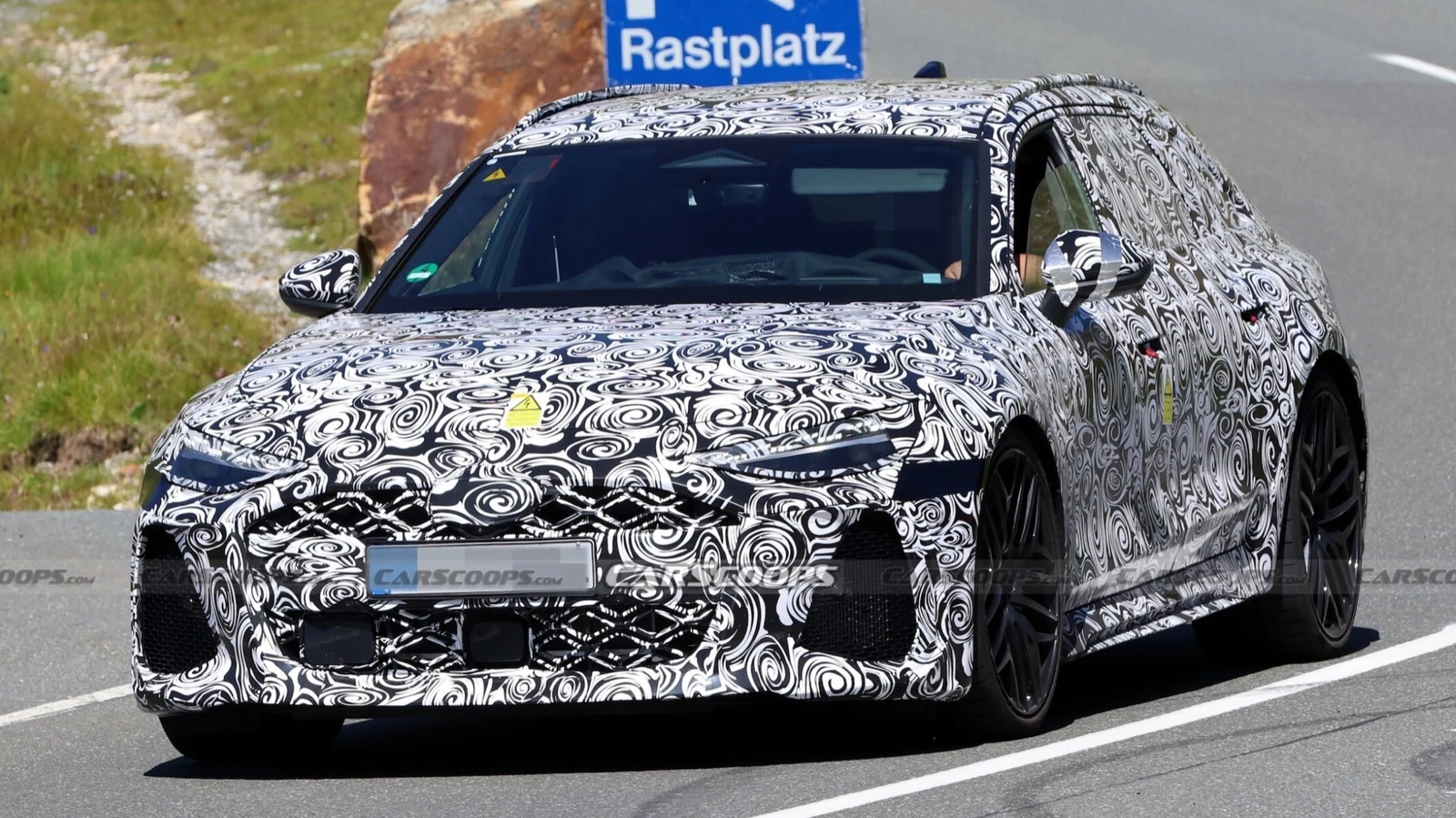
Image: Carscoops

Audi has signalled that the next-generation RS6 Avant will be sold in the United States, with a senior US product executive saying the wagon's global availability would carry over to the American market. The comment, made in an interview with The Drive, points to a successor for the performance wagon that Audi has been testing in both Avant and sedan body styles this year.

Audi's US product boss on the RS6's American future

Filip Brabec, Audi of America's senior vice president of product management, told The Drive that "if there is globally an RS6 Avant, then it will come to America". The phrasing stops short of a formal confirmation of the next-generation model, but it is the clearest signal yet that the fast wagon will stay on US price lists.

Brabec also recalled that securing approval to sell the outgoing RS6 Avant in the US was not straightforward, and that once it arrived it "superseded any kind of internal expectations". He described the original planning as ambitious. That matters because the RS6 Avant's US availability was itself a break with precedent: Audi only announced in 2019 that the wagon would be sold in America for the first time.

Powertrain still unconfirmed, with a V8 plug-in hybrid tipped

Audi has not confirmed technical details for the new RS6 Avant or the sedan version. The strongest indication is that it will use the twin-turbocharged 4.0-litre V8 plug-in hybrid powertrain from the Bentley Continental GT Speed, which could produce around 740 horsepower in this application.

That would put it well clear of the outgoing RS6 Avant GT, which produces 621 hp, and ahead of the BMW M5 at 717 hp. A twin-turbo 2.9-litre V6 plug-in hybrid has also been suggested in other reports, though Carscoops is unconvinced, partly because the heavy Audi RS5 already uses that engine and sharing it with a cheaper, smaller model could complicate the RS6's positioning.

Whatever engine is chosen, it is likely to be paired with an eight-speed automatic transmission and an advanced all-wheel-drive system with electromechanical torque vectoring similar to the new RS5's. The plug-in hybrid system is likely to make the new RS6 heavier than its predecessor, but it has the potential to handle better and feel more dynamic.
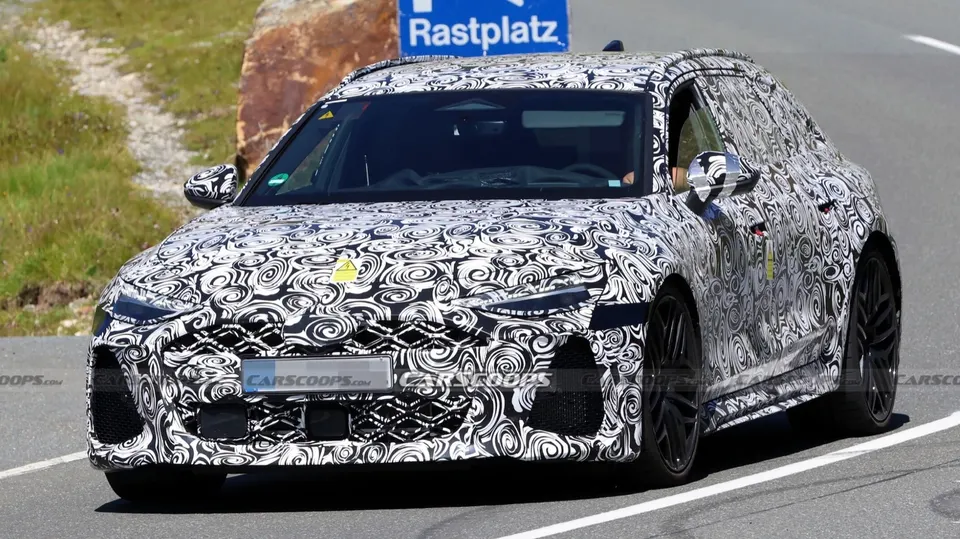
A camouflaged next-gen RS6 Avant prototype caught testing, hinting at the hybrid V8 powertrain expected to reach US shores.
A camouflaged next-gen RS6 Avant prototype caught testing, hinting at the hybrid V8 powertrain expected to reach US shores., Image: Carscoops

RS5 Avant could follow, but nothing is confirmed

Brabec left the door open for the smaller RS5 Avant to be sold in the US as well. Asked whether it will be imported, he said Audi sees potential in it, that the company has "tried various times", and that there is "nothing to announce today".

The distinction is worth keeping in mind: the RS6 Avant's US future rests on a conditional statement from a senior executive rather than a formal product announcement, and the RS5 Avant sits a step further back again. Audi has not announced US pricing, an on-sale date or final output figures for either car, so the headline number of around 740 hp remains a reported expectation rather than a confirmed specification.
Open this article ↗
Electric / TDCN ORIGINAL

Uber logs a record 207 million EV trips but admits its 2030 goals are out of reach

Electric trips rose 52% year on year in the third quarter, yet Uber missed nearly all of its 2025 sustainability targets and says its end-of-decade ambition is unlikely to be met.

Uber drivers completed 207.4 million trips in electric vehicles worldwide in the third quarter of 2025, a 52% increase on the same period last year, the ride-hailing company has disclosed. That works out to more than 26 EV trips every second on average across the quarter.

The number of drivers using an EV on the platform also climbed 52%, to an average of 434,000 active EV drivers between July and September. Despite the gains, Uber concedes that its 2030 emissions goals, based on current trends, "continue to be out of reach".

Europe pulls ahead as North America stalls

The global figures hide a sharp regional split. In Europe, one in five Uber trips in the quarter was made in an EV, while in the US and Canada the ratio was one in ten. Uber's own charts show Europe holding a consistent lead on electrification since the start of 2021, with the two North American markets falling well behind from the third quarter of 2024 onward.

Uber attributes the gap to two factors: European drivers are more inclined toward EVs and hybrids, and the US has more stringent fuel economy reporting standards, which affect how emissions are counted. European uptake has also been helped by incentives and expanded charging infrastructure, while Uber itself has offered cash bonuses to drivers who switch to an EV.

The regional divide matters for anyone watching fleet electrification, because ride-hailing covers high-mileage driving where the emissions difference between a petrol car and an EV is largest. Europe's lead reflects policy and charging support as much as driver preference, and the flat North American line suggests bonuses alone are not shifting the mix.

Emissions per mile improve but remain above 2023 levels

Average emissions per passenger mile in the US and Canada came to 318 grams of CO2 in the quarter, better than 2024's 340 grams but worse than the 306-gram average recorded in 2023. In Europe the figure was 186 grams per mile, down on 2024 and 2023 but above the 183-gram average in 2022.

The pattern is the same on both sides of the Atlantic: a year-on-year improvement that still leaves emissions above where they stood two years earlier. More EV trips have not been enough to offset the drivers who chose petrol or diesel cars to earn on the platform.

Uber misses nearly all of its 2025 targets

Uber had aimed for 100% of rides in London and Amsterdam to be zero-emission in 2025. The year ended at 41%. It also wanted 50% of all mobility miles across seven European capitals completed in EVs; the outcome was 32%.

By the end of the decade, Uber wants 100% of rides in Canada, Europe and the US to be zero-emission, but the company is candid that finishing 2030 at those numbers is highly unlikely. It says it remains "deeply committed to this transition" while acknowledging that many of the levers are outside its control.

That admission is the most telling part of the disclosure. Uber can incentivise drivers and set platform targets, but the pace of electrification depends on vehicle prices, charging access and government policy in each market, which is why the company's own numbers show progress and shortfall at the same time.

Open this article ↗

Keep scrolling to read the next story.

Older articles →