INDEPENDENT AUTOMOTIVE NEWSGLOBAL PERSPECTIVE / AUSTRALIAN EDITION
TDCNTHE DAILY
CAR NEWS.

The road ahead.
Every day.

RSS ↗
Latest/New cars

509 original articles

New cars / TDCN ORIGINAL

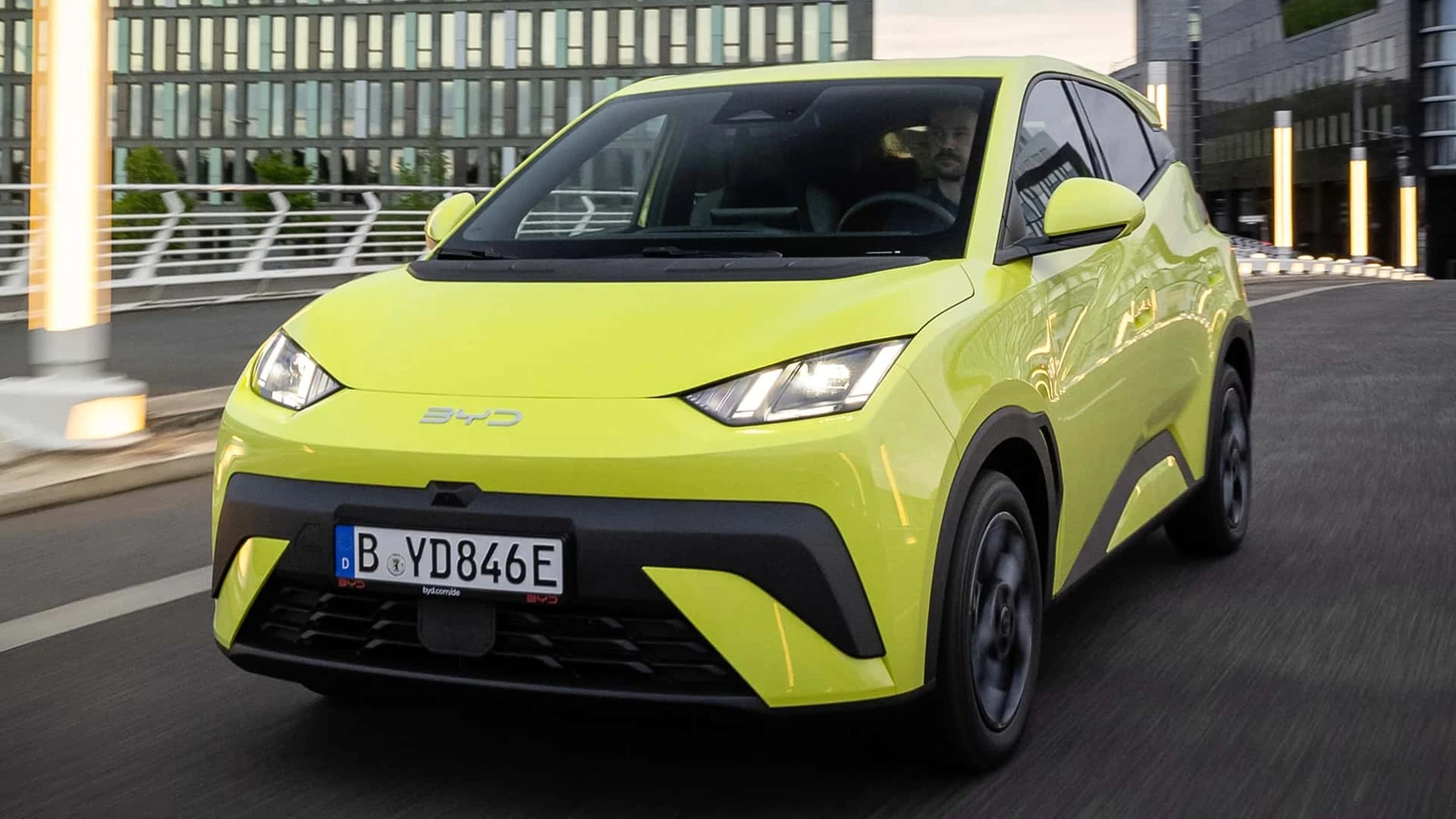
Germany restricts connected Chinese cars at Bundeswehr sites over sensor data fears

Defence ministry says the limits target connected vehicles generally, not named brands, and local security officers decide access site by site.

Image: Motor1

Germany's armed forces are turning away some connected Chinese cars from sensitive Bundeswehr sites, with BYD, Nio and Geely models among those affected, over what their cameras and sensors might record. The defence ministry says the restriction applies to connected vehicles broadly rather than to a named list of brands or countries, and that soldiers driving an affected car must park outside and walk in.

What the restriction actually covers

Defence ministry spokesperson Mitko Müller told a government press conference on November 11 that local security officers set access rules site by site. A connected car might be kept out of one restricted zone while still parking in a lot farther from sensitive buildings.

That local discretion means there is no single published list of banned models, and officials have not confirmed whether brands beyond BYD, Nio and Geely are involved. The ministry named cameras, microphones, radar and ultrasonic sensors as the equipment behind the concern, all of it hardware that gathers data about a car's surroundings for parking assist or driver monitoring. Near a barracks, the same kit could map layouts, routines and equipment.

The rules are not limited to electric cars. They apply to any connected vehicle carrying that sensor suite, whatever its powertrain or country of origin. That breadth is why scrutiny has widened beyond a single automaker, and why Geely's German exposure runs further than its own badge, through Volvo, Polestar, Lynk & Co, Zeekr, Lotus and its joint ownership of Smart with Mercedes-Benz.

Unconfirmed intelligence assessment behind the move

Bloomberg reported that people familiar with a nonpublic counterintelligence assessment said Germany barred certain vehicles from bases because their signals could potentially collect and pass on data. Two days earlier, Der Spiegel reported that lists circulating inside the Bundeswehr name specific Chinese models barred from facilities classified as security areas.

Stuttgarter Zeitung reported that no publicly substantiated evidence shows any of these cars sent Bundeswehr data to Chinese intelligence services, and the entry limits are described as precautionary. That distinction matters for drivers: the restriction is a gate policy built on risk, not a finding of wrongdoing, so the practical effect is a longer walk from the car park rather than a recall or a sales ban.

A separate drone decision, and a widening pattern

The vehicle restriction sits apart from an already confirmed decision: the Bundeswehr will stop using Chinese-made drones for training and replace them with German or other European models, covering future training and exercises.

Germany is not alone. Poland restricted Chinese-made vehicles at military facilities in February, covering any car able to record location, video or sound unless those functions are switched off. In October, the US military barred privately owned BYD vehicles from entering Kadena Air Base in Okinawa, Japan, citing security risks tied to the same sensor categories.

For buyers, the signal is that connected-car scrutiny is becoming a facilities-level question as much as a trade one. A car's sensor suite can now determine where it is welcome, independent of how it is powered or where its badge was designed.
Open this article ↗
New cars / TDCN ORIGINAL

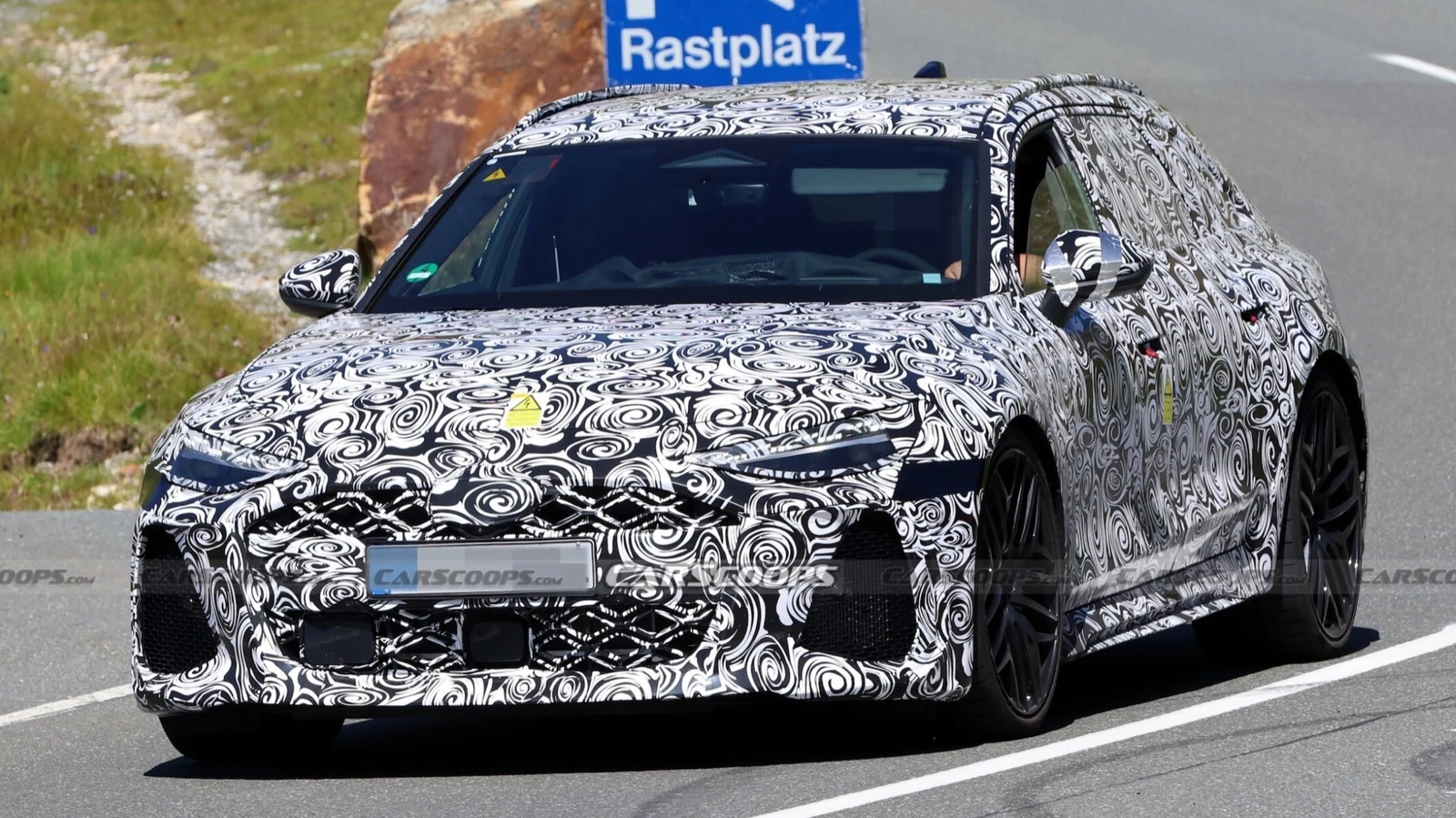
Audi signals next RS6 Avant will reach the US, with a hybrid V8 tipped

Audi of America's product chief says a global RS6 Avant would be sold in the US, but powertrain details and timing remain unconfirmed.

Image: Carscoops

Audi has signalled that the next-generation RS6 Avant will be sold in the United States, with a senior US product executive saying the wagon's global availability would carry over to the American market. The comment, made in an interview with The Drive, points to a successor for the performance wagon that Audi has been testing in both Avant and sedan body styles this year.

Audi's US product boss on the RS6's American future

Filip Brabec, Audi of America's senior vice president of product management, told The Drive that "if there is globally an RS6 Avant, then it will come to America". The phrasing stops short of a formal confirmation of the next-generation model, but it is the clearest signal yet that the fast wagon will stay on US price lists.

Brabec also recalled that securing approval to sell the outgoing RS6 Avant in the US was not straightforward, and that once it arrived it "superseded any kind of internal expectations". He described the original planning as ambitious. That matters because the RS6 Avant's US availability was itself a break with precedent: Audi only announced in 2019 that the wagon would be sold in America for the first time.

Powertrain still unconfirmed, with a V8 plug-in hybrid tipped

Audi has not confirmed technical details for the new RS6 Avant or the sedan version. The strongest indication is that it will use the twin-turbocharged 4.0-litre V8 plug-in hybrid powertrain from the Bentley Continental GT Speed, which could produce around 740 horsepower in this application.

That would put it well clear of the outgoing RS6 Avant GT, which produces 621 hp, and ahead of the BMW M5 at 717 hp. A twin-turbo 2.9-litre V6 plug-in hybrid has also been suggested in other reports, though Carscoops is unconvinced, partly because the heavy Audi RS5 already uses that engine and sharing it with a cheaper, smaller model could complicate the RS6's positioning.

Whatever engine is chosen, it is likely to be paired with an eight-speed automatic transmission and an advanced all-wheel-drive system with electromechanical torque vectoring similar to the new RS5's. The plug-in hybrid system is likely to make the new RS6 heavier than its predecessor, but it has the potential to handle better and feel more dynamic.

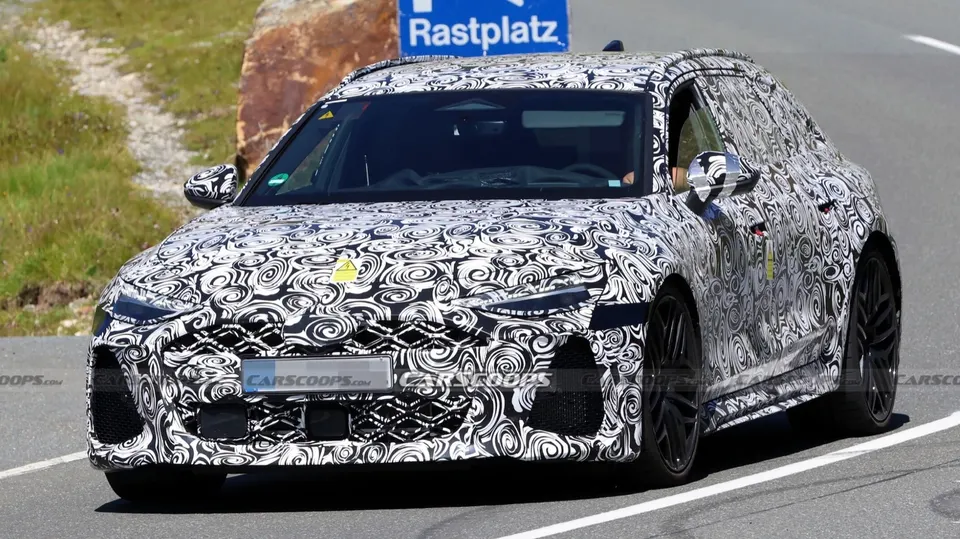
A camouflaged next-gen RS6 Avant prototype caught testing, hinting at the hybrid V8 powertrain expected to reach US shores.
A camouflaged next-gen RS6 Avant prototype caught testing, hinting at the hybrid V8 powertrain expected to reach US shores., Image: Carscoops

RS5 Avant could follow, but nothing is confirmed

Brabec left the door open for the smaller RS5 Avant to be sold in the US as well. Asked whether it will be imported, he said Audi sees potential in it, that the company has "tried various times", and that there is "nothing to announce today".

The distinction is worth keeping in mind: the RS6 Avant's US future rests on a conditional statement from a senior executive rather than a formal product announcement, and the RS5 Avant sits a step further back again. Audi has not announced US pricing, an on-sale date or final output figures for either car, so the headline number of around 740 hp remains a reported expectation rather than a confirmed specification.

Open this article ↗

Keep scrolling to read the next story.

Older articles →