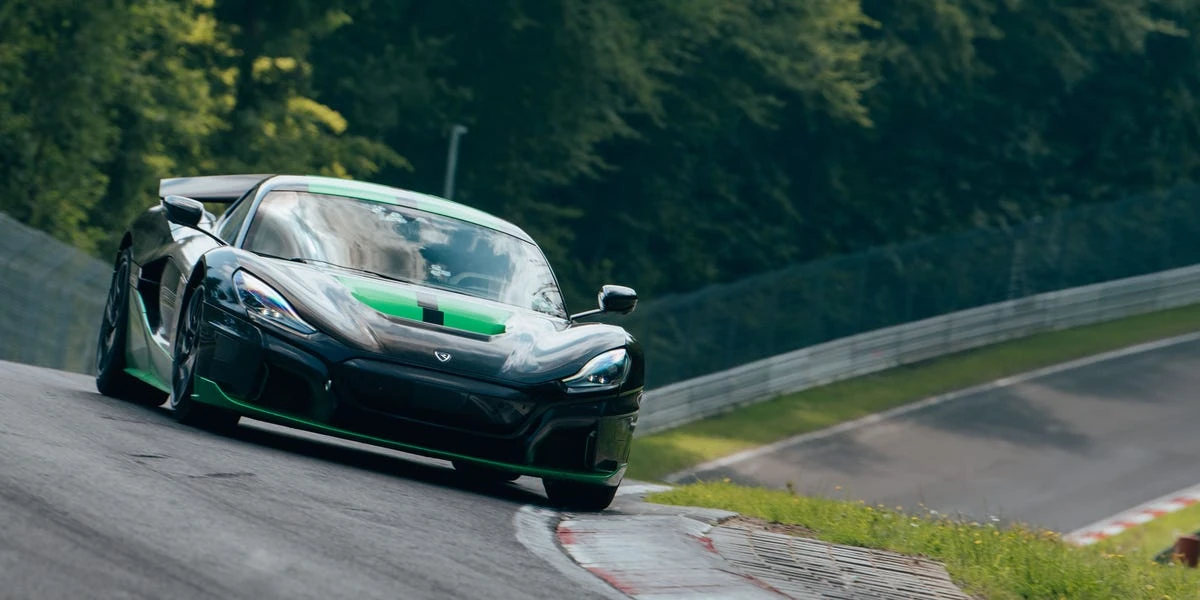
Rimac will reportedly stop building the Nevera at the end of 2026, closing out the electric hypercar's production run with far fewer cars than originally planned. According to a report from Germany's Auto Motor und Sport, cited by Car and Driver, just 71 of 190 planned Neveras were built.
The reported breakdown is 51 base-model Neveras against a plan for 150, and 20 Nevera Rs against a plan for 40. Rimac has not confirmed the figures publicly in the material available, so the tally should be treated as unconfirmed until the company says otherwise.
A record-breaker that did not convert into orders
The Nevera and its later R variant collected a stack of performance records, including the title of world's quickest car, an EV lap record at the Nürburgring Nordschleife and a quarter-mile run under 7.9 seconds. Those numbers did not translate into buyer demand at the scale Rimac had projected.
The shortfall is not a Nevera-specific problem. Lotus once pitched the Evija directly against the Nevera but has since shifted to a hybrid V-8 supercar, and Porsche, a former Rimac stakeholder, considered an electric hypercar before pivoting to an internal-combustion model. Even with the Tesla Roadster and Yangwang U9 Xtreme grabbing headlines for record-setting stunts, it is still an open question whether a conventional hypercar buyer wants to pay for an EV.
That matters because the Nevera's commercial result says less about electric performance than about the customer base for very expensive, very fast cars. The buyers who spend hypercar money have historically rewarded noise, heritage and scarcity, and the Nevera's record sheet did not override those priorities.
What the Nevera did achieve for Rimac
Commercially underwhelming or not, the Nevera raised Rimac's profile considerably. Founder Mate Rimac is now fully in charge of Bugatti, and Rimac Technology supplies electric powertrain components to major programmes including the Porsche 911 Turbo S.
Alongside the closely related Pininfarina Battista, the Nevera stands as the most significant electric hypercar to reach the market so far, and the handful of cars in private hands represent a genuine step forward for electric performance and for the Rimac brand. For drivers and buyers, that legacy may prove more consequential than the sales tally: Rimac's influence now runs through other manufacturers' cars rather than only its own.
What replaces the Nevera
Rimac has not announced a direct Nevera successor in the source material, so what fills the model's place in the line-up is not yet confirmed. The company's future output is now split between Bugatti under Mate Rimac's leadership and Rimac Technology's role as an electric powertrain supplier to other brands.
The end-of-2026 date and the 71-car total both trace back to the Auto Motor und Sport report, so both remain unconfirmed until Rimac itself comments.