INDEPENDENT AUTOMOTIVE NEWSGLOBAL PERSPECTIVE / AUSTRALIAN EDITION
TDCNTHE DAILY
CAR NEWS.

The road ahead.
Every day.

RSS ↗
Latest/New cars

520 original articles

New cars / TDCN ORIGINAL

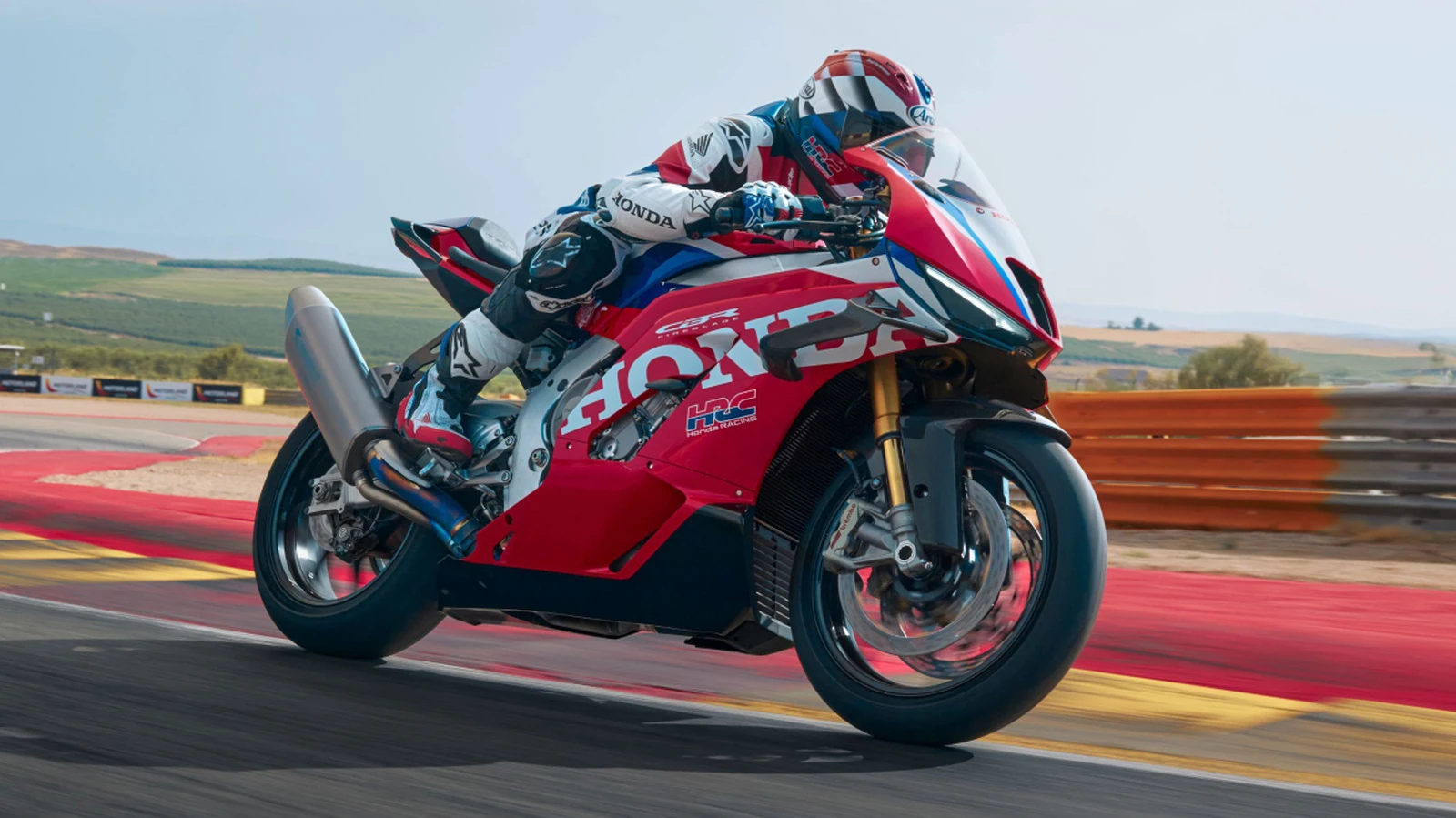
Honda updates Fireblade for 2027 with 214 hp engine and HRC Works Edition

Honda says around 75% of the CBR1000RR-R's parts are new, and the range now includes a road-going take on its World Superbike racer.

Image: Carscoops

Honda has revealed a 2027 update for its CBR1000RR-R Fireblade, a three-bike range that pairs a 999 cc inline-four with a new chassis and, at the top, a road-going homologation special of its Superbike World Championship machine. The standard Fireblade, the Fireblade SP and the Fireblade HRC Works Edition all share the same 214 horsepower at 14,000 rpm and 84.1 pound-feet of torque at 10,500 rpm.

Honda says roughly 75% of the bike's parts have been redesigned for the new model year, including a new twin-tube aluminium frame and revised engine cylinder hangers. Pricing and an on-sale date have not been announced in the material available so far.

A shared engine with a new intake and throttle system

All three versions run the naturally aspirated inline-four, and Honda has fitted a two-piece intake funnel that adjusts the length and diameter of the intake passage according to vehicle speed, which the company says improves power at lower revs. The throttle-by-wire system has also been revised for greater response and engine braking.

The engine work sits alongside chassis changes. Honda says the new frame and improved cylinder hangers keep the same torsional rigidity as the previous bike while cutting lateral rigidity by 20%, which it claims improves cornering performance. A new swingarm reduces lateral rigidity to sharpen tyre feel, and Honda has reworked the Showa suspension on the standard Fireblade and the electronically controlled Öhlins suspension on the SP.

That lateral-rigidity reduction is a deliberate trade: a supersport machine lives or dies on front-end feel, and Honda is effectively tuning flex rather than chasing stiffness numbers. Whether riders notice it on the road, where most of these bikes spend their time, is the open question the spec sheet cannot answer.

Titanium tank and a race-derived Works Edition

A lightweight titanium fuel tank with an area of exposed titanium is one of the more visible changes across the range. At the top sits the HRC Works Edition, which comes with mechanically adjustable Öhlins NPX front forks and TTX36 rear suspension plus Brembo Hypure Sports brake components.

That version adds carbon fibre front winglets, a carbon front fender and a carbon rear fairing, and can be ordered with an HRC Racing Kit that brings a bottom-neutral shift system, head pipe collar, swingarm pivot collar, and PFM-FI and ignition system. It is sold only in red and is a strict single-seater.

Honda quotes a claimed 438.7 pounds (about 199 kg) for the base CBR1000RR-R, 443.1 lbs for the Fireblade SP and 440.9 lbs for the HRC Works Edition. The Works Edition's extra hardware explains why it is not the lightest of the three, even though it sits at the top of the range.
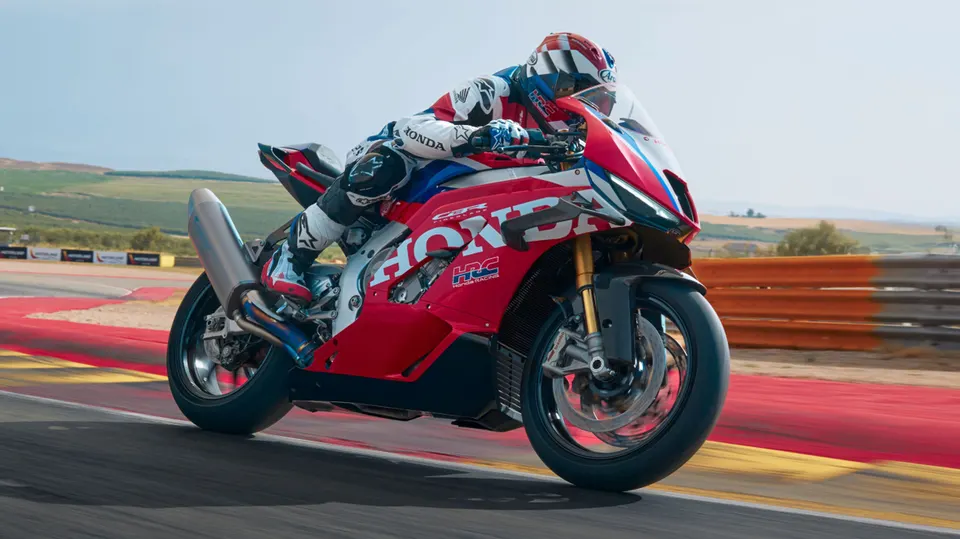
The updated Fireblade in HRC colors testing on track, hinting at the race-derived Works Edition
The updated Fireblade in HRC colors testing on track, hinting at the race-derived Works Edition, Image: Carscoops

What is still unknown

The sources confirm the 2027 model year and the specification, but Honda has not yet announced prices or a precise on-sale date for the range. Australian availability and local pricing are likewise not confirmed in the material released so far, so buyers here should treat the 2027 Fireblade as a confirmed model without a confirmed local sticker price.
Open this article ↗
Electric / TDCN ORIGINAL

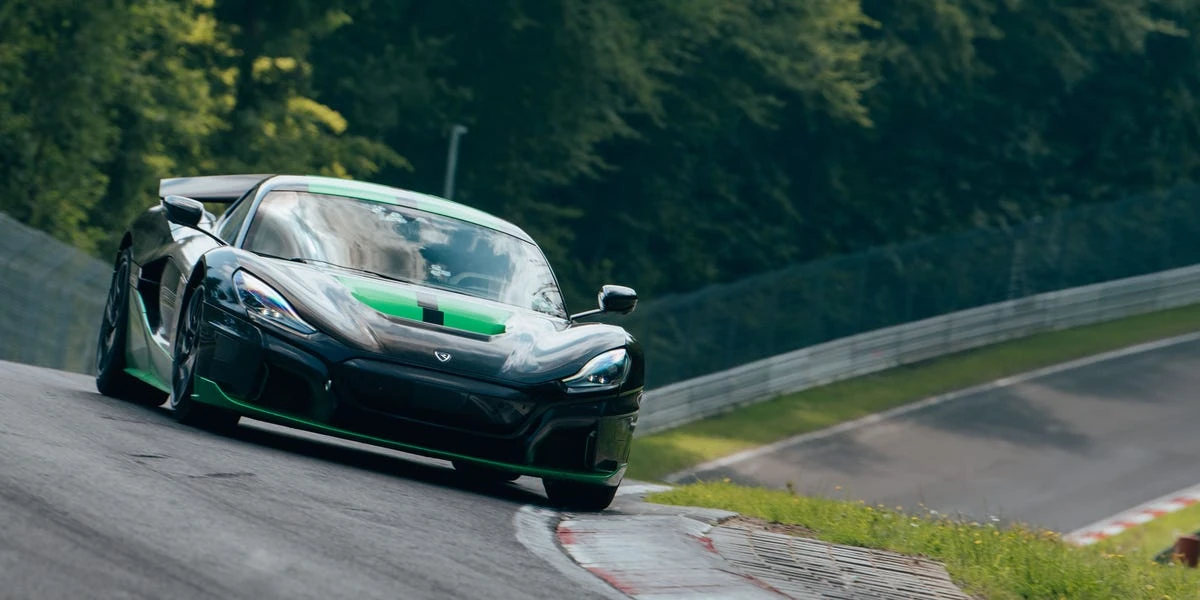
Rimac reportedly to end Nevera production after building 71 of 190 planned cars

A German report says the electric hypercar's run wraps up at the end of 2026, with the base Nevera and R variant both falling well short of planned volumes.

Rimac will reportedly stop building the Nevera at the end of 2026, closing out the electric hypercar's production run with far fewer cars than originally planned. According to a report from Germany's Auto Motor und Sport, cited by Car and Driver, just 71 of 190 planned Neveras were built.

The reported breakdown is 51 base-model Neveras against a plan for 150, and 20 Nevera Rs against a plan for 40. Rimac has not confirmed the figures publicly in the material available, so the tally should be treated as unconfirmed until the company says otherwise.

A record-breaker that did not convert into orders

The Nevera and its later R variant collected a stack of performance records, including the title of world's quickest car, an EV lap record at the Nürburgring Nordschleife and a quarter-mile run under 7.9 seconds. Those numbers did not translate into buyer demand at the scale Rimac had projected.

The shortfall is not a Nevera-specific problem. Lotus once pitched the Evija directly against the Nevera but has since shifted to a hybrid V-8 supercar, and Porsche, a former Rimac stakeholder, considered an electric hypercar before pivoting to an internal-combustion model. Even with the Tesla Roadster and Yangwang U9 Xtreme grabbing headlines for record-setting stunts, it is still an open question whether a conventional hypercar buyer wants to pay for an EV.

That matters because the Nevera's commercial result says less about electric performance than about the customer base for very expensive, very fast cars. The buyers who spend hypercar money have historically rewarded noise, heritage and scarcity, and the Nevera's record sheet did not override those priorities.

What the Nevera did achieve for Rimac

Commercially underwhelming or not, the Nevera raised Rimac's profile considerably. Founder Mate Rimac is now fully in charge of Bugatti, and Rimac Technology supplies electric powertrain components to major programmes including the Porsche 911 Turbo S.

Alongside the closely related Pininfarina Battista, the Nevera stands as the most significant electric hypercar to reach the market so far, and the handful of cars in private hands represent a genuine step forward for electric performance and for the Rimac brand. For drivers and buyers, that legacy may prove more consequential than the sales tally: Rimac's influence now runs through other manufacturers' cars rather than only its own.

What replaces the Nevera

Rimac has not announced a direct Nevera successor in the source material, so what fills the model's place in the line-up is not yet confirmed. The company's future output is now split between Bugatti under Mate Rimac's leadership and Rimac Technology's role as an electric powertrain supplier to other brands.

The end-of-2026 date and the 71-car total both trace back to the Auto Motor und Sport report, so both remain unconfirmed until Rimac itself comments.

Open this article ↗

Keep scrolling to read the next story.

Older articles →