INDEPENDENT AUTOMOTIVE NEWSGLOBAL PERSPECTIVE / AUSTRALIAN EDITION
TDCNTHE DAILY
CAR NEWS.

The road ahead.
Every day.

RSS ↗
Latest/New cars

516 original articles

New cars / TDCN ORIGINAL

A 2005 VW Golf with 104 miles on the clock sells at auction for €13,700

The single-owner French hatchback, a 2.0 FSI Carat kept in a dark garage for 21 years, drew a bid below its pre-sale estimate.

Image: Carscoops

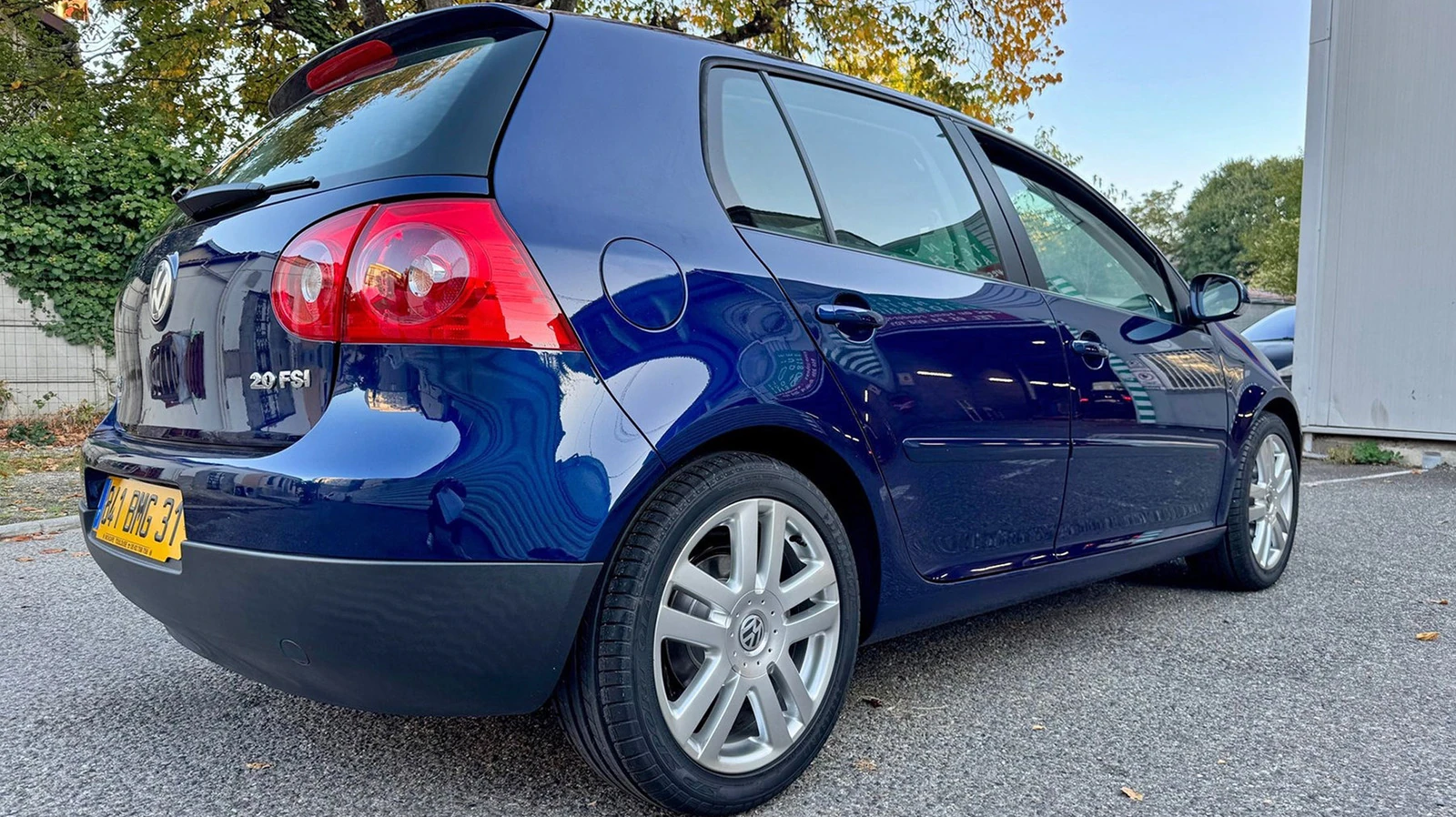
A fifth-generation Volkswagen Golf delivered new in Toulouse in May 2005 has been auctioned with just 104 miles (167 km) on its odometer, after spending 21 years stored in a closed garage. The winning bid on Catawiki was €13,700 ($15,200), short of the €18,000-20,000 ($19,900-22,100) the listing had expected.

What the auction bought

The car is a Golf 2.0 FSI in Carat trim, the high-end specification of its day, and it retains its original delivery paperwork, two original keys and a stamped service book. The listing describes a single owner who kept it shielded from light, dust and humidity, and the car is said to show no defects, wear or missing parts, with unclouded headlights and unchipped 17-inch alloy wheels.

Anyone planning to drive it should expect some basic maintenance first, since two decades of storage are not the same as two decades of use. The upside is that low-mileage fifth-generation Golfs in this condition are scarce, and matching one outside Volkswagen's own collection would be difficult.
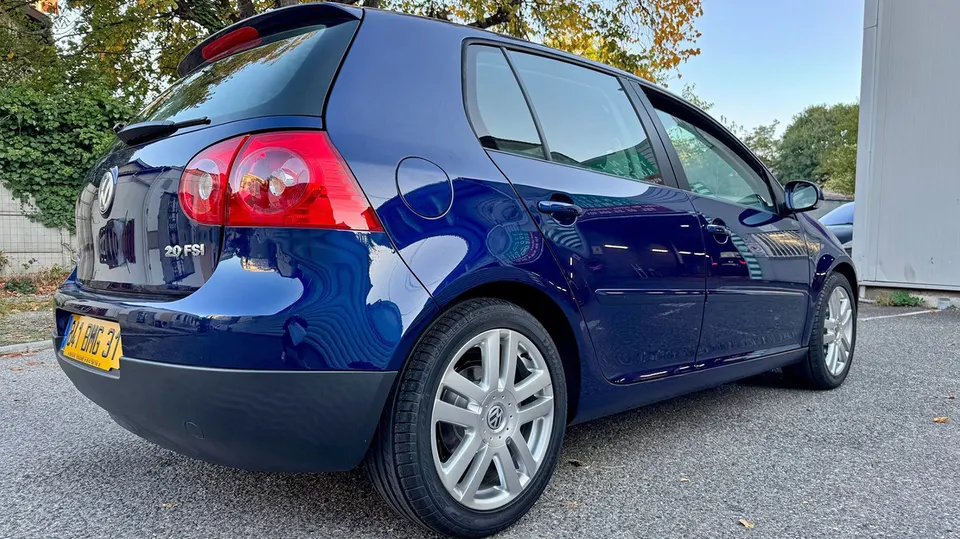
The 104-mile 2005 Golf as auctioned, its factory-fresh bodywork and alloys on display
The 104-mile 2005 Golf as auctioned, its factory-fresh bodywork and alloys on display, Image: Carscoops

Specification and equipment

The 2.0 FSI is a naturally aspirated four-cylinder petrol engine producing 148 hp (110 kW / 150 PS) and 200 Nm (147 lb-ft) of torque, sent to the front axle through a six-speed manual gearbox. Volkswagen's official figures put the 0-100 km/h (0-62 mph) sprint at 8.8 seconds and top speed at 209 km/h (130 mph). Automatic and 4Motion versions of the 2.0 FSI existed, but this car is neither.

Carat trim brought leather upholstery, climate control, automatic headlights and wipers, and six airbags, but no modern infotainment display. It sits below the GTI and R32 in the performance hierarchy of the period, though the 2.0 FSI was never intended as the hot variant.

Why the price looks the way it does

French pricing from 2005 puts the five-door Golf 2.0 FSI Carat with the six-speed manual at €26,950 ($29,900), a figure just €40 below the starting price of the three-door Golf GTI. On that basis the second owner paid roughly half the original outlay, before any adjustment for inflation.

The gap between the €18,000-20,000 estimate and the €13,700 result suggests bidders priced in the work a long-dormant car may need, and treated delivery mileage as a curiosity rather than a guarantee of value. The fifth-generation Golf, launched in 2003, was widely praised for quality, refinement, driving dynamics and design, and the sixth-generation car of 2008 was an update of the same approach rather than a clean-sheet replacement. With 3.4 million MK5s sold, the model is common; what is rare here is the condition, not the car.
Open this article ↗
Industry / TDCN ORIGINAL

Mercedes-Benz halts German passenger car investment and opens door to plant closures

Production chief Michael Schiebe says current cost structures do not allow investment in Germany, with Hungary tipped as a possible destination for shifted output.

Image: Carscoops

Mercedes-Benz will stop investing in passenger car manufacturing in Germany and has left the door open to closing plants, as it negotiates with unions over cutting labour costs. The company confirmed the position in an internal interview with board members released on Thursday, with production head Michael Schiebe saying the current cost structures do not allow investment in Germany.

Two German plants are understood to be at risk, though Mercedes has not named them publicly. The comments came in an interview with board members that was released internally, and were first reported by the Financial Times.

Why Mercedes says the money stops in Germany

Mercedes is asking employees at its German plants to work 40 hours a week without extra pay, five hours above the standard for the German automotive sector, arguing that German labour costs are too high next to Eastern Europe and the US. Labour costs in Germany can run as much as five times those at other plants in Eastern Europe.

The squeeze is showing in the numbers. Mercedes expects returns of just 2% to 3% this year, against the double-digit projections it had hoped for. Heavy spending on EVs has not paid off as quickly as expected, with adoption slower than forecast in Europe and the US, while passenger car sales in China, its largest market, fell 31% in the third quarter of 2026.

The company is in the middle of negotiations with Germany's IG Metall union and the Mercedes General Works Council, and the unions have vowed to fight any closures. That standoff is the reason the investment freeze is a negotiating position as much as a financial one: Mercedes needs the works council to accept longer hours without extra pay, and holding German investment hostage is its strongest lever.

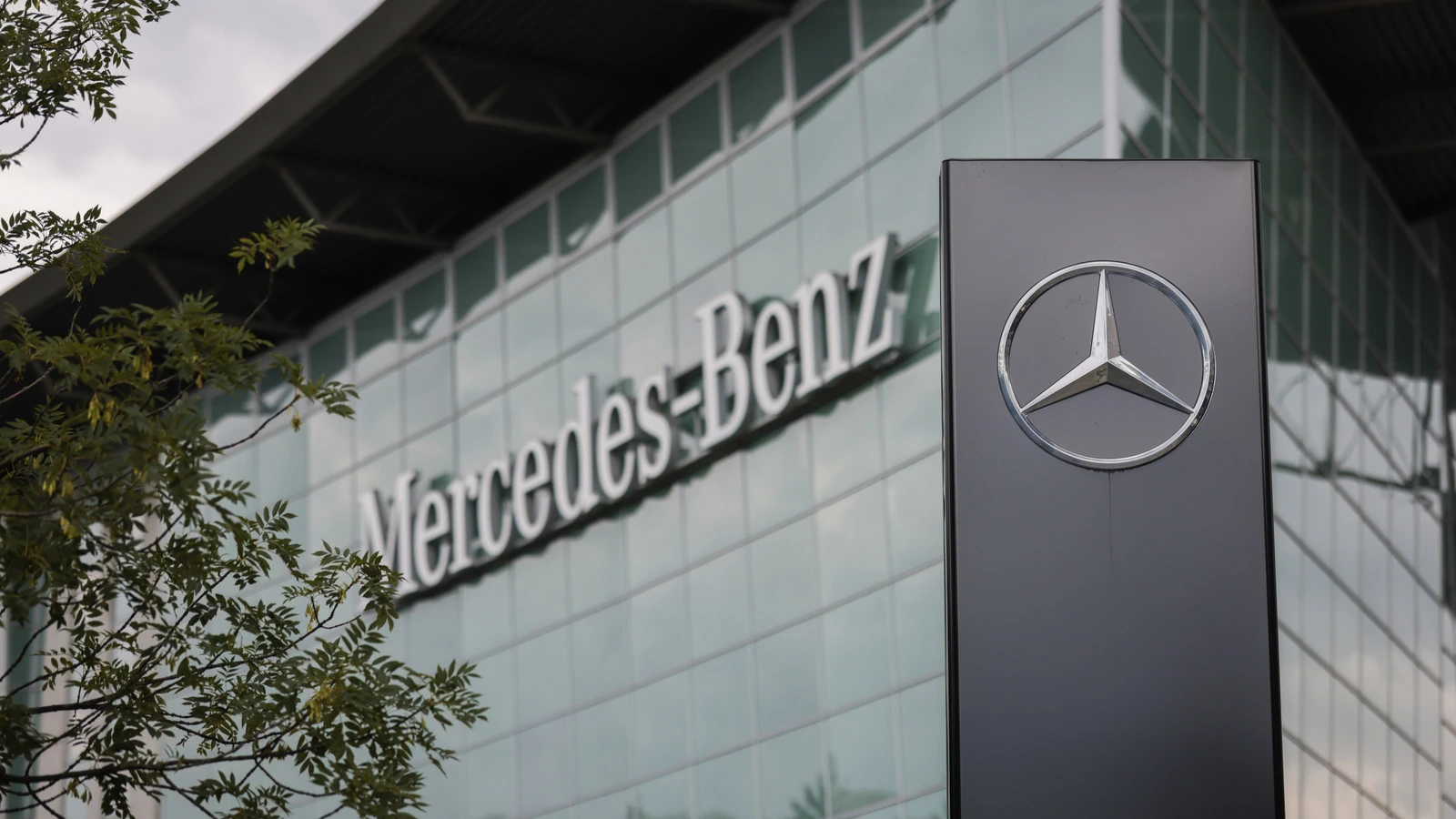
Mercedes-Benz's German headquarters: the corporate face behind the investment rethink
Mercedes-Benz's German headquarters: the corporate face behind the investment rethink, Image: Carscoops

Which plants are exposed

Mercedes assembles passenger vehicles at three German sites: Sindelfingen, with 31,500 employees, Bremen with 10,500 and Rastatt with 7,000. It runs seven further German plants, including Untertürkheim in Stuttgart, Berlin and Hamburg for drivetrains and components, Düsseldorf and Wörth for commercial vehicles, Kamenz for lithium-ion batteries and Affalterbach for AMG.

Schiebe has previously indicated that two German plants are on the chopping block, though the company has not confirmed which.

Hungary is the obvious landing spot for any shifted production. Mercedes has invested heavily in its Kecskemét plant, which employs 5,000 people, is one of the largest employers in the region and builds internal combustion, plug-in hybrid and electric passenger vehicles, including the current GLB, A-Class and C-Class electric models. Outside Europe the company has plants in China, South Africa and the US, plus knock-down assembly joint ventures in India, Thailand, Malaysia, Indonesia and Vietnam.

The catch for buyers is that the cars themselves are unlikely to change much: Kecskemét already builds electric Mercedes models, so moving more output there is a cost decision rather than a product one.

A wider German problem

Mercedes is not alone in retrenching. Volkswagen is in similar financial trouble and last month paused development of the ID Golf. For German car buyers, the risk is less about what they can order today than about where the next generation of models is built, and whether the cost savings show up in prices or simply in the company's margins.

What is still undecided

No closure has been confirmed. The two plants at risk have not been officially named, and the outcome depends on talks with IG Metall and the works council, which are ongoing. Mercedes has not announced a date for a final decision on closures, so the timing of any shutdown remains open.

Open this article ↗

Keep scrolling to read the next story.

Older articles →