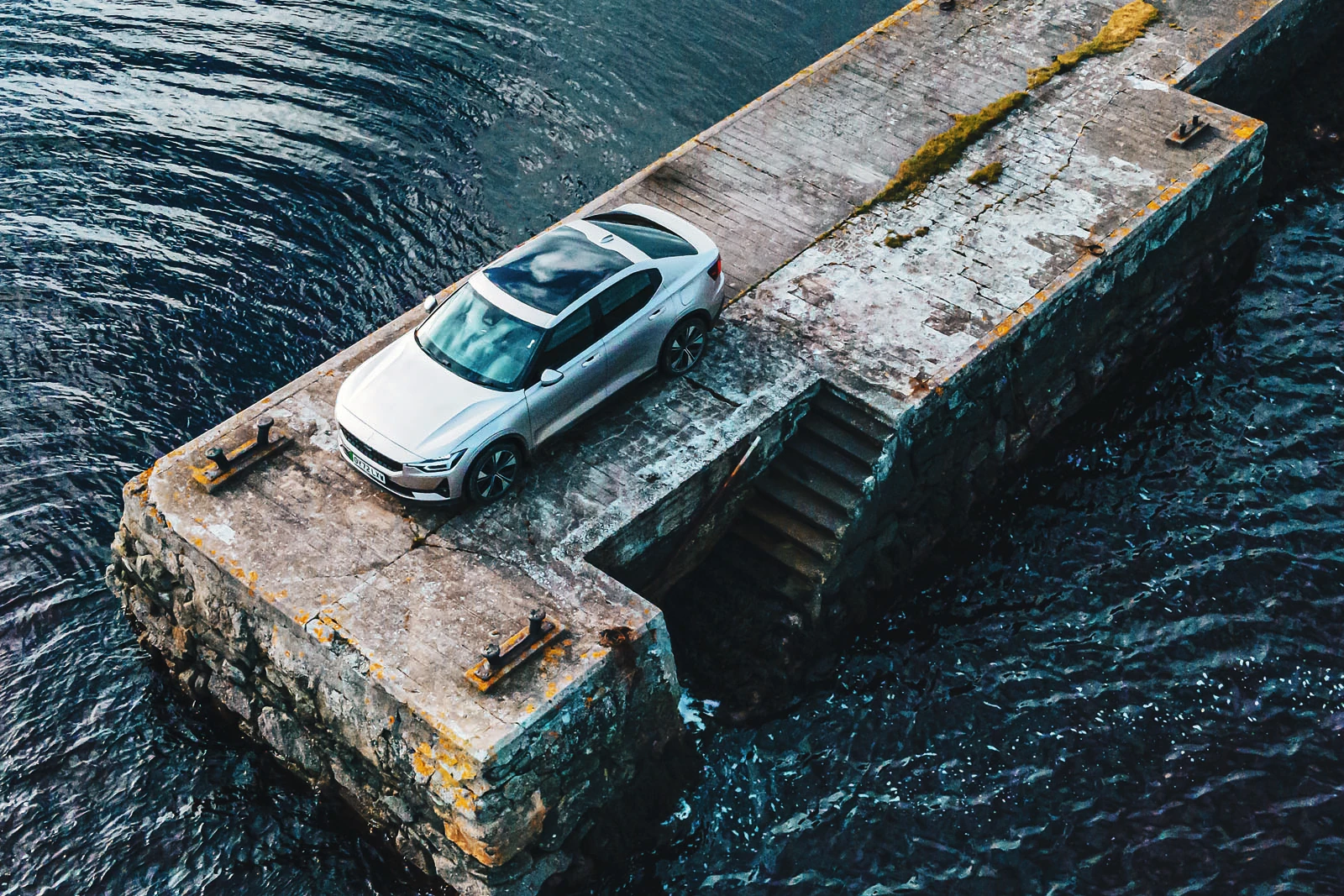
Production of the Polestar 2 has ended, closing the book on the model that established Polestar as a standalone electric car brand rather than a performance arm of Volvo. The car's replacement is described as being just around the corner, arriving at what Autocar characterises as a particularly uncertain moment for the company.
The car that made Polestar a brand
The Polestar 2 was not the company's first model. That was the Polestar 1, a plug-in hybrid that began life as a Volvo concept and arrived just as owner Geely repositioned the business as an all-electric car maker. By Polestar's naming logic, which simply follows the order in which its cars were introduced, the 2 came second.
What set the 2 apart was its engineering character. In Performance Pack form it offered manually adjustable Öhlins dampers, with the front units reached by putting the car on stands and removing the front wheel and arch lining, as the manual instructed. Autocar's reviewer found the liners could be reached through with the wheels on lock instead, and adjusted the dampers without tools. The same writer ran a Polestar 2 as a daily car for six months and rated it good to drive at all times and genuinely good with the dampers set up properly.
What replaces it, and what it costs
Polestar has not confirmed the replacement's full specifications or pricing in the material available here, so those details have yet to be announced. What is clear is the timing: the new model lands as Polestar faces a period the source describes as uncertain.
For buyers, the end of 2 production means the current car will only be available while stock lasts, and the manual-damper option that made the Performance Pack distinctive goes with it unless the replacement carries it over. That matters because the 2's appeal was never raw output or headline range figures in this account, but the sort of hands-on adjustability that drew enthusiasts to it.
A following built on detail, not volume
Autocar frames the 2 as a car that won a particular kind of admirer: owners willing to get their hands dirty around the wheels to tune ride and handling, beyond the level of a hot hatch driver scrolling through a touchscreen to set adaptive damping. The Polestar 1, by contrast, is said to have achieved about as many genuine UK sales as the number in its name.
That the end of production registers as significant at all, when a maker retiring a hatchback just before its successor arrives would not normally be big news, says more about what the 2 represented for Polestar than about the car's sales performance. It was the model that defined the brand, and its departure leaves the replacement carrying that reputation into a harder market.