INDEPENDENT AUTOMOTIVE NEWSGLOBAL PERSPECTIVE / AUSTRALIAN EDITION
TDCNTHE DAILY
CAR NEWS.

The road ahead.
Every day.

RSS ↗
Latest/Australia

525 original articles

Australia / TDCN ORIGINAL

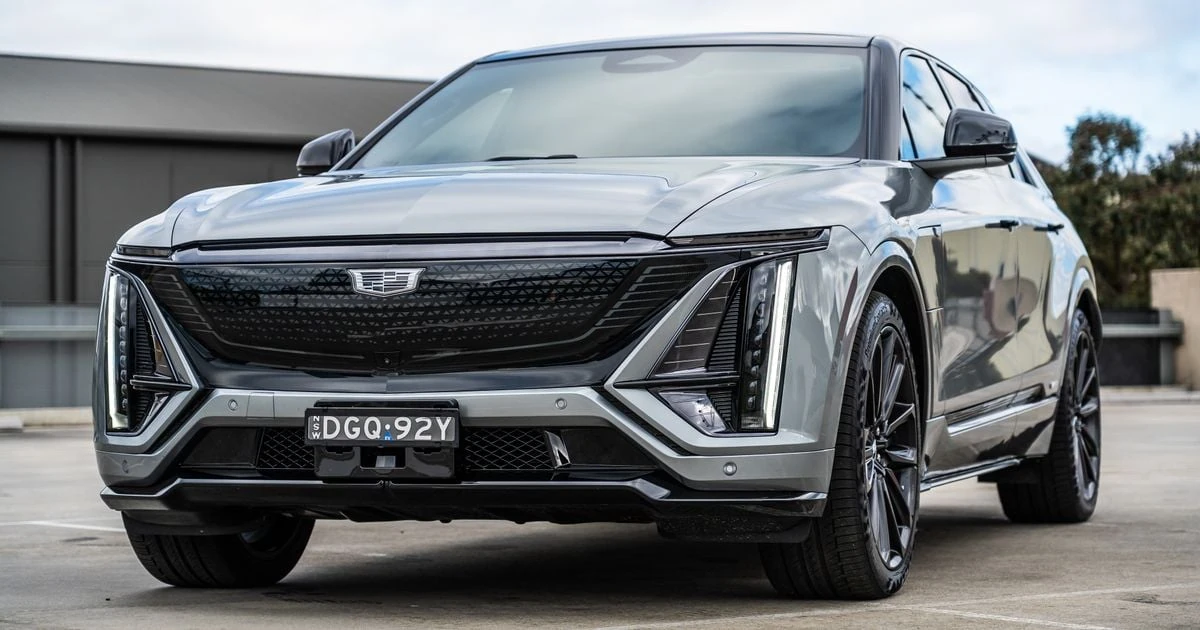
Cadillac Lyriq-V electric SUV priced at $99,000 for Australia, deliveries due from March 2027

The first electric V-Series Cadillac packs 459kW and 880Nm, but its WLTP range falls to 471km against the standard Lyriq Sport's 503km.

Cadillac will price the 2027 Lyriq-V at $99,000 before on-road costs in Australia, with deliveries expected to begin between March and April 2027. A Cadillac Australia spokesperson told CarExpert that "Lyriq-V deliveries will start late Q1 into Q2".

The Lyriq-V is the high-performance version of the large Lyriq electric SUV and the first electric model in Cadillac's V-Series line, which the brand has built for more than two decades, largely around V8 engines. Its Australian arrival follows the Vistiq, whose deliveries are due to start late this year or in the first quarter of 2027.

More power, less range than the Lyriq Sport

The Lyriq-V uses the same 92kWh nickel manganese cobalt battery and dual-motor all-wheel drive layout as the Lyriq Sport, but adds 75kW of power and 160Nm of torque. Cadillac quotes 459kW and 880Nm, with a claimed 0-100km/h time of 3.6 seconds against 4.9 seconds for the Sport.

The extra output costs range. Cadillac's claimed WLTP figure for the Lyriq-V is 471km, down from 503km for the Sport, and claimed energy consumption is 21.6kWh/100km. Buyers weighing the two will be trading roughly 30km of WLTP range for a substantial jump in straight-line performance, a trade that suits the V-Series brief but narrows the Lyriq's long-distance appeal.

Chassis and charging details

Beyond the powertrain, the V-Series gets retuned suspension with Continuous Damping Control adaptive dampers, larger 22-inch alloy wheels in place of the Sport's 21-inch items, and a V-Mode with a Velocity Max button that unlocks the SUV's full outputs, plus Competitive Mode and Launch Control. Brakes are unchanged: 390mm front rotors with fixed calipers and 345mm rear rotors with sliding calipers.

Cadillac also fits a one-pedal drive mode and its Regen on Demand paddle, which slows the car when pulled, and the SUV uses five-link independent suspension.

Export-market Lyriqs, Australia included, use a 92kWh battery rather than the 102kWh pack fitted elsewhere, which cuts maximum DC charging from 190kW to 130kW. AC charging is listed at 7.4kW on single-phase power and 22kW on three-phase. The V-Series tips the scales at a tare weight of 2687kg.

A V-Series badge on an electric SUV

Cadillac's V-Series has traditionally meant V8 power, and the Lyriq-V is the first electric model to carry the badge. In the US it has since been joined by the smaller Optiq-V, which has already been ruled out for Australia.

For Australian buyers, the Lyriq-V sits at the top of the Lyriq line at $99,000 before on-road costs, with the Sport below it. Cadillac has not announced further local pricing detail beyond that figure, and full specification and pricing for the Lyriq Sport is published separately.
Open this article ↗
New cars / TDCN ORIGINAL

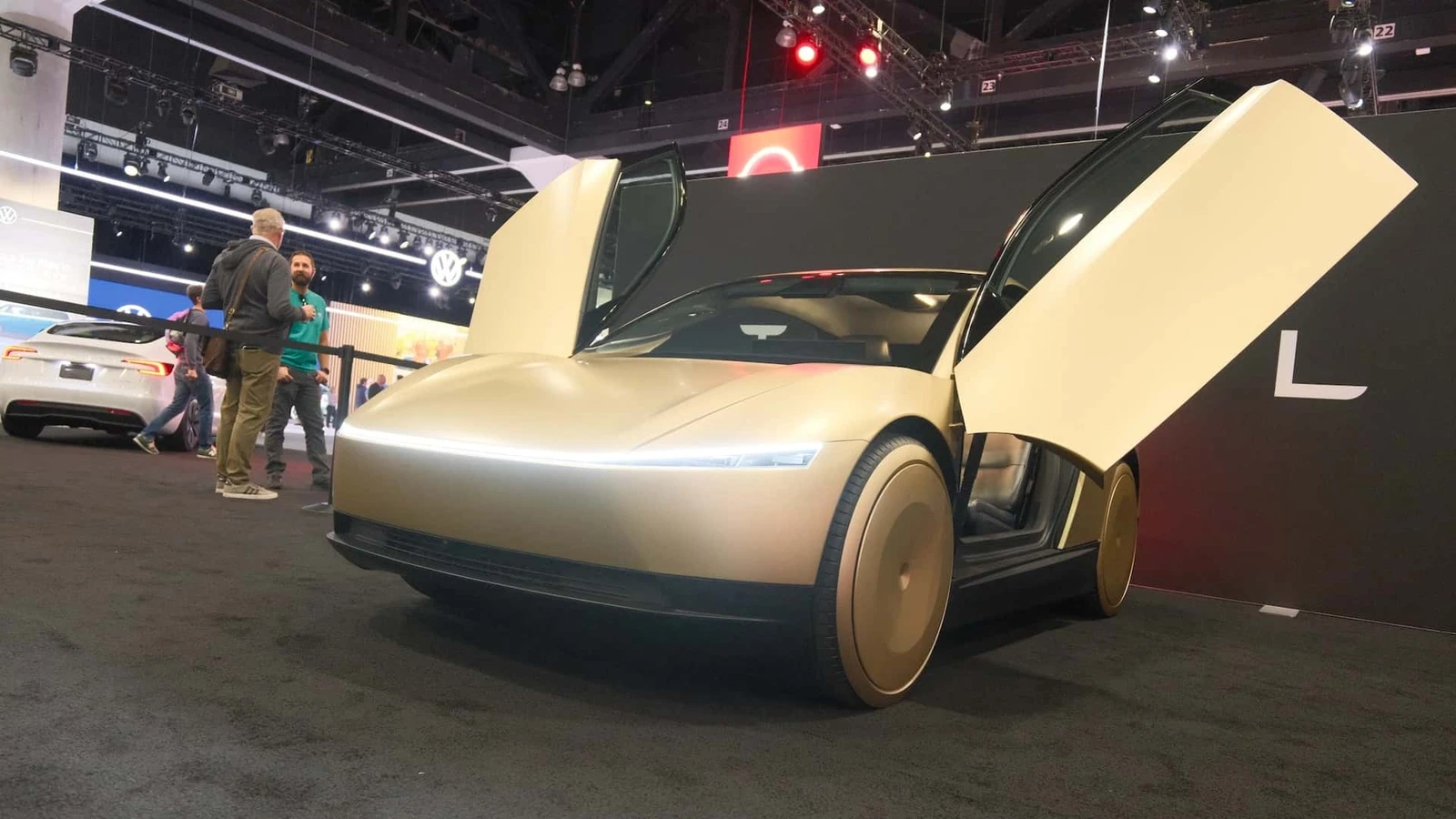
Tesla prices the steering wheel-free Cybercab at $29,990 with a $299 monthly subscription

The two-seater is Tesla's cheapest model yet, but early buyers must be hand-picked and can only use it in supported service areas.

Tesla has put a price on the Cybercab, the steering wheel-free two-seater it intends to sell to individuals: $29,990, plus a $299-per-month subscription for the autonomous driving software needed to operate it, with the first month free. The company says customer deliveries for personal use could begin as soon as next month.

The car is not yet on open sale. Tesla said on its Robotaxi X account that "select customers are now being invited to purchase Cybercab for personal use," and an order page screenshot shared by the company points to deliveries starting next month.

The cheapest Tesla, with conditions attached

At $29,990 the Cybercab undercuts every other Tesla on price, making it the brand's least expensive vehicle to date. The monthly $299 charge is not optional: it covers the autonomous driving subscription the car needs to run.

There are geographic limits too. Tesla says the Cybercab will not operate anywhere in the country, only within "supported service areas". Buyers outside those zones would be paying for a self-driving car that cannot drive itself everywhere, which makes the map of supported areas as important as the sticker price for anyone considering one.

Hand-picked buyers only, for now

The first Cybercabs go to invited customers rather than the general public. Tesla has not said when, or whether, ordering will open to everyone, so the wider rollout date is still unannounced.

What Tesla is selling is unusual in itself. Today's driverless cars are generally owned and run by companies operating ride-hailing fleets, among them Waymo, Zoox and Tesla itself, rather than by private individuals. A car an ordinary person can own and that drives without supervision would be a significant step for the industry and for Tesla in particular.

For Tesla, the stakes are personal. Putting autonomous cars in the hands of regular people has been one of Elon Musk's central promises for about a decade, and he has missed his own deadlines on it year after year. The Cybercab order page is the first point at which that promise takes a concrete, purchasable form.

Robotaxi service is already running

The Cybercabs in operation today belong to Tesla's Robotaxi service, which launched last year and now carries riders in a handful of US cities, including Austin and Miami. Those cars are fleet vehicles, not customer-owned ones, so the personal-sale programme is a separate track from the ride-hailing business.

Tesla has described the story as developing, and details such as the full list of supported service areas and a public order date have not been announced.

Open this article ↗

Keep scrolling to read the next story.

Older articles →