INDEPENDENT AUTOMOTIVE NEWSGLOBAL PERSPECTIVE / AUSTRALIAN EDITION
TDCNTHE DAILY
CAR NEWS.

The road ahead.
Every day.

RSS ↗
Latest/Electric

533 original articles

Electric / TDCN ORIGINAL

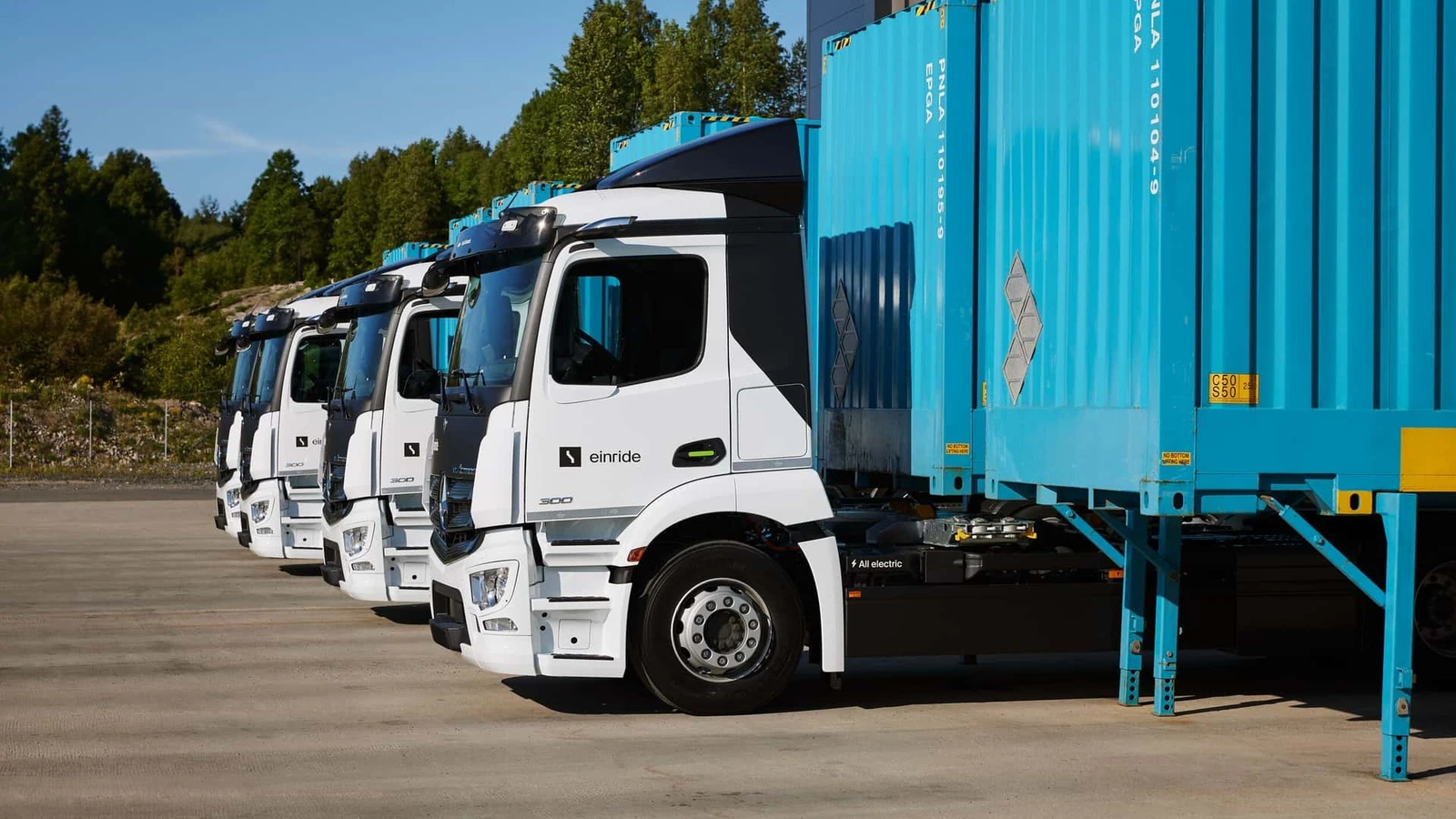
Diesel price surge drives fresh interest in electric trucking, Einride CEO says

Einride says its sales pipeline tripled year on year in the first half of 2026 as shippers react to diesel above $6 a gallon in the US.

Soaring diesel prices are pushing more freight customers to look at electric trucks, according to Roozbeh Charli, CEO of Swedish-founded electric and autonomous freight company Einride. Charli told InsideEVs he is seeing "an upswing in both customer conversations and just general narrative" around electrification as fuel costs climb.

The shift is showing up in Einride's own numbers. The company, founded in 2016, says its sales pipeline tripled year over year in the first half of 2026 and its conversion rate doubled over the same period.

Diesel costs push shippers back to the table

Average US diesel prices have risen by more than 60% since the war with Iran began, climbing above $6 per gallon, a steeper increase than for regular gasoline. Shippers in Europe are facing much higher fuel costs too.

Charli said customers who had previously told Einride they would revisit electric freight later are now moving. "A lot of those customers are coming back now, saying 'let's get started, rather sooner than later,'" he said.

The pressure is not confined to Einride. In September, a coalition of shippers including PepsiCo placed an order for 2,500 electric trucks, a deal set to double the US fleet of electric Class 8 trucks. Catalyst Mobility, one of the nonprofits running the programme, says diesel prices have drawn interest from companies outside that deal as well.

Where electric trucks already compete on cost

Charli attributes the interest to two factors. Current fuel pricing widens the range of routes where electric trucks are price-competitive with, or cheaper than, diesel big rigs. Those are typically "middle-mile" runs of around 100 to 200 miles with high utilisation, he said. Utilisation matters because battery-electric trucks still generally cost more to buy than diesel ones.

The second factor is exposure. Volatile diesel prices are making some companies realise how much of their operating cost sits at the mercy of fuel markets, Charli said.

The economics are not the only argument. Heavy-duty trucks are a small share of the US fleet but consume a disproportionate amount of fuel and produce a disproportionate share of harmful air pollution. "Any exposure to diesel exhaust is going to be harmful to your health," said Ray Minjares, heavy-duty vehicles programme director at the International Council on Clean Transportation. "And so since there's really no safe level, the obvious solution, particularly in a world where commercial zero-emission vehicles are already available, is to switch to that technology."

Tesla Semi changes the hardware picture

Charli said high diesel prices are not the only tailwind for electrification this year. The long-awaited launch of the Tesla Semi has raised the profile of electric trucking and brought a genuinely new capability to the US market. "The Tesla Semi, in a U.S. context, is definitely a step-change in the capabilities of the hardware" in range, performance and price, he said.

In August, Einride announced plans to deploy 500 Semis serving Amazon and other North American customers, which would triple its fleet. Tesla's truck is several years late to full-scale production, but with diesel where it is now, its timing may work in its favour.

The sources do not set out a full long-haul cost case for battery-electric trucking. The competitive ground Einride describes is middle-mile work with high utilisation, and the company has not published figures on long-haul route economics, so a like-for-like long-haul comparison has not been announced.
Open this article ↗
New cars / TDCN ORIGINAL

Subaru launches WRX STI Sport R in Japan with the old STI's six-speed manual

The Japanese-market flagship pairs the standard 271 hp turbo boxer with the heavy-duty TY85 gearbox and rev-matching, but US availability is undecided.

Image: Carscoops

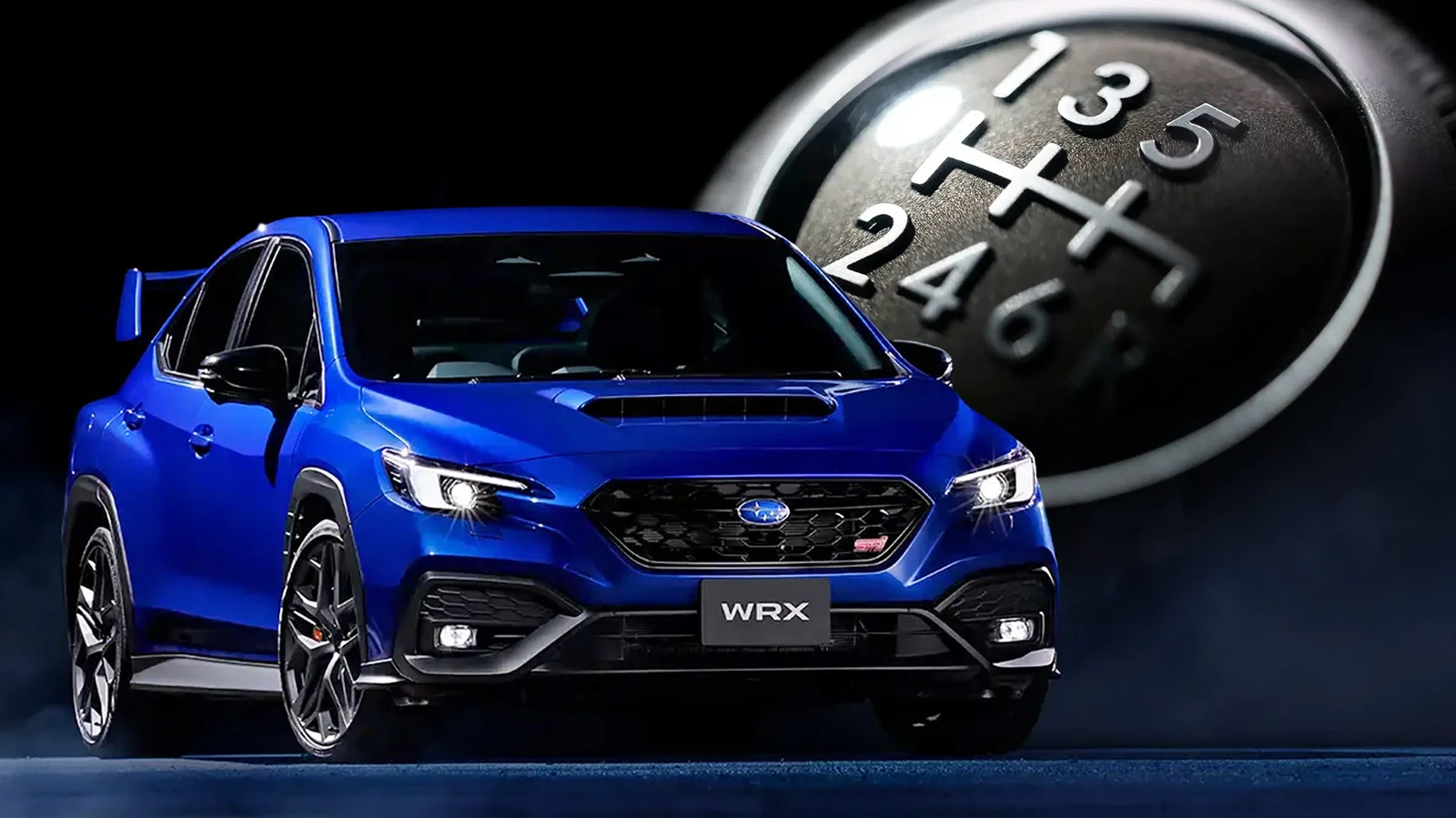
Subaru has unveiled the WRX STI Sport R for the Japanese market, a flagship trim that brings back the heavy-duty six-speed manual gearbox from the discontinued VA-generation WRX STI. Order books open on November 19, with a monthly sales target of 330 units and a starting price of ¥5,480,000 (about $34,300).

The car is the closest thing yet to a full STI version of the current VB-generation WRX, and it exists because Japanese buyers kept asking for a three-pedal option that the regular lineup did not offer.

How the manual came back

Until now, Japanese buyers who wanted a manual VB WRX were largely out of luck. The regular range was CVT-only, and the manual WRX STI Sport# was capped at 600 units sold through a lottery. Demand for the stick shift pushed Subaru to rethink its approach.

The project began when Subaru realised the production line for the gearbox from the long-discontinued VA WRX STI was still usable. A small skunkworks team was assembled and tasked with fitting the manual to the VB WRX as quickly as possible.

The unit in question is the TY85 six-speed, a stronger gearbox than the TY75 manual used in the STI Sport# and the US-market WRX tS. Subaru says it has evolved and optimised the transmission, cutting shift play by up to 60 percent, and its test drivers claim it changes the driving experience.

The WRX STI Sport R pairs its boxer turbo with the old STI's six-speed manual, as the shift-knob graphic makes plain
The WRX STI Sport R pairs its boxer turbo with the old STI's six-speed manual, as the shift-knob graphic makes plain, Image: Carscoops

Same output, recalibrated response

Power is unchanged from the rest of the WRX line. The turbocharged 2.4-litre boxer produces 271 hp (202 kW / 275 PS) and 277 lb-ft (375 Nm) of torque, though Subaru has recalibrated the engine for sharper response.

Drive goes to all four wheels through Subaru's Symmetrical AWD system and a viscous limited-slip differential. The STI Sport R also gains Rev Sync rev-matching, a technology Subaru says was inspired by its involvement in the Super Taikyu racing series, and the EyeSight driver assistance suite has been adapted to work with the manual.

That matters because the car's appeal rests on the gearbox rather than extra power. Buyers comparing it with the CVT-equipped STI Sport are paying for the third pedal and the hardware that comes with it, not for a bigger output figure.

Chassis, equipment and weight

The STI Sport R rides on 19-inch matte grey alloy wheels wrapped in Bridgestone Potenza S007 tyres, matching the American WRX tS. It also shares that car's electronically controlled ZF dampers and Brembo braking system with drilled rotors, and adds gold Brembo calipers and dark-tinted tailpipes. A rear wing sized to carry the red STI badge is optional, and buyers can add a dealer-installed bodykit and alternative wheels.

Subaru's spec sheet lists a kerb weight of 3,439 lbs (1,560 kg), the same as the STI Sport# and 110 lbs (50 kg) lighter than the CVT-equipped STI Sport.

Inside there is Ultrasuede upholstery with red stitching, a 12.3-inch digital instrument cluster, an 11.6-inch infotainment touchscreen and heated seats as standard. STI-branded Recaro front seats and a Harman Kardon audio system are optional.

At ¥5,480,000, the Japanese car undercuts the US-spec WRX tS, which starts at $44,995. The gap reflects different market positioning and specification as much as the hardware itself, since the two cars share much of their chassis componentry.

No US decision yet

Subaru has not said whether the TY85 transmission or the Rev Sync software will reach the US lineup. The company is still experimenting with the current-generation sedan: spy photographers recently caught a mysterious longtail WRX prototype testing at the Nürburgring.

The STI Sport R is one of three manual Subaru models due to debut by next year, alongside a lightweight version of the BRZ with sharper aero and an as-yet-unnamed five-door hatchback.

For Japanese buyers, the practical result is straightforward: a showroom WRX with a proper manual and no lottery, at a lower price than the limited STI Sport# commanded in practice. For everyone else, the car is a demonstration that Subaru still has the tooling and the will to build manual performance models, even if it has not committed to selling them everywhere.

Open this article ↗

Keep scrolling to read the next story.

Older articles →