INDEPENDENT AUTOMOTIVE NEWSGLOBAL PERSPECTIVE / AUSTRALIAN EDITION
TDCNTHE DAILY
CAR NEWS.

The road ahead.
Every day.

RSS ↗
Latest/Australia

540 original articles

Australia / TDCN ORIGINAL

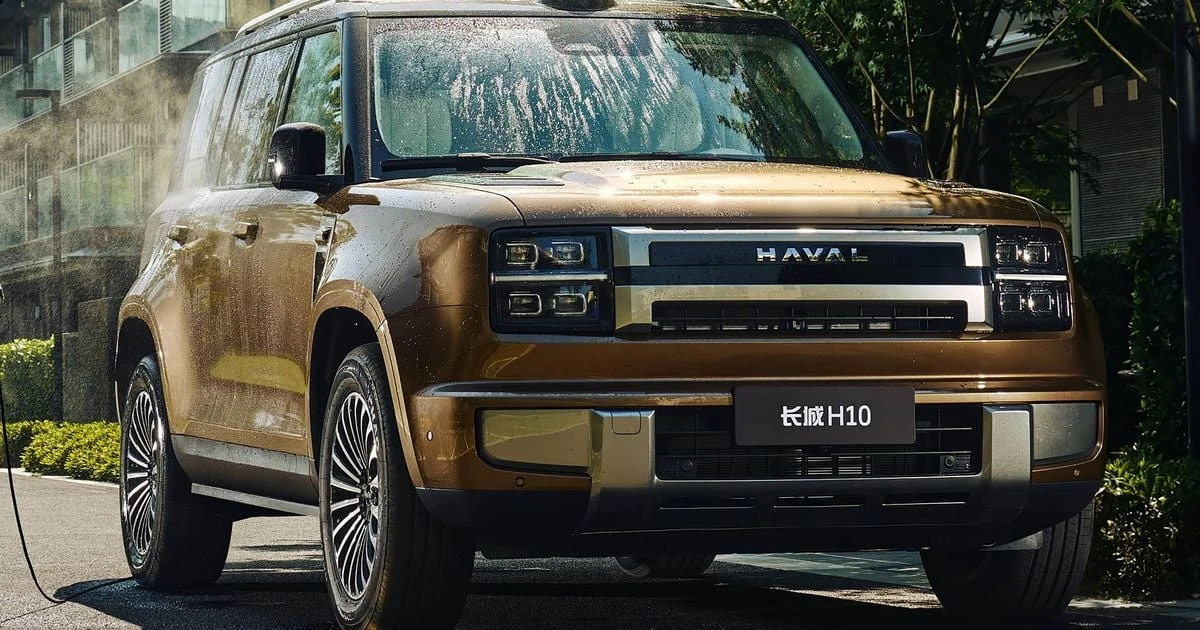
GWM locks in Haval H10 plug-in hybrid SUV for Australia in 2027

The Haval H10 will be GWM's biggest SUV in Australian showrooms, arriving in the third quarter of 2027 with a 42.8kWh battery and up to 180km of WLTC electric range.

GWM Australia has confirmed the Haval H10, the largest SUV yet for its Haval brand locally, will launch in Australian showrooms in the third quarter of 2027. Managing director Andrew Gao said the model would expand the brand's SUV range and give buyers another large seven-seat option.

The H10 was revealed in China in April 2026 and is sold there in two body styles: a five-seater measuring 5138mm long, 2050mm wide and 1970mm tall, and a six-seater that stretches to 5299mm, both on a shared 3000mm wheelbase. Gao's statement points to the longer body for Australia, and it appears GWM will swap the Chinese-market second-row captain's chairs for a three-seat bench.

A bigger footprint than its rivals

At 5299mm long, the Australian-bound H10 would be longer than the BYD Sealion 8 (5040mm), the Chery Tiggo 9 (4800mm), the Hyundai Palisade (5060mm) and the Toyota Kluger (4966mm). It uses car-like unibody construction with four-wheel independent suspension, despite blocky styling that echoes GWM's Tank models.

The Tank 500, which is also offered with three rows, is shorter at 5078mm and uses more rugged body-on-frame construction with a live rear axle for off-road work. The H10's difference is that it pairs a third row with plug-in hybrid power, something the Tank 500 does not offer.

Plug-in hybrid powertrain and range

The H10 carries a 42.8kWh lithium iron phosphate battery that can be charged on AC power at up to 6.6kW or on DC, and delivers between 176km and 180km of electric range on the WLTC cycle. WLTC fuel consumption is listed at up to 6.7L/100km with the battery depleted, and a 65L fuel tank is standard.

Its powertrain combines a 123kW/243Nm turbocharged 1.5-litre four-cylinder petrol engine with 100kW/170Nm front and 220kW/312Nm rear electric motors and a four-speed hybrid transmission.

Buyers should read those range figures in context: WLTC is a laboratory cycle, so the Australian electric-only figure will not be directly comparable with the EPA or CLTC numbers quoted for rival plug-in hybrids sold elsewhere.

Price still to be confirmed

GWM has not announced Australian pricing for the Haval H10. For a rough guide, the related Tank 500 range currently runs from $65,990 to $79,990 drive-away.

The H10's arrival in the third quarter of 2027 means GWM has time to settle local specification and pricing closer to launch, and those details have not been released.
Open this article ↗
Electric / TDCN ORIGINAL

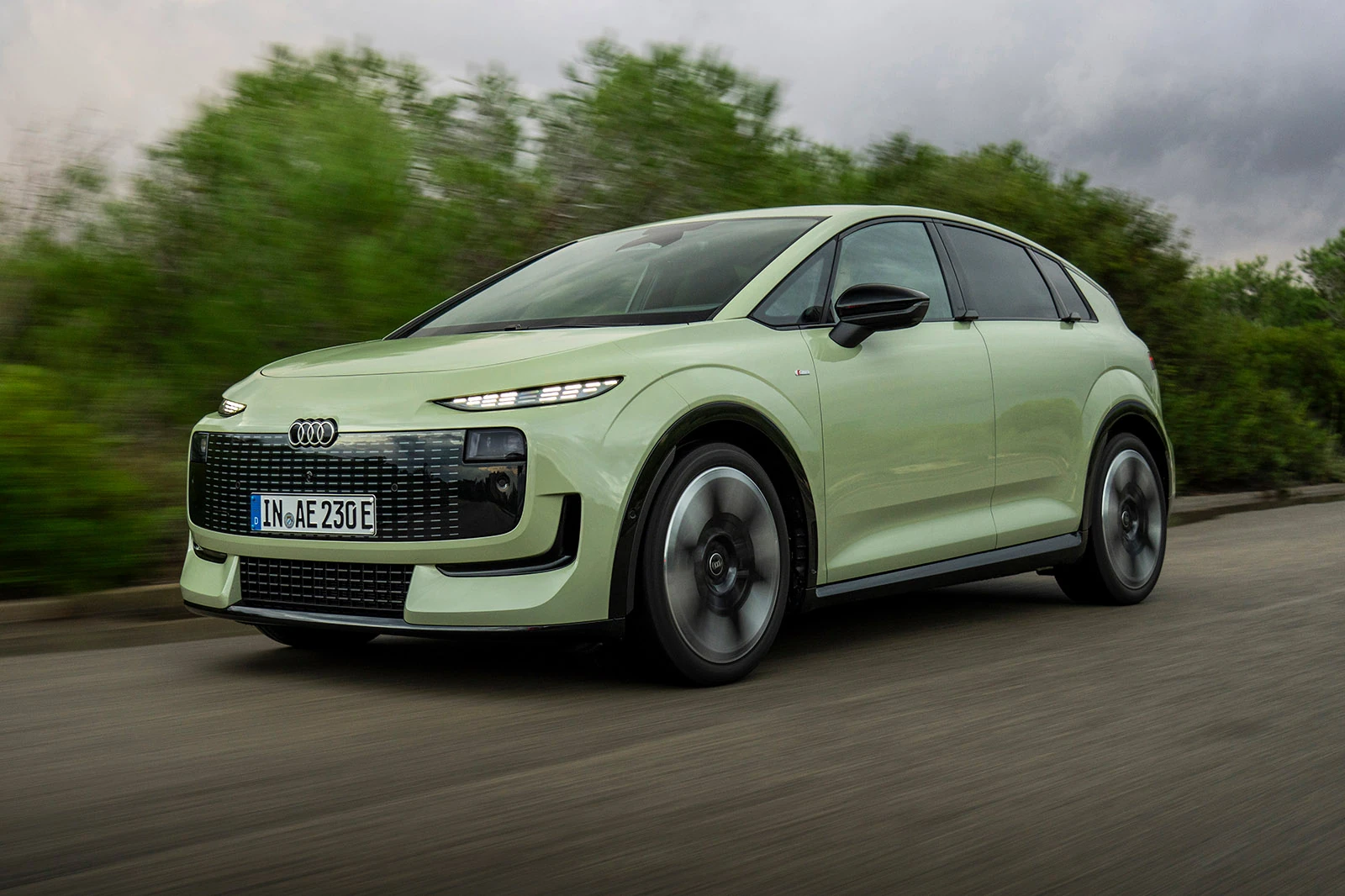
Audi revives A2 as an electric hatchback with up to 402 miles of WLTP range

The A2 E-tron returns as Audi's smallest and cheapest E-tron, priced from £30,700 in the UK and offered with LFP or NMC batteries.

Audi has brought back the A2 nameplate as an electric hatchback, the A2 E-tron, reviving a cult-classic supermini for the EV era and slotting it in as the smallest and most affordable model in the firm's E-tron line-up. UK prices start at £30,700 for the entry-level 52kWh car and rise to £48,350 for the range-topping Edition 1 variant.

Battery options and range

Audi offers the A2 E-tron with three battery and powertrain combinations. The entry-level 52kWh and mid-rung 61kWh cars use lithium-iron-phosphate (LFP) packs, which Audi says can be charged to 100% without degrading, unlike nickel-manganese-cobalt (NMC) cells. Those two versions are quoted at up to 261 and 317 miles of WLTP range respectively.

Above them sits an 84kWh NMC car promising up to 402 miles, or 387 miles in range-topping 322bhp form. All versions use a single motor driving the rear wheels. Audi expects the 61kWh and the 228bhp 84kWh models to account for most UK sales.

Charging peaks are quoted at 100kW for the 52kWh battery, 105kW for the 61kWh unit and 183kW for the 84kWh NMC pack, with all versions able to charge from 10-80% in under 30 minutes. Only the LFP models qualify for the UK government's £1,500 Electric Car Grant.

Packaging and positioning

The A2 E-tron is built on the latest version of the Volkswagen Group's MEB platform and is longer and taller, though slightly narrower, than a Volkswagen ID 3. It is positioned against premium compact rivals including the Volvo EX30 and Cupra Born.

Audi has kept the original A2's monovolume silhouette and split rear window, and the retro bodywork contributes to efficiency: a blanked-off grille and controllable front air inlet help the car achieve a drag coefficient of 0.24. The 396-litre boot beats the Volvo EX30's 318 litres and the Cupra Born's 385 litres.

Inside, the layout follows other Audis, with a 12.8in central touchscreen, magnetic phone chargers and haptic shortcut buttons for switching off the driver assistance systems. Material quality is mixed: Autocar's test cars had cloth trim that felt cheap on the 61kWh version, while the 84kWh model used knitted fabric on the doors and dashboard and leatherette seats.

On the road

Autocar drove the A2 E-tron in Spain and found the 84kWh S Line car stern-riding over sharp-edged lumps and bumps, though controlled over shorter imperfections and composed at motorway speeds. The 61kWh car, on conventional passive suspension, was more comfortable than the adaptive-damper 84kWh model over large bumps, if a little busy over abrasive surfaces at low speed.

The 228bhp 84kWh car feels brisk with a nicely metered throttle, and the 187bhp 61kWh version is hardly short of pace. Autocar noted occasional rear-axle squirm under hard acceleration from a junction, and found the car surprisingly playful with traction control in its Sport setting. Brake blending between friction and regenerative braking is more effective than some earlier Volkswagen Group efforts, but the pedal felt inconsistent and long in travel, and the regenerative braking reverted to its Auto setting by itself.

Real-world efficiency fell short of the official claims in Autocar's testing: the 84kWh car returned 3.6mpkWh against an official 4.4mpkWh, and the 61kWh car 3.4mpkWh against 4.8mpkWh. Autocar named the £33,900 61kWh model as the pick of the range.

What it replaces

The A2 E-tron effectively serves as the indirect replacement for the retired A1 and Q2, giving Audi a presence in the small premium EV class it previously lacked. Audi has teased an A2 return for years, showing a concept in 2011 and a one-off electric restomod in 2024 to mark the original's 25th birthday.

The original A2 was renowned for efficiency, and the new car's modest real-world economy means it cannot quite match that reputation, though it retains the old car's clever packaging while adding comfort and composure. Audi has not announced Australian availability or pricing for the A2 E-tron.

Open this article ↗

Keep scrolling to read the next story.

Older articles →